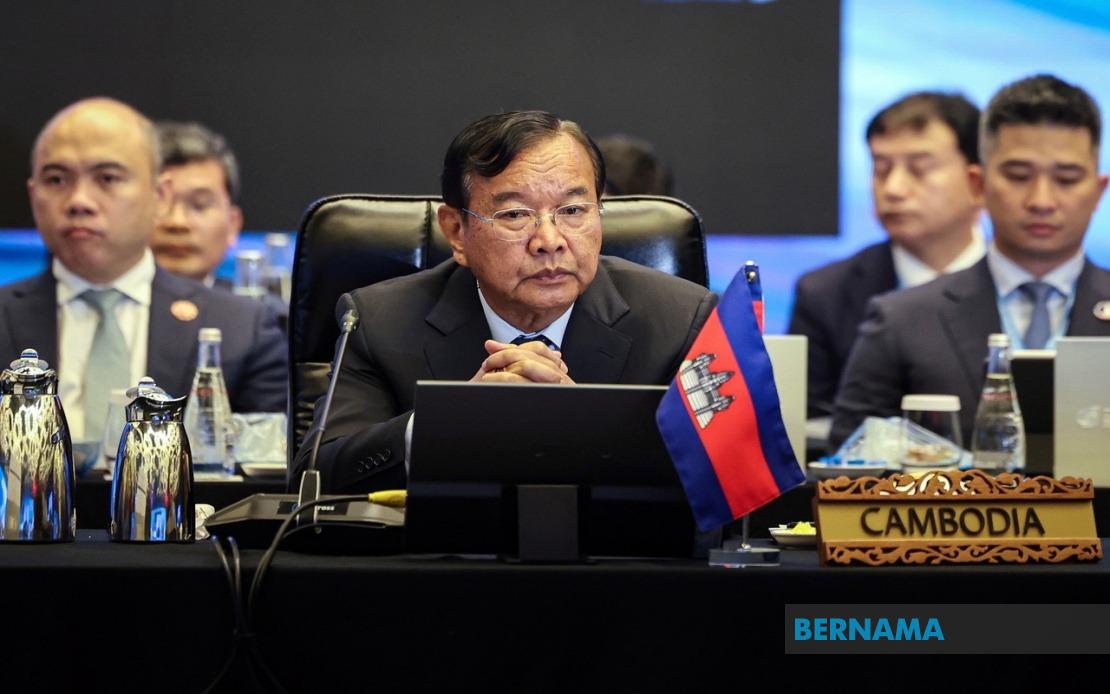
Cambodian Foreign Affairs and International Cooperation Minister Prak Sokhonn has reaffirmed ASEAN's indispensable role as a stabilising force in Southeast Asia, emphasising that the ten-member regional bloc remains the cornerstone of dialogue and cooperation despite an increasingly volatile international landscape. Speaking on the occasion of ASEAN's 59th anniversary, Sokhonn highlighted how the organisation has evolved from addressing regional conflicts into a platform that promotes shared development and peaceful coexistence among its diverse members.
The association, founded on August 8, 1967, currently brings together Brunei, Cambodia, Indonesia, Laos, Malaysia, Myanmar, the Philippines, Singapore, Thailand, Vietnam and Timor-Leste. Over nearly six decades, ASEAN has successfully transformed Southeast Asia from a region fractured by political divisions and uncertainty into one characterised increasingly by constructive engagement and collaborative frameworks. This institutional evolution represents one of the region's most significant diplomatic achievements, particularly given the historical animosities and competing interests that once defined inter-state relations.
Sokhonn, who also serves as deputy prime minister, stressed that ASEAN's foundational documents—its Charter and the Treaty of Amity and Cooperation—continue to provide essential guidance for member states navigating complex regional challenges. These frameworks embody principles of mutual respect for sovereignty, non-interference in internal affairs, and peaceful settlement of disputes, principles that remain remarkably relevant even as geopolitical pressures intensify. The TAC in particular has become a cornerstone agreement for expanding ASEAN's diplomatic reach beyond the region.
However, the Cambodian minister acknowledged that Southeast Asia faces unprecedented headwinds. Armed conflicts have resurged in various parts of the globe, while competition between major powers has intensified geopolitical tensions that inevitably affect the region's security environment and economic prospects. International law itself faces mounting challenges from state actors unwilling to respect established norms, whilst the multilateral system that underpinned post-Cold War stability appears increasingly strained. For a region dependent on open sea lanes, predictable trade flows, and stable partnerships with multiple powers, these global tremors pose genuine risks.
Sokhonn's key message departed from defensive rhetoric to assert that ASEAN must adopt a proactive posture rather than merely reacting to external pressures. The bloc cannot remain a passive observer of geopolitical change; instead, it must actively work to influence developments that affect its members' interests and security. This call for greater agency reflects growing recognition within ASEAN capitals that the organisation's relevance depends on its capacity to shape outcomes rather than simply absorb them. The statement carries particular significance given ongoing debates about ASEAN's effectiveness in addressing transnational challenges ranging from maritime security to cybercrime.
Maintaining ASEAN unity and preserving the bloc's central position in regional architecture emerge as critical prerequisites for this more assertive approach. Unity has never come easily to ASEAN—the organisation brings together countries with vastly different political systems, development levels, and strategic alignments. Cambodia's own entry into ASEAN in 1999, two decades after the bloc's founding, represented a significant expansion that was itself contentious. Yet over the past quarter-century, Phnom Penh has become an increasingly committed stakeholder in ASEAN's institutions and processes.
Cambodia's particular commitment to ASEAN orthodoxy deserves scrutiny in the Malaysian context. As a country that has sometimes aligned closely with Beijing on major geopolitical questions, Cambodia's emphasis on strict adherence to the ASEAN Charter and the non-interference principle reflects efforts to position itself as a defender of ASEAN's traditional ethos—an approach that paradoxically aims to protect space for member states to pursue partnerships beyond ASEAN without external pressure. This tension between maintaining bloc cohesion and respecting individual members' strategic autonomy remains one of ASEAN's central dilemmas.
For Malaysian readers and policymakers, Sokhonn's message carries several implications. Malaysia, as a founding member and current chair of various ASEAN mechanisms, bears responsibility for translating such rhetoric into concrete institutional action. The challenge extends beyond ceremonial affirmations of unity to substantive coordination on security threats, economic integration, and diplomatic positioning. ASEAN's ability to speak with greater coherence on major regional issues—from the South China Sea to Myanmar's political crisis—depends on member states like Malaysia maintaining constructive engagement with all partners whilst upholding the bloc's principles.
The regional security environment has indeed become more complex since ASEAN's founding. The return of great power competition, particularly between Washington and Beijing, forces ASEAN members to navigate between multiple powers with competing interests in the region. Unlike Cold War-era non-alignment, modern strategic positioning requires constant calibration and sophisticated diplomacy. ASEAN's strength derives partly from the fact that no single external power can dominate all members simultaneously—a reality that gives the bloc leverage if it can maintain internal cohesion.
Cambodia's reaffirmation of commitment to ASEAN's institutional frameworks should not be dismissed as mere diplomatic formula. The country's recent foreign policy trajectory has sometimes drawn international criticism for perceived alignment with particular powers, making its explicit endorsement of ASEAN multilateralism a significant statement. Such affirmations, multiplied across ten member states, reinforce the normative environment within which regional diplomacy occurs. They set expectations for how states should behave and legitimate appeals to shared principles when disagreements arise.
The broader challenge facing ASEAN involves translating institutional commitment into coordinated action on substantive issues. The bloc has successfully managed economic integration through mechanisms like the ASEAN Regional Forum and East Asia Summit, yet security cooperation remains episodic and constrained by sovereignty concerns. Myanmar's political crisis has exposed the limits of ASEAN's ability to influence member states' internal affairs, whilst maritime disputes in the South China Sea continue generating friction that ASEAN as a collective has struggled to resolve decisively.
Looking forward, ASEAN's relevance will depend on its capacity to deliver concrete benefits to member states whilst maintaining the institutional structures that Sokhonn emphasised. For Malaysia and other members, this requires sustained investment in ASEAN mechanisms, willingness to coordinate on regional challenges, and recognition that collective action often yields better outcomes than individual responses. The association's durability over nearly six decades suggests resilience, yet complacency about its centrality would be misplaced in an era of rapid geopolitical change.

