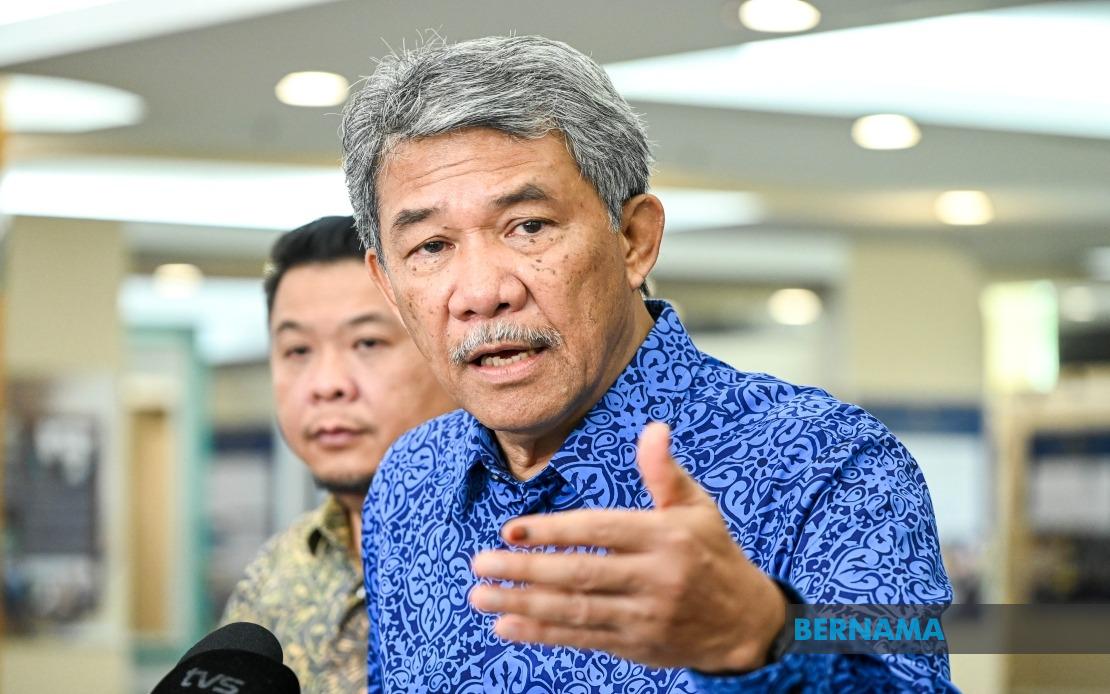
ASEAN faces a critical opportunity to unlock its economic potential, but member states must significantly expand trade among themselves to capitalise on the trajectory toward becoming the world's fourth-largest economic bloc by 2030. Foreign Minister Datuk Seri Mohamad Hasan highlighted the urgency of this challenge during remarks at the 59th ASEAN Day celebration in Putrajaya on Monday, pointing out that intra-ASEAN trade currently accounts for less than 25 per cent of the region's total commercial activity—a figure far below what the bloc's combined economic weight should support.
The shortfall underscores a fundamental paradox within ASEAN's integration agenda. Despite decades of cooperation frameworks and trade agreements, member states continue to source substantially more from outside the region than from their neighbours. This pattern reflects persistent structural barriers including tariff complications, infrastructure constraints, and competitive pressures that incentivise businesses to engage global supply chains rather than regional ones. For a bloc positioning itself as an economic superpower, the internal trade metric represents unfinished business that directly threatens the credibility of ASEAN's 2030 economic ambitions.
Modern ASEAN has shifted its strategic focus markedly away from the political preoccupations that once dominated its agenda. While security dialogues and sovereignty concerns remain part of the organisational framework, member governments increasingly recognise that collective economic advancement offers the most durable foundation for regional stability and prosperity. Mohamad's remarks reflected this pragmatic reorientation, emphasising that ASEAN's future hinges on demonstrating tangible benefits through enhanced commercial integration rather than through traditional diplomatic protocols alone.
The region already possesses an institutional toolkit designed to facilitate greater trade flow. The principle of free movement of goods among member states exists as a cornerstone mechanism, theoretically allowing seamless commerce across borders. However, the gap between formal agreement and practical implementation remains substantial. Customs procedures, regulatory divergence, and inadequate logistics infrastructure continue to impose friction costs that offset theoretical tariff advantages. These implementation challenges explain why ASEAN's intra-trade percentage has remained stubborn despite repeated policy commitments.
Malaysia's tenure as ASEAN chair during the previous calendar year yielded several proposals and resolutions intended to strengthen the economic foundation. These initiatives were consolidated in the Kuala Lumpur Declaration, which served as a blueprint for advancing regional commerce. The Philippines, assuming the rotating chair position for the current year, has undertaken to build upon this framework, incorporating Malaysia's recommendations into its own chairmanship agenda. This continuity demonstrates recognition that economic integration requires sustained political commitment beyond single-year terms.
Malaysia's designation as the Permanent Shepherd or Permanent Auditor for the ASEAN Community 2045 vision positions the country as a custodian of long-term integration goals. This role extends beyond ceremonial function, granting Malaysia substantive responsibility for monitoring progress toward the bloc's mid-century economic vision. The appointment implicitly acknowledges Malaysia's stake in ensuring that foundational economic pillars—particularly intra-regional trade—receive consistent attention and resources throughout the next quarter-century.
The gap between current intra-ASEAN trade levels and potential capacity reflects missed opportunities for member economies. Businesses throughout the region face genuine obstacles when attempting to expand into neighbouring markets, despite formal trade agreements suggesting openness. Supply chain managers often find that established relationships with distant suppliers, combined with predictable legal frameworks and advanced logistics infrastructure in developed economies, offer fewer complications than navigating ASEAN's fractured regulatory landscape. Closing this friction gap requires coordinated action addressing customs harmonisation, mutual recognition of standards, and investment in cross-border infrastructure.
For Malaysia specifically, expanding intra-ASEAN trade offers particular strategic value. As a middle-sized economy with sophisticated manufacturing capabilities, Malaysia serves as a natural hub for regional production networks. Enhanced trade integration would allow Malaysian firms to better leverage their competitive advantages across the bloc, while simultaneously exposing local industries to healthier competition from regional peers. The economic diversification that would result aligns with Malaysia's broader development objectives.
The 2030 timeframe referenced by Mohamad represents both opportunity and deadline. That target date coincides with several other regional milestones and global trends that will shape ASEAN's competitive position. Rising labour costs in China and geopolitical tensions prompting supply chain redistribution create window conditions favourable to increased intra-ASEAN trade—but only if the bloc acts decisively to remove barriers and build capacity. If these opportunities pass unactualised, the 2030 projection of fourth-largest status could prove optimistic rather than achievable.
Addressing the sub-25-per-cent figure requires initiatives beyond rhetoric and agreement-signing. Member states need concrete mechanisms for dispute resolution that build business confidence in regional commerce. Infrastructure investments connecting major economic centres across borders deserve greater priority in regional funding frameworks. Regulatory harmonisation should advance faster, particularly in sectors where technical standards currently fragment the market. These measures demand resources and political will, yet their cumulative impact would materially shift the intra-ASEAN trade equation.
The path toward ASEAN's economic ascendancy depends fundamentally on whether member states can transform their relationship from bilateral convenience to integrated ecosystem. Current intra-trade levels suggest the transformation remains incomplete. By explicitly raising the 25-per-cent figure and committing institutional resources to its improvement, Mohamad signalled that Malaysia—and by extension ASEAN's collective leadership—recognises this gap as both problem and opportunity. How quickly member states translate this recognition into results will largely determine whether the fourth-largest economy vision materialises on schedule or becomes another aspirational projection unfulfilled.

