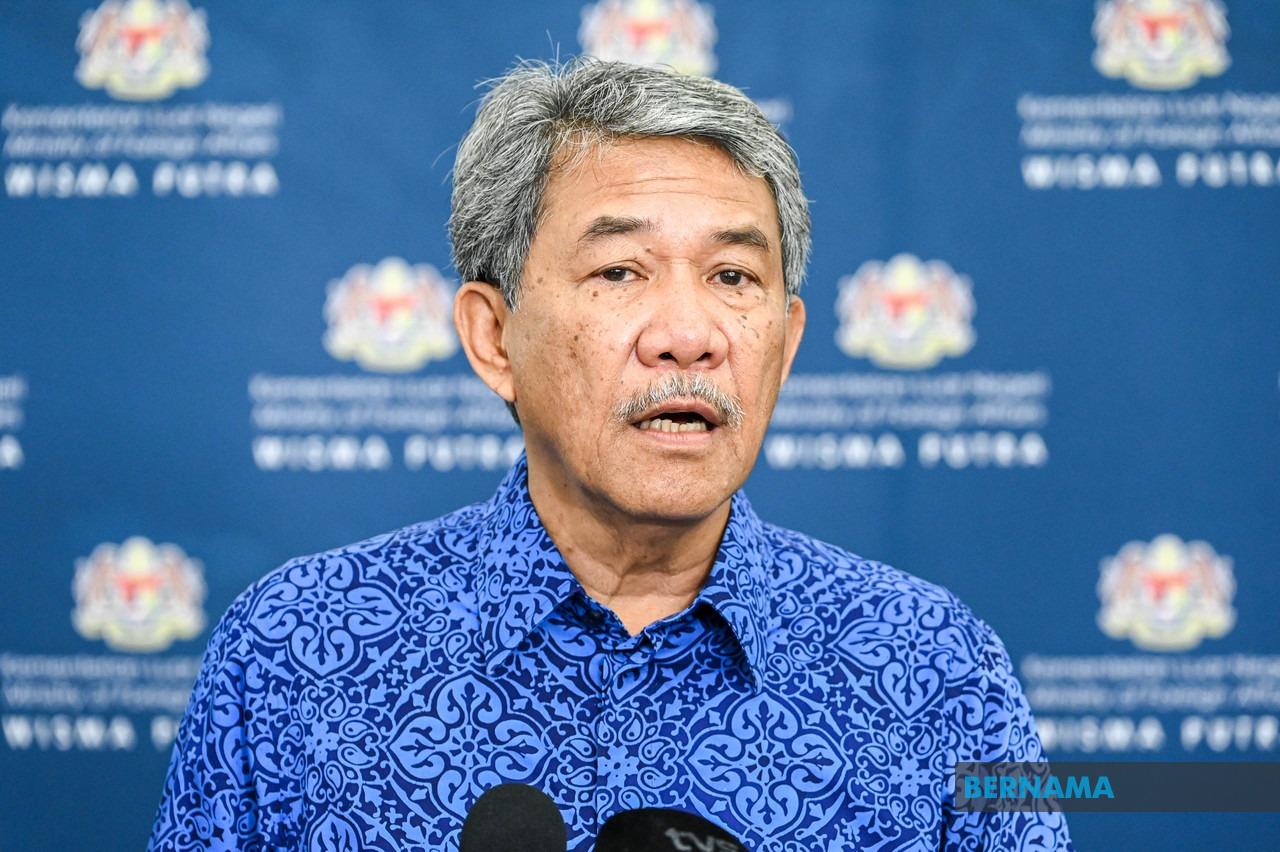
Malaysia's Foreign Minister Datuk Seri Mohamad Hasan has underscored the critical importance of maintaining ASEAN centrality as the regional bloc navigates an increasingly fractured global landscape dominated by major power competition and the erosion of traditional multilateral frameworks. Speaking at the 59th ASEAN Day celebration in Putrajaya on Monday, he characterised the current international environment as marked by unprecedented fragmentation, featuring intense geopolitical rivalries between major powers, mounting economic competition for technological dominance, and a visible weakening of the rules-based multilateral systems that have long underpinned global stability.
The minister's remarks come at a pivotal moment for Southeast Asia, a region sitting at the intersection of competing interests from the United States, China, India, and other major actors seeking to expand their influence. Mohamad framed ASEAN centrality not as an entitlement but as a privilege requiring constant vigilance and strategic clarity to preserve. This distinction is significant for Malaysian policymakers and the broader regional community, as it acknowledges that ASEAN's ability to maintain autonomy and chart its own course depends entirely on the collective commitment of member states and their capacity to present a unified front when dealing with external powers.
The foreign minister's emphasis on unity reflects genuine anxieties within ASEAN capitals about internal divisions undermining the bloc's negotiating leverage at a time when global circumstances demand stronger, not weaker, regional cohesion. He stressed that individual member states cannot afford to allow parochial interests or bilateral disputes to fracture ASEAN's collective position, warning that national prosperity is inextricably linked to regional stability and shared progress. This message carries particular resonance for Malaysia, which relies heavily on stable sea lanes for trade, multilateral frameworks for economic integration, and regional consensus to protect its interests vis-à-vis larger powers.
Central to Mohamad's vision is the notion that ASEAN must evolve from a passive observer of global dynamics into an active shaper of international norms and rules. He called for ASEAN to engage with external partners as equals rather than subordinates, a formulation that addresses longstanding regional sensitivities about power imbalances in bilateral relationships. This positioning is particularly significant for smaller Southeast Asian nations that fear being pressured into exclusive alliances or alignments that contradict ASEAN's foundational principle of non-alignment and equidistance between major powers.
The minister identified the digital economy as a crucial engine for ASEAN's next phase of growth, signalling the bloc's determination to harness technological transformation as a means of enhancing collective prosperity and reducing economic disparities among members. He highlighted the ASEAN Digital Economy Framework Agreement as a key initiative, alongside efforts to modernise trade arrangements with major partners including China, India, and South Korea. These initiatives underscore recognition within ASEAN leadership that economic integration and digital connectivity are now as vital to regional relevance as traditional security arrangements.
Sustainability has emerged as another strategic imperative in ASEAN's economic planning, with Mohamad emphasizing that environmental considerations must be embedded into the bloc's development agenda rather than treated as peripheral concerns. The acceleration of the ASEAN Power Grid initiative exemplifies this commitment, combining energy security objectives with climate transition goals and investment attraction. For Malaysia, which possesses both significant renewable energy potential and regional infrastructure expertise, such initiatives present opportunities for commercial engagement alongside environmental stewardship.
The challenge of balancing regional cohesion with individual member interests remains formidable. ASEAN's membership spans countries with vastly different economic capabilities, political systems, and strategic orientations, from developed city-state Singapore to developing nations like Laos and Cambodia. Mohamad's call for collective action implicitly acknowledges the difficulty of achieving consensus on issues where member states hold divergent views, whether concerning maritime disputes, trade policies, or relationships with major powers.
The reference to ASEAN's expansion from five founding members in 1967 to eleven current members, including Timor-Leste's recent admission last year, underscores the bloc's commitment to inclusive regionalism. However, this enlargement has also made decision-making more complex, as the addition of new members with their own strategic priorities and concerns has widened the range of interests requiring accommodation. The 2026 ASEAN chair theme of "Navigating Our Future Together" selected by the Philippines reflects awareness of these integration challenges.
For Malaysia specifically, ASEAN centrality remains foundational to national strategy. As a mid-sized regional power without the economic heft of Singapore or the geographic scale of Indonesia, Malaysia's influence depends significantly on its ability to operate within a robust regional framework that constrains larger actors from dominating Southeast Asian affairs. The foreign minister's insistence that ASEAN must punch above its weight by broadening global partnerships directly serves Malaysian interests in maintaining access to diverse markets and strategic allies.
The geopolitical context underscoring Mohamad's remarks is unmistakable. With US-China strategic competition intensifying, the European Union reassessing its Indo-Pacific engagement, and India seeking greater regional influence, ASEAN faces constant pressure from major powers to take sides in broader systemic conflicts. The minister's emphasis on ASEAN as a "voice of reason" and commitment to dialogue and diplomacy is essentially a plea for the bloc to resist such pressures and preserve the space for manoeuvre that has historically allowed Southeast Asia to benefit from multiple partnerships without sacrificing autonomy.
Looking forward, the success of ASEAN centrality will depend on whether member states can translate rhetorical commitment into concrete cooperation on pressing regional challenges. These range from maritime security and terrorism to pandemic preparedness and climate adaptation. The digital economy and renewable energy initiatives represent tangible areas where collective action can generate mutual benefits, potentially strengthening the bonds that hold ASEAN together while advancing genuine development goals.
Ultimately, Mohamad's message reflects the view from Putrajaya and other ASEAN capitals that the region's best defense against being pulled into great power conflicts is maintaining internal solidarity and demonstrating that Southeast Asia can contribute positively to global stability through multilateralism, dialogue, and development cooperation. Whether ASEAN can sustain this compass course amid intensifying external pressures will significantly shape not just Southeast Asian futures, but the trajectory of the entire Indo-Pacific region.

