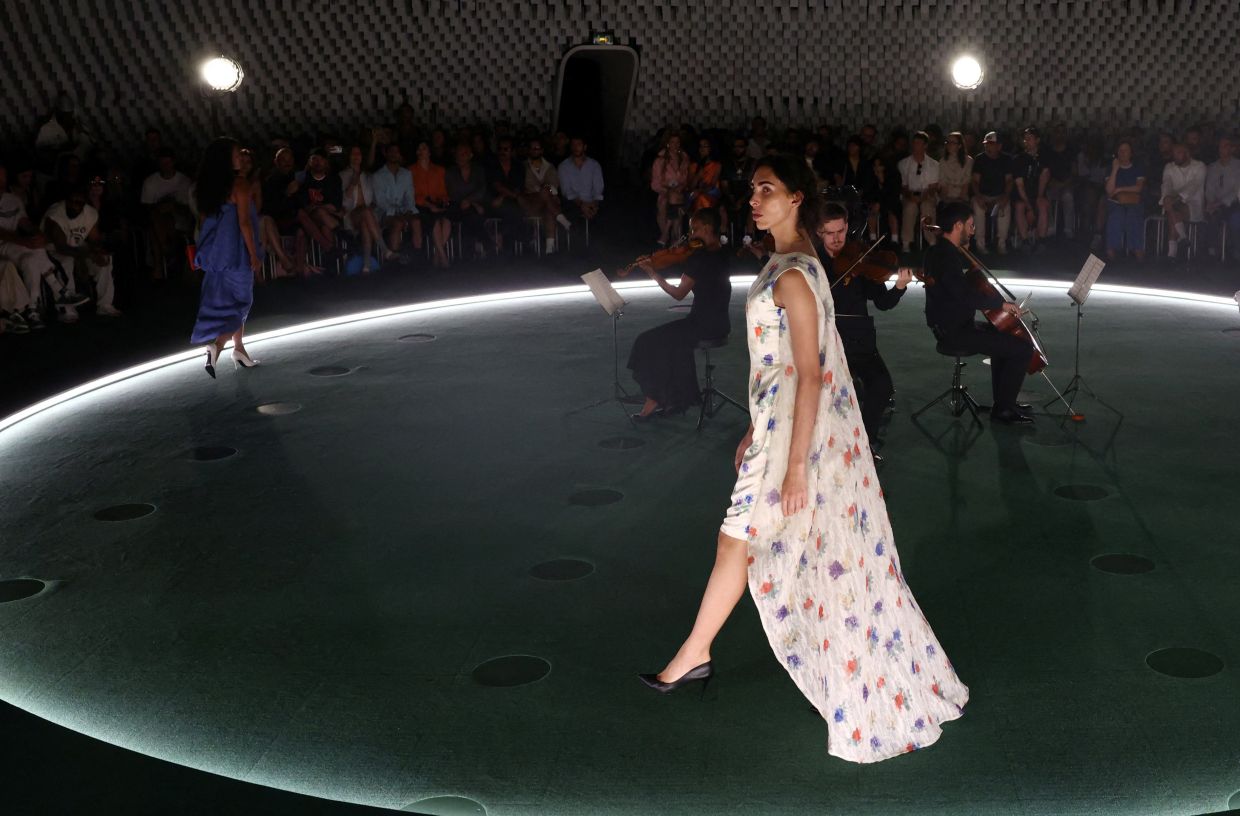
The fashion world is experiencing a pronounced shift toward sleeveless clothing, a development that extends far beyond aesthetic preference into questions of identity, ageing, and cultural acceptance. Data from Cognitive Market Research reveals the scale of this transformation: the global sleeveless market stood at US$24.36 billion in 2021 and is expected to balloon to US$51.39 billion by 2033, a trajectory that reflects substantial changes in how clothing is designed and consumed worldwide. More immediate signs of momentum appear in seasonal collections, where fashion search engine Tagwalk documented a 133% surge in sleeveless designs featured in Spring 2026 collections compared to the previous year, suggesting momentum that has attracted even established designers to recalibrate their offerings significantly.
Multiple forces are driving this transformation across the industry and consumer behaviour. Climate change has emerged as an obvious accelerant, with rising global temperatures naturally pushing consumers toward less restrictive and lighter garments that offer greater comfort during increasingly sweltering seasons. Simultaneously, the prominence of fitness culture has reshaped body ideals and self-presentation, particularly among younger demographics who view toned arms as markers of health and discipline rather than masculine signifiers. Beyond these practical considerations lies a more profound shift in societal attitudes toward gender expression and bodily autonomy, where conventional restrictions on how women present themselves have become subject to meaningful challenge and revision.
The visibility of sleeveless fashion has become inescapable in contemporary media environments. Television newsrooms now routinely feature female anchors in sleeveless dresses, normalising a presentation style that would have been considered unprofessional or inappropriate merely a decade ago. Designer Willy Chavarria, who prominently featured sleeveless dresses during Paris Fashion Week presentations, observed that sleeveless pieces have substantially outperformed their sleeved counterparts commercially across recent seasons, indicating that this represents not a fleeting trend but a persistent reorientation of market preferences and cultural acceptance.
Yet the rise of sleeveless fashion has exposed a complicated emotional landscape, particularly for women navigating changing norms around body exposure and age visibility. Arms occupy an unusual position in contemporary body consciousness. While mainstream discussions celebrate body positivity and self-acceptance, arms—especially upper arms—remain largely absent from these conversations, their significance overlooked despite their prominent visibility in daily life and interaction. The physical realities of ageing affect arms distinctly, in ways that differ from faces, which can be modified through cosmetic intervention. The neck, hands, and arms together function as what dermatologists might call chronological markers, revealing authentic age in ways that facial procedures cannot entirely disguise or conceal.
The specific anxieties around exposed arms carry historical weight, particularly for women. Earlier professional norms explicitly discouraged women from displaying their arms, especially in workplace contexts where such exposure was coded as inappropriate or distracting. This gendered policing of female presentation reflects deeper cultural assumptions about female bodies and their inherent provocativeness. The political dimension of this restriction became impossible to ignore during the controversy surrounding former First Lady Michelle Obama's preference for sleeveless dresses, which attracted surprising and disproportionate criticism. The racialised and gendered nature of this backlash—scrutinising her choice in ways rarely applied to male public figures—illuminated how sleevelessness became entangled with questions of respectability, professionalism, and female power.
Institutional change has been glacially slow despite shifting cultural attitudes. The United States House of Representatives only reformed its dress code in 2017, following a determined "sleeveless protest" by congresswomen, while the Senate required an additional two years before implementing equivalent changes. These delays underscore how contemporary professional institutions have historically enforced restrictions on female presentation that lacked equivalent application to male colleagues, creating structural barriers to bodily autonomy and authentic self-expression in spaces where women's authority should not be compromised by clothing choices.
Designer Antonin Tron of Balmain articulated a philosophical position that reframes the conversation around sleevelessness and ageing. He explicitly rejected the cultural narrative suggesting that female sexuality and self-presentation inherently diminish with age, instead arguing that ageing bodies possess their own authentic beauty worthy of celebration and visibility. This perspective offers a counterweight to ingrained assumptions about female bodies requiring concealment as they age, instead suggesting that diversity in body presentation—including evidence of time and lived experience—enriches rather than diminishes aesthetic and cultural conversations.
For those uncertain about embracing sleeveless styles, Tron proposed practical strategies that acknowledge legitimate styling considerations without requiring wholesale rejection of the trend. Beginning with supplementary accessories provides one approach: a striking necklace or bangles can direct visual attention toward elements the wearer feels confident emphasising, functioning as a psychological anchor while building comfort with the overall aesthetic. This technique works within existing preferences rather than demanding their abandonment, offering a graduated pathway toward greater bodily confidence rather than imposing sudden transformation.
Intermediate design options exist between fully sleeveless and conventionally sleeved styles, expanding the available possibilities for those hesitant about complete exposure. Cold-shoulder designs and open-arm styles provide partial coverage while maintaining some of the visual lightness and contemporary appeal of sleeveless silhouettes. Cap sleeves offer another compromise approach, while Chavarria suggested layering strategies—wearing sheer or transparent tops over sleeveless pieces creates visual texture and coverage without entirely sacrificing the modernity the trend represents. The specific construction of armholes also matters substantially: a high-cut armhole provides better proportions and prevents unsightly gapping, ensuring that chosen garments flatter rather than compromise the wearer's appearance.
Beyond styling calculations lies a more expansive consideration about what arms represent in human experience and identity. Arms constitute the instruments through which people accomplish their daily lives—they deliver professional presentations, support and carry children, manipulate objects essential to work and home life, embrace loved ones, and literally construct the material conditions of existence. This functional and emotional significance suggests that revealing arms might constitute not mere fashion compliance but authentic representation of how women actually inhabit and move through the world. Reconsidering arms as worthy of visibility—scarred, marked, strong, lined with age or marked by work—becomes an act of self-honesty rather than vanity or capitulation to trend. The sleeveless movement, when understood in this broader context, represents not superficial fashion evolution but cultural permission for women to present themselves as they authentically are.

