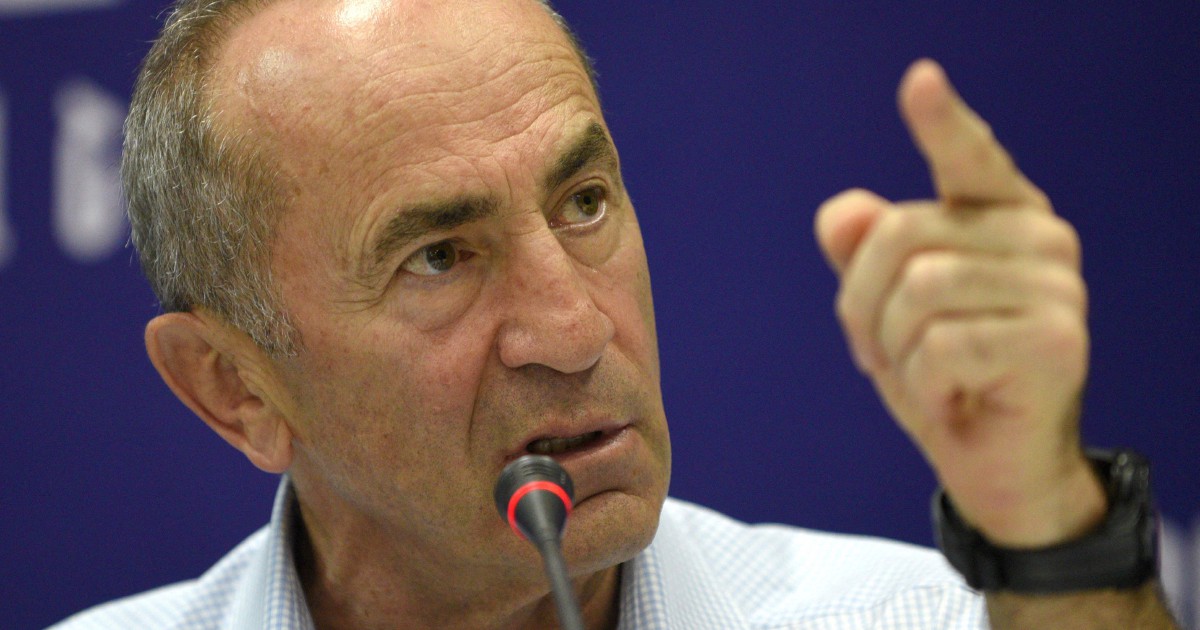
State prosecutors in Armenia have arrested Robert Kocharyan, the country's former head of state and a significant opposition voice, accusing him of multiple corruption-related transgressions committed while he held high office. The detention, which took place on Tuesday, represents a significant moment in Armenian politics, bringing formal charges against one of the nation's most prominent political figures and underscoring intensifying scrutiny of executive conduct during his administration.
Kocharyan's arrest marks an escalation in investigations into potential misconduct during his presidency, a period that saw substantial political and economic developments in this South Caucasus nation. The formal charges filed by prosecutors indicate that investigators have accumulated evidence they believe demonstrates systematic wrongdoing across multiple domains of governance. This action reflects broader regional and international pressure on former post-Soviet leaders to account for alleged financial improprieties and abuse of state resources.
The detention of such a prominent political figure carries deep implications for Armenia's domestic political landscape. Kocharyan has maintained a powerful presence in opposition circles, commanding significant support among certain voter constituencies. His arrest therefore divides public opinion, with supporters viewing it as politically motivated persecution and critics seeing it as overdue accountability. This polarization reflects the complex and often contentious nature of post-conflict Armenian politics, where historical grievances, competing visions for national development, and questions of institutional legitimacy remain unresolved.
Armenian prosecutors have positioned these corruption allegations within the broader framework of state accountability mechanisms. The specific charges, while not detailed comprehensively in initial reports, centre on alleged misappropriation of public resources and improper exercise of presidential authority during Kocharyan's tenure. Establishing culpability in such cases typically requires demonstrating clear evidence of intentional wrongdoing, distinguishing between legitimate governmental decision-making and prosecutable corruption—a challenging legal and political undertaking.
The timing of Kocharyan's detention occurs against a backdrop of significant turbulence in Armenian governance. The country has experienced considerable institutional instability following recent military conflicts with Azerbaijan, constitutional disputes, and shifting alliances within the political establishment. Against this backdrop, judicial proceedings against former leaders serve multiple functions: they may genuinely advance accountability, or they may represent efforts to consolidate power among incumbent factions, or they may constitute some combination of both motivations.
For regional observers and international bodies monitoring rule-of-law developments in the South Caucasus, Kocharyan's case exemplifies the ongoing challenges facing post-Soviet states in constructing independent judiciaries insulated from political manipulation. The credibility of these proceedings will substantially depend on whether prosecution proceeds according to transparent legal standards, whether evidence is presented openly, and whether the defendant receives procedural protections consistent with international legal norms. Sceptics, particularly in opposition circles, worry that the judiciary may function as an instrument of political advantage rather than impartial justice.
The broader context of anti-corruption efforts across the former Soviet space suggests mixed records regarding genuine reform. While numerous post-Soviet states have launched high-profile prosecutions of former leaders, observers debate whether such actions reflect authentic institutional development or simply reflect cyclical patterns wherein victorious political coalitions pursue their predecessors. Armenia's approach will inform assessments of whether the country represents an exception to this troubling pattern or another iteration of it.
International attention to Kocharyan's case extends beyond Armenia's borders. Western governments and regional powers maintain varying interests in Armenian governance, and they monitor how justice systems handle high-profile political figures. The prosecution's conduct, the defence team's capabilities, and appellate procedures will collectively signal whether Armenian institutions can manage complex political cases through genuinely impartial processes. Such perceptions influence international confidence in Armenia's governance trajectory.
For ordinary Armenians, Kocharyan's detention raises fundamental questions about their country's political future. Will institutional development proceed toward greater accountability and rule-of-law protections? Or will political competition continue to manifest through selective prosecution of opponents? These concerns transcend the immediate case, affecting public confidence in institutions, attitudes toward political participation, and broader social cohesion. Citizens increasingly demand governments that operate transparently and apply laws consistently, rather than weaponizing prosecutorial power against rivals.
The prosecution phase ahead will prove critical in determining both Kocharyan's personal fate and the trajectory of Armenian institutional development. Prosecutors must present compelling evidence of wrongdoing convincingly, whilst Kocharyan's defence will challenge allegations and procedural fairness. Independent observers will scrutinize whether trials proceed according to established legal standards, whether media coverage permits informed public discourse, and whether political pressure influences judicial decision-making—factors that collectively determine whether prosecutions advance genuine accountability or merely represent episodes in Armenia's ongoing political struggles.

