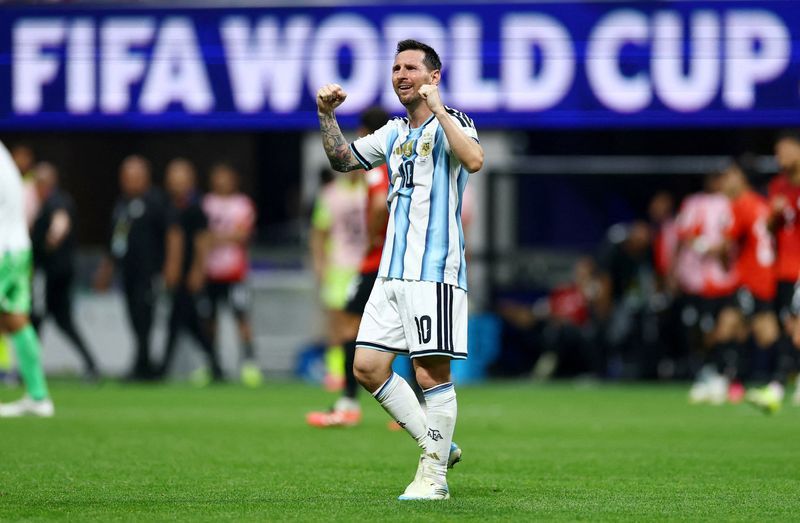
Argentina's path through the knockout rounds has tested even the patience of the defending champions' most devoted supporters, yet Lionel Scaloni's squad continues to advance through sheer determination and late-game heroics. Few analysts would have anticipated that the side that dominated their group stage could require extra time against Cape Verde before facing another near-catastrophic collapse against Egypt. Tuesday's stunning 3-2 victory in Atlanta, where Lionel Messi orchestrated a comeback from two goals down with eleven minutes remaining, has become the defining narrative of their tournament run so far. The attention now turns to Saturday's quarter-final encounter against Switzerland in Kansas City, where Argentina will attempt to channel their hard-won momentum into another progression.
The manner of Argentina's group stage campaign provided little indication of the turbulence awaiting in elimination football. Scaloni's men swept through their assignments against Algeria, Austria and Jordan with the kind of clinical efficiency expected of continental champions. That dominance evaporated upon entering the knockout bracket, revealing defensive frailties that could prove catastrophic against more accomplished opponents. In the space of two matches, Argentina conceded four goals—a stark contrast to their solitary breach against Jordan, a match where Scaloni deliberately rotated his lineup and prioritised recovery over peak performance.
Yet the very adversity that exposed these vulnerabilities may ultimately strengthen Argentina's championship credentials. Former striker Carlos Tevez, analysing the Egypt match for ESPN Argentina, emphasised the psychological dimension often overlooked in tactical assessments: the unwavering refusal to accept defeat that has become synonymous with this particular squad. Messi himself articulated this quality in post-match comments, acknowledging the strain of successive close encounters while insisting that collective belief remained unshaken throughout. His midfield partner Leandro Paredes reinforced this theme, describing the sensation of never feeling entirely out of contention despite Egypt's two-goal advantage. This mental fortitude, whether forged through experience or squad chemistry, represents an intangible asset that no amount of defensive organisation can manufacture.
Scaloni's assessment of the Egypt performance offered more nuance than the final scoreline suggested. Rather than cataloguing defensive failures, the coach highlighted Argentina's attacking prowess and chance creation, particularly in the opening period when Messi's penalty miss represented a crucial missed opportunity. This framing—focusing on what Argentina did well rather than what Egypt exploited—reflects a coach attempting to extract constructive lessons from a narrow escape. The vulnerabilities remain evident, yet they appear less systemic than symptomatic of matches where concentration wavered during critical periods.
Argentina's trajectory through this tournament parallels the cyclical nature of knockout competition itself. Teams rarely progress through elimination rounds with unmarked perfection; instead, resilience becomes the primary currency. The defending champions have demonstrated sufficient reserves of character and technical quality to overcome opponents who exposed weaknesses in their structure. Whether Scaloni's defensive adjustments adequately address the concerning statistic of four goals conceded in two matches remains uncertain, though the coaching staff's analytical approach suggests serious reflection is underway.
Switzerland represents an opponent of considerably different complexion than Cape Verde or Egypt. The Swiss have cultivated a legitimate World Cup tradition spanning decades, with players dispersed throughout Europe's most competitive leagues. Scaloni publicly acknowledged this challenge during his media engagement, recognising that Saturday's quarter-final demands a more complete performance than either previous knockout encounter. The Swiss combine technical soundness with organisational discipline, offering fewer obvious weaknesses for Argentina to exploit than their recent opponents presented.
The recovery period following Tuesday's match assumes heightened importance given the emotional and physical toll of comeback victories. Argentina's training session on Wednesday evening in Kansas City provided the first opportunity to decompress and refocus, with Scaloni presumably using the ensuing days to address both tactical refinements and mental preparation. The squad's demonstrated character suggests they will approach Switzerland with renewed focus, having proven they can recover from seemingly insurmountable positions.
Argentina's broader World Cup narrative continues to hinge on whether they can transform these narrow escapes into momentum-building victories. The tournament has revealed both exceptional moments—Messi's direction of play and individual brilliance—and concerning lapses in defensive concentration. Scaloni's challenge involves maintaining the attacking philosophy that generates his team's most dangerous moments while tightening the fragile defensive structure that has repeatedly placed them in precarious positions.
As Argentina prepares for Switzerland, the conversation within South American football circles will inevitably focus on whether the defending champions possess sufficient resilience to win a second consecutive World Cup title. Their passage through the knockout stage has been unconventional and occasionally harrowing, yet they remain undefeated. The quarter-final against Switzerland will provide a clearer indication of whether Argentina's character and quality can translate into sustained success or whether their earlier vulnerabilities presage tournament elimination.

