As Argentina prepared for its World Cup semi-final against England in the summer of 2022, the country's war veterans stepped forward with an unusual plea: set aside the decades-old territorial dispute and let the football speak for itself. The April 2 War Veterans Federation issued a statement on Monday urging fans and the broader public to resist channelling nationalist grievances through the pitch, a recognition that the match carried symbolic weight extending far beyond 90 minutes of sport.
The federation's intervention reflected deep sensitivities surrounding the Falkland Islands, known to Argentines as the Malvinas. Four decades earlier, in 1982, Argentina and Britain had fought a brutal 74-day conflict that claimed 649 Argentine military lives and 255 British combatants. For many Argentines, the islands remained a national wound, a territorial claim supported by decades of UN resolutions and enshrined in the country's constitution. Yet the veterans' statement demonstrated that even those most directly affected by that war understood the dangers of conflating sporting passion with geopolitical grievance.
The federation's message carried particular weight because it came from those with unquestionable legitimacy to speak about the Falklands. These were men who had fought and survived the conflict, who had lost comrades and seen the human cost of armed struggle. Their declaration that the World Cup semi-final was "not an armed rematch nor historical compensation" carried a solemnity that resonated beyond typical sporting commentary. Instead of framing the match as another chapter in the Falklands dispute, they urged supporters to honour fallen soldiers through respect and dignity rather than through nationalist fervour directed at an opponent.
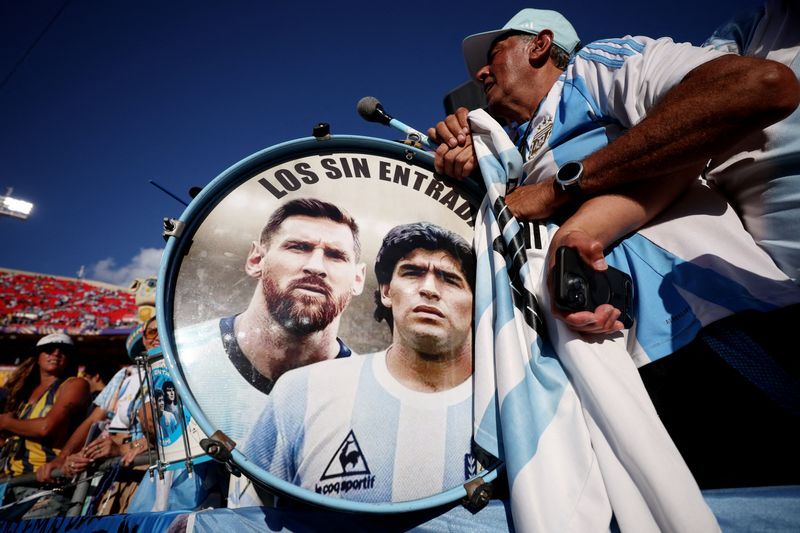
Yet the challenge facing Argentine supporters was real. Throughout the tournament, fans had been singing chants that intertwined football, national pride, and historical references—melding memories of Diego Maradona's legendary 1986 performance against England with contemporary hopes that Lionel Messi would finally claim a second World Cup title to cement his legacy. The boundary between sporting enthusiasm and political expression had grown decidedly porous, as often happens when football becomes a vehicle for national identity.
Britain's position on the islands had remained unwavering. London maintained military sovereignty over the territory and kept a permanent garrison there, treating the question as settled. Argentina, by contrast, had pursued its claim through every available diplomatic channel: the United Nations, regional organisations, and countless bilateral conversations stretching back four decades. The federation's statement implicitly acknowledged this reality, noting that "sovereignty is defended in international forums through diplomacy, historical truth and the peaceful, non-negotiable claim enshrined in our national constitution." In other words, football stadiums were not the appropriate battlefield.
For Malaysian and Southeast Asian observers, the Argentine veterans' statement offered relevant lessons about managing historical grievances within modern sporting contexts. The region has experienced its own territorial disputes—from the South China Sea to maritime boundaries—where sporting events occasionally become flashpoints for nationalist sentiment. The appeal for separating passion from politics demonstrated a mature approach to managing competing identities: one could maintain legitimate sovereignty claims while refusing to weaponise sport as a political platform.
Argentina's national team management largely aligned with the veterans' position. Manager Lionel Scaloni struck a notably conciliatory tone in the buildup to the semi-final, consistently emphasising that football would be the sole focus when the teams met in Atlanta on Wednesday. He resisted narratives portraying the match as anything other than a World Cup semi-final between two accomplished nations. This represented a deliberate choice to centre the sporting narrative and deny space for historical grievance.
England's camp echoed the same sentiment. Goalkeeper Jordan Pickford told reporters that the fixture was simply "just a game of football," a straightforward statement that might have seemed obvious but carried diplomatic significance given the historical context. "It's two proud nations. The football will do its talking," Pickford said, articulating the philosophy that sporting excellence should determine outcomes rather than extra-footballing narratives.
The two nations shared one of international football's most storied and contentious rivalries, marked by several iconic World Cup encounters. The 1986 quarter-final remained permanently etched in the rivalry's memory—particularly Maradona's controversial "Hand of God" goal that Argentina had celebrated and England had contested for decades. That match demonstrated how single moments in sport could crystallise national sentiment and generate lasting diplomatic friction. The war veterans' 2022 statement can be read partly as a response to such history, an effort to ensure that the upcoming semi-final would not replicate that pattern.
Ultimately, the federation's appeal reflected an understanding that sporting contests between nations with genuine historical grievances require careful management. While sovereignty claims remained legitimate and non-negotiable, channelling them through World Cup semi-finals risked trivialising both the sport and the serious political issues at stake. By urging supporters to separate their love of football from their commitment to Argentina's territorial position, the war veterans offered a model for patriotism that acknowledged multiple, sometimes competing loyalties—love for country expressed through sporting passion rather than political weaponisation. As the match approached, both sets of fans would ultimately decide whether that plea would resonate.

