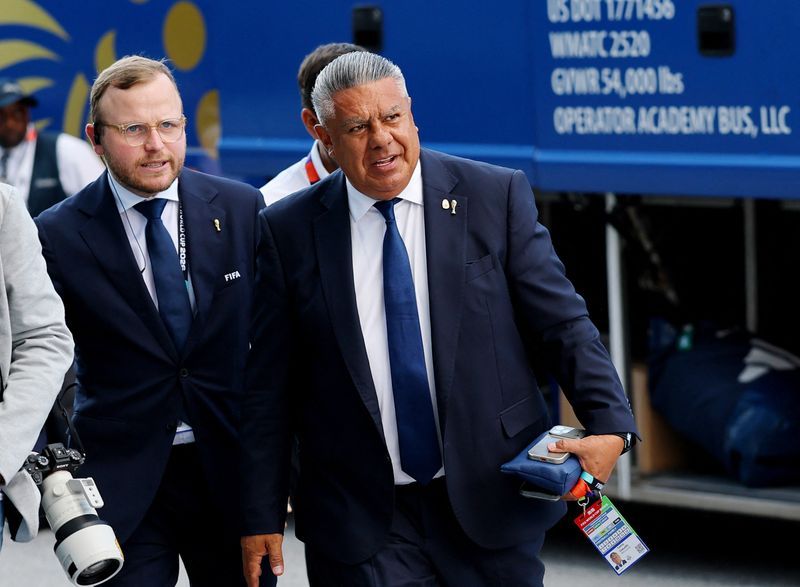
Argentina's football association moved quickly on Wednesday to distance its leadership from mounting scrutiny over financial dealings, issuing a categorical denial that president Claudio Tapia or treasurer Pablo Toviggino had been compelled to provide testimony to United States authorities. The AFA statement, however, contained a significant caveat: the organization confirmed that an unnamed third party had indeed been summoned to appear before a U.S. grand jury with potential knowledge of matters involving various individuals connected to the football body.
The clarification follows reports in Argentine media that suggested far more direct involvement of the association's top officials in federal proceedings. News outlets including Infobae had reported that FBI agents encountered both Tapia and Toviggino at New York's John F. Kennedy Airport on Monday morning, detaining them briefly as the Argentine national squad prepared to depart on a charter aircraft following the World Cup final. According to witnesses present at the airport, the two officials underwent approximately thirty minutes of questioning aboard a bus positioned on the tarmac, with agents also allegedly requesting access to Tapia's mobile devices.
The investigation emerging from the U.S. authorities centers on a portfolio of commercial arrangements connected to the AFA that purportedly exceeds $300 million in value. This federal scrutiny represents part of a broader examination into the financial structures underpinning Argentine football, a sector that has drawn regulatory attention throughout the region. The timing of the inquiry is particularly sensitive given the heightened international profile of Argentine football following the nation's December victory in the World Cup.
For Malaysian readers and Southeast Asian observers of global football governance, this episode underscores the complex intersection between sporting institutions and financial oversight. The revelation that federal authorities are examining contracts valued at such substantial sums highlights how football's commercial apparatus—ticket sales, sponsorships, broadcast rights, and merchandise arrangements—can become subject to serious criminal investigation when irregularities are suspected. The AFA incident demonstrates that even the governing bodies of successful national teams operate within jurisdictions where financial transparency and accountability remain paramount concerns.
The AFA's formal statement attempted to establish clear boundaries around what had and had not occurred. The association emphasized that neither Tapia nor Toviggino had been subjected to any summons, that no personal legal measures had been imposed upon them, and crucially, that no electronic devices belonging to either official had been confiscated or seized. The statement further stressed that neither individual faced any procedural obligations arising from the U.S. judicial process. By characterizing the media reports as "absolutely false" and "completely untrue," the association sought to reassert control over the narrative and protect the reputational standing of its leadership during a period when Argentine football commands significant global attention.
Yet the disclosure that an unidentified third party had received a grand jury subpoena creates ambiguity about the broader scope and targets of the federal investigation. In U.S. legal procedure, grand jury summonses are typically issued to witnesses or parties with potential knowledge of matters under investigation, rather than to primary subjects of prosecution. The mystery surrounding the third party's identity—whether a contractor, consultant, intermediary, or other associate of the AFA—suggests that investigators possess additional leads and evidence that may not yet be public.
Argentine football has confronted financial irregularities before. The announcement that this investigation is linked to wider scrutiny initiated by December raids conducted under a money-laundering probe indicates that U.S. authorities are operating on the assumption that funds may have been diverted through illicit channels or that contractual arrangements masked improper transactions. For regional sports governance, the case illustrates how interconnected global financial networks mean that even South American football associations face potential exposure to North American federal jurisdiction.
The sequence of events at JFK Airport remains striking. The detention of two senior officials of the AFA, the questioning aboard an airport tarmac, and the interest in electronic devices all suggest a coordinated law enforcement operation. While the AFA maintains that this amounted to routine questioning rather than formal legal compulsion, the public perception of such encounters can inflict lasting damage on institutional credibility. For Southeast Asian football administrators and governing bodies, the incident serves as a cautionary tale about the importance of maintaining meticulous records of commercial transactions and ensuring contractual arrangements withstand external audit.
The investigation's focus on more than $300 million in AFA-linked commercial contracts raises substantive questions about oversight mechanisms. How thoroughly have these arrangements been vetted by internal compliance functions? Have independent auditors examined the commercial terms and valuations? Did proper competitive bidding processes govern the award of major contracts? These questions will likely intensify as the U.S. investigation proceeds and if additional documentation emerges.
For Argentina's football body, the challenge ahead involves balancing transparency with the protection of legitimate business interests. The association's forceful denial suggests that leadership believes it can distinguish between ordinary business operations and any alleged impropriety. However, the persistence of the federal investigation and the involvement of grand jury proceedings indicate that American authorities possess grounds to believe that further inquiry is warranted. Whether additional revelations emerge regarding the summoned third party or the substance of the commercial arrangements under investigation remains uncertain.
From a regional perspective, this episode demonstrates how football's extraordinary commercial value creates incentives for irregular conduct and simultaneously attracts regulatory attention. Southeast Asian football associations managing increasingly valuable broadcast and sponsorship contracts should treat the Argentina situation as instructive. Robust compliance frameworks, transparent procurement processes, and proactive engagement with audit requirements protect institutional integrity and reduce exposure to the kind of federal investigation now confronting the AFA.

