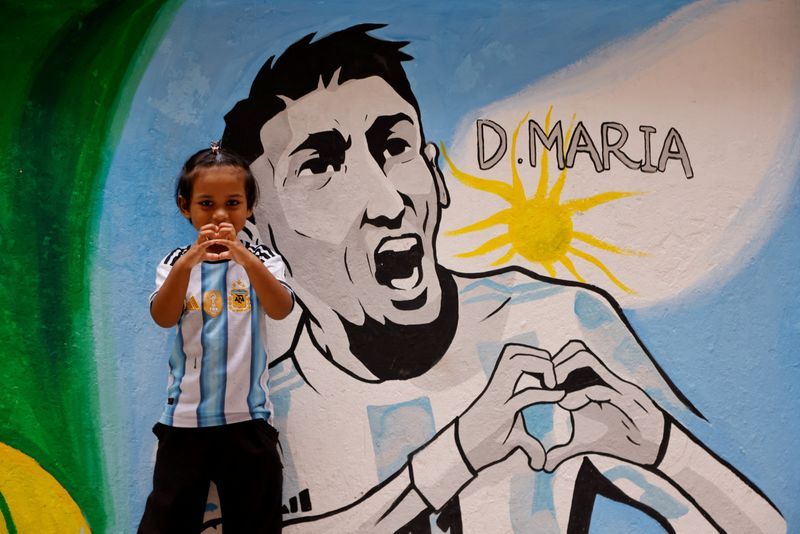
The football world circles back to unfinished narratives this Saturday when Argentina and Switzerland collide in the World Cup quarter-finals, reconnecting two nations whose paths converged memorably in Brazil 12 years ago. That encounter, decided by Angel Di Maria's extra-time strike in Sao Paulo, sent Lionel Messi's side advancing while Switzerland departed in familiar disappointment. Now, in a contest brimming with historical resonance, the two teams meet again at a tournament that has fundamentally reshaped both their trajectories since their last knockout duel.
The context surrounding these two sides could scarcely be more different from 2014. Back then, Argentina carried the weight of national expectation, desperate to end a World Cup drought extending nearly three decades, with Messi at his physical and creative zenith attempting to shoulder the burden of delivering glory. Switzerland, by contrast, were a tournament fixture but remained perpetual quarter-final dreamers, never having broken through to that stage since 1954. Their football was characterised by tactical solidity and defensive rigour, virtues that had earned them respect if not silverware.
Argentina now arrive as reigning world champions following their triumphant campaign in Qatar 2022, capping a tournament run that also saw them lose in the 2014 final. The defending title holders have demonstrated remarkable resilience in this competition, exemplified by their stunning comeback against Egypt in the previous round. After falling two goals behind with just 11 minutes of regulation time remaining, Messi orchestrated an improbable revival that secured a 3-2 victory. The captain's performance underscored his enduring capacity to influence matches despite being 39 years old and no longer possessing the explosive athleticism of his prime years. Yet the tournament narrative continues to gravitate toward him, a gravitational pull that speaks to his continued importance to Argentine football ambitions.
Messi himself characterised the team's mental fortitude following the Egyptian comeback, acknowledging the emotional toll while stressing the collective refusal to surrender. Such resilience has become Argentina's hallmark throughout this campaign, with their coach Lionel Scaloni cultivating a squad mentality that compensates for individual moments of vulnerability. Scaloni expects to maintain substantial continuity in selection for the Swiss encounter, having found a formula that withstands pressure despite occasional lapses in defensive organisation.
Switzerland's journey to this juncture represents something altogether different for the Alpine nation. Murat Yakin's team achieved a historic breakthrough by reaching the quarter-finals for the first time in seven decades, accomplishing the feat through a penalty shootout victory over Colombia following a goalless draw. This achievement carries profound significance for Swiss football, marking an ascension beyond their customary tournament limitations. The team has evolved beyond its traditional profile as a defensive fortress, developing greater attacking ambition while retaining the organisational discipline that has long characterised their play. Yakin's tactical philosophy appears to embrace contemporary football's demands for balanced, progressive football rather than purely reactive defensive strategies.
Personal continuity between the sides extends to just three individuals from the 2014 encounter. Messi remains the obvious constant, but Swiss captain Granit Xhaka and defender Ricardo Rodriguez provide through-lines connecting the two competitions. Xhaka, now 33, approached the prospect with measured respect for his opponent, framing the opportunity to contest against Messi as a professional privilege while emphasising Argentina's collective strength. Rodriguez similarly acknowledged the formidable challenge ahead, identifying Argentina's overall quality while singling out Messi as the decisive individual factor.
Switzerland's preparations have been complicated by injury concerns, with midfielder Johan Manzambi nursing a knee injury that limited his availability against Colombia. His creativity and attacking contributions were notably absent during that Colombian encounter, suggesting his participation could materially alter the tactical dynamics. The team's capacity to threaten Argentina's defensive organisation may depend substantially on Manzambi's fitness and involvement.
Yakin has detected potential vulnerability in Argentina's recent performances, particularly during matches against Cape Verde and Egypt, suggesting the defending champions are susceptible to tactical pressure and organised defensive schemes. This assessment represents a meaningful strategic departure from the traditional perception of Argentina as an assembled superpower simply overwhelming opponents through individual brilliance. The Swiss coach framed the coming contest as tactically intriguing, suggesting he has identified specific approaches that could trouble his opponents.
Argentina's coach Scaloni acknowledged the competitive threat posed by Switzerland, characterising them as possessing an exceptional World Cup tradition and outstanding personnel. The Argentine tactician expects another demanding examination despite his team's status as defending champions. Such cautious respect reflects the genuine difficulty that tight, well-organised teams present to sides whose primary strength has historically flowed from individual skill and creative brilliance.
The geographical context of this encounter—taking place in North America rather than the traditional football heartlands—adds a neutral dimension to proceedings. Neither team enjoys the home-field advantage that might distort outcomes, making this a genuine test of tactical preparation and player execution. The Kansas City venue becomes neutral ground where Swiss ambition and Argentine experience will determine who progresses to the semi-finals.
For Swiss football, this represents more than simply advancing past Argentina. A quarter-final victory would validate Yakin's strategic philosophy and suggest that Swiss football has genuinely evolved beyond its historical limitations. The breakthrough to this stage represents already-achieved progress, yet advancement would crystallise a generational shift in Swiss competitive capacity. For Argentina, the challenge amounts to defending their championship status while managing the psychological weight of defending division against a determined opponent possessing nothing to lose.

