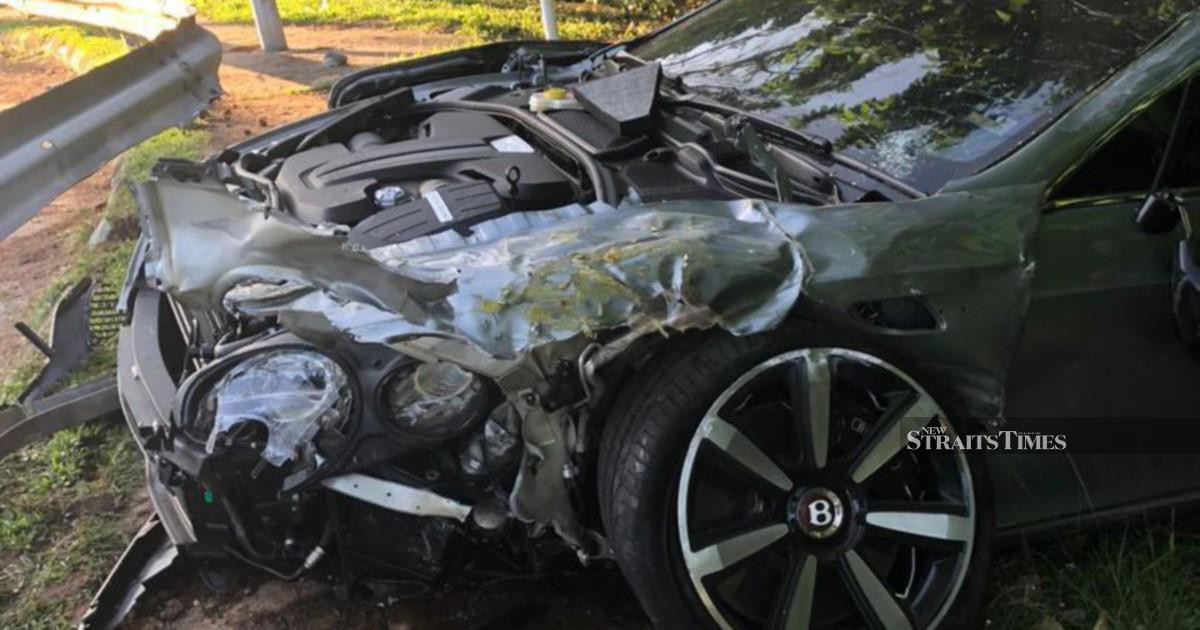
A landmark decision from Malaysia's Court of Appeal in Putrajaya has reaffirmed a lower court ruling that requires an insurance provider to compensate a businessman RM900,000 following damage to his luxury vehicle, ending a protracted legal dispute that spans over half a decade. The appellate bench upheld the original High Court determination, effectively rejecting arguments presented by the insurance company challenging its liability and the valuation of the claim submitted by the vehicle owner.
The case centres on a Bentley Continental GTS V6 MDS, a high-value luxury automobile whose repair costs or replacement value formed the basis of the compensation claim. Such disputes involving luxury vehicles have become increasingly complex in Malaysian courts, particularly when determining whether repair versus replacement constitutes the appropriate measure of damages. The six-year timeline between the accident and the appellate decision underscores the complexity and contested nature of the original claim, suggesting that both parties mounted rigorous defences regarding liability attribution, extent of damage assessment, and the appropriate quantum of compensation.
Insurance coverage disputes in Malaysia frequently hinge on interpreting policy terms, whether exclusions apply to the particular circumstances, and the proper methodology for calculating vehicle loss. The persistence of this case through multiple court levels indicates that fundamental disagreements existed regarding these factual and legal questions. The fact that the Court of Appeal found sufficient grounds to uphold the High Court's decision suggests that the lower court's reasoning withstood rigorous appellate scrutiny, providing important precedential weight for future similar disputes.
The RM900,000 quantum represents substantial compensation, reflecting both the inherent value of the damaged luxury vehicle and potentially additional losses incurred by the businessman during the period he was without the use of his Bentley. Luxury vehicle ownership in Malaysia carries particular insurance considerations, as parts sourcing, specialist repair facilities, and the limited number of technicians qualified to work on such vehicles can substantially inflate repair costs compared to more common automobiles. Insurance companies must therefore account for these practical realities when assessing claims involving high-end motor vehicles.
This decision carries implications for how Malaysian insurers approach claims management and settlement strategies involving expensive vehicles. The Court of Appeal's affirmation signals that courts will not lightly overturn well-reasoned High Court decisions on damage quantification, particularly where the evidence supports the valuation methodology employed by the vehicle owner. Insurers must therefore exercise caution in disputing damage assessments for luxury vehicles, as appellate intervention is unlikely unless the original finding was demonstrably unreasonable or based on flawed legal reasoning.
The prolonged nature of this dispute, stretching across six years from accident to final appellate decision, also highlights potential inefficiencies within Malaysia's civil litigation system when addressing insurance disagreements. While the legal process ultimately succeeded in providing a remedy, the extended timeframe would have created significant cash flow challenges for the businessman, who was unable to recover his full loss until the appellate judgment. This delay factor represents a hidden cost to claimants that extends beyond the monetary sum awarded.
For Malaysian consumers and business owners insuring luxury vehicles, this ruling provides reassurance that courts will enforce insurance contracts according to their terms and will not automatically side with insurers in contested damage valuations. The decision reinforces the principle that insurance companies bear the burden of substantiating any defences they raise against claims, and cannot simply reject claims by asserting that owner-provided damage estimates are excessive. The burden falls on the insurer to present credible, expert evidence demonstrating why the claimed amount exceeds reasonable compensation.
The case also underscores the importance of comprehensive documentation when filing insurance claims for vehicle damage, particularly involving luxury automobiles. Claimants who preserve detailed records, obtain multiple repair quotes, and engage qualified assessors strengthen their position considerably in disputes. The businessman in this case presumably had sufficient documentation and expert support to persuade the High Court judge of his claim's merit, a position he successfully maintained through the appellate process.
Moving forward, the decision will likely influence how insurers adjust their claims handling procedures for high-value vehicles. Those operating in the Malaysian market will need to ensure their assessment teams possess appropriate expertise in valuing luxury vehicles, and that any rejection or reduction of claimed amounts is supported by robust evidence. Conversely, the ruling may also encourage claimants involved in similar disputes to pursue their cases through the courts, as this decision demonstrates that judicial remedies can ultimately vindicate properly substantiated claims.
The broader context of this case reflects Malaysia's evolving jurisprudence on insurance contract disputes, where courts increasingly expect both parties to approach claims seriously and in good faith. The appellate affirmation suggests that the High Court's original analysis regarding the appropriate compensation amount for the Bentley's damage was neither controversial nor subject to legitimate dispute, representing the kind of straightforward damage assessment that should not require years of litigation. This implicit criticism of the insurance company's appeal strategy may prompt industry-wide reconsideration of defensive litigation approaches in clear-cut cases.

