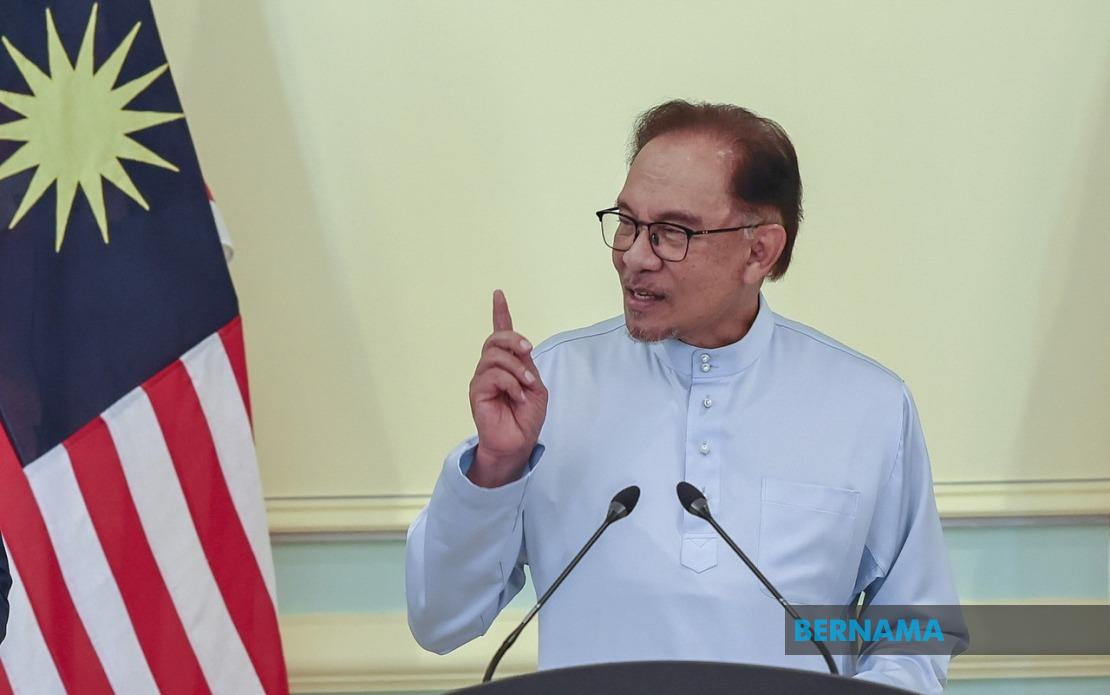
Prime Minister Datuk Seri Anwar Ibrahim's handling of the Gaza conflict represents a carefully calibrated diplomatic strategy that merits recognition for its principled foundation and practical execution, according to UPNM Honorary Professor Dr Mizan Aslam. The approach interweaves legal arguments rooted in international conventions, sustained pressure through diplomatic engagement, and tangible humanitarian support—demonstrating how a middle-power nation can channel its influence through multiple institutional frameworks rather than relying on unilateral gestures.
The Gaza situation has transcended its origins as a regional dispute between Israel and Palestine, according to Mizan, becoming instead a test case for the integrity of the international legal system itself. The crisis exposes fundamental weaknesses in global governance structures and the apparent inability of major powers to enforce their obligations to civilian protection. This framing is significant for Malaysian policymakers and citizens because it positions the country's response not as an act of solidarity with one side, but as a defence of universal humanitarian principles that protect all civilian populations during armed conflict.
The scale of human suffering underpinning Malaysia's diplomatic engagement becomes clearer when examining specific casualty figures. After 1,000 days of warfare, Gaza has experienced over 73,000 deaths alongside more than 173,000 injuries. Among these casualties, children comprise a disproportionate share—21,730 killed and 45,113 wounded. The figure of 59,054 children orphaned reveals the war's long-term social consequences: an entire generation growing up without parental support structures. Additionally, 5,400 individuals have sustained permanent disabilities and amputations, creating chronic healthcare and rehabilitation demands that will strain Gaza's already devastated infrastructure for decades.
The physical destruction underlying these human tolls presents a humanitarian catastrophe of unprecedented scope. Over 90 percent of Gaza's infrastructure has been damaged or destroyed, with 81 percent of all structures affected. Nearly all residential housing stock has been impacted, leaving families without adequate shelter. Water and sanitation systems, essential for disease prevention and basic hygiene, have suffered 90 percent damage rates. Consequently, 91 percent of households now face severe water shortages—a situation that creates cascading public health risks including waterborne disease, malnutrition, and reduced sanitation capacity. These material conditions transform Gaza from a conventional war zone into a humanitarian emergency of comprehensive proportions.
Malaysia's legal support for South Africa's case against Israel at the International Court of Justice represents a crucial element of Anwar's strategy that extends beyond rhetorical condemnation. By backing allegations of genocide violations under the 1948 Genocide Convention, Malaysia positions itself not merely as a sympathetic observer but as an active participant in international accountability mechanisms. This approach recognises that enduring political solutions require establishing legal consequences for alleged crimes against humanity. For other regional nations, Malaysia's example demonstrates how smaller countries can leverage existing international institutions to amplify their voice on matters of principle.
Anwar has similarly mobilised multilateral forums to escalate pressure on the conflict's perpetuation. Through venues such as the Arab-Islamic Extraordinary Summit, he has called for intensified international action to halt atrocities, preserve funding for the United Nations Relief and Works Agency for Palestine Refugees in the Near East (UNRWA), and restrict the weapons supply chains sustaining the conflict. This multi-channel diplomatic approach acknowledges that Gaza's resolution cannot emerge from any single institutional pathway but requires coordinated pressure across political, legal, humanitarian and economic dimensions. The strategy reflects sophisticated understanding that middle powers amplify influence through collective rather than individual action.
The humanitarian dimension of Malaysia's response carries particular urgency given current food security conditions in Gaza. Approximately 1.97 million people face acute food insecurity, while 641,000 experience famine or catastrophic hunger levels that represent the most severe stages of food deprivation. These statistics translate into preventable mortality and permanent developmental harm to children. The government's initial allocation of RM100 million demonstrates commitment matching rhetoric with substantial financial commitment at a moment when donor fatigue threatens assistance levels.
Malnutrition has emerged as a secondary but devastating consequence of the conflict's destruction of food systems. As of May 2026, medical surveys documented 17,800 cases of malnutrition among children under five years old, alongside 68,996 cases of severe malnutrition in the same age cohort. Additionally, 466 deaths have been directly attributed to malnutrition-related conditions. These figures indicate that the conflict is now producing widespread preventable starvation despite the passage of years since major combat operations commenced. Young children face particular vulnerability because malnutrition during critical developmental windows causes irreversible cognitive and physical stunting even among survivors.
Gaza's healthcare infrastructure has been systematically devastated through direct targeting and broader collapse of functional systems. Hospital facilities, which should serve as protective spaces under international humanitarian law, have sustained 825 documented attacks. Forty hospitals and 158 primary healthcare centres have been specifically targeted. These attacks have killed 1,723 healthcare workers and resulted in the detention of another 362 medical personnel. The destruction of healthcare capacity means that even treatable conditions now become fatal, compounding the humanitarian emergency beyond the direct effects of combat violence.
Anwar's diplomatic framework extends beyond immediate ceasefire demands to encompass permanent political resolution through the establishment of a sovereign, viable Palestinian state. This positioning reflects sophisticated recognition that temporary truces merely pause suffering without addressing underlying political conflict. The emphasis on statehood rather than humanitarian access alone signals that Malaysia views the crisis as fundamentally a political problem requiring political solutions, despite the humanitarian urgency demanding immediate action.
The analytical framework employed by Mizan invokes Malaysia's long-standing foreign policy doctrine of "active non-alignment"—an approach enabling the country to adopt positions based on principle, values and strategic interest rather than bloc loyalty. Applied to Gaza, this doctrine permits Malaysia to defend civilian protection, ensure humanitarian access, promote legal accountability and affirm Palestinian self-determination based on universal principles rather than sectarian alignment. The doctrine's relevance for Southeast Asia extends beyond this single conflict, establishing precedent for how regional nations can engage complex international disputes.
While Malaysia cannot resolve the Gaza crisis unilaterally, Anwar's strategy ensures the issue receives sustained attention across multiple institutional venues—international courts, global conferences, diplomatic channels and the broader international conscience. This approach translates rhetorical solidarity into documented legal action and measurable humanitarian assistance. The strategy's effectiveness ultimately depends not on Malaysia's independent power but on its capacity to anchor humanitarian principles within international institutional frameworks where accumulated pressure from multiple nations can gradually shift geopolitical calculations and establish legal precedent for future accountability.

