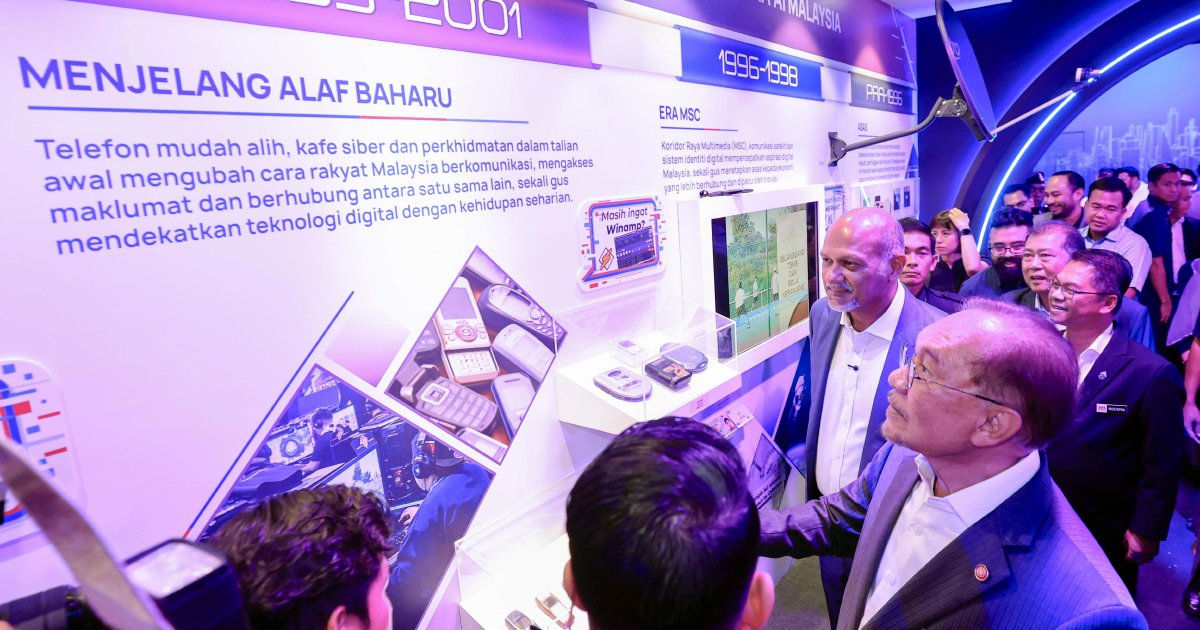
Prime Minister Datuk Seri Anwar Ibrahim has raised a fundamental concern about Malaysia's ambitions to establish itself as a regional artificial intelligence hub, warning that the nation's technological ascent could inadvertently create a troubling chasm between those who benefit from AI advancement and those left stranded in the digital economy. Speaking in Cyberjaya, the epicentre of Malaysia's tech aspirations, Anwar emphasised that rapid adoption of intelligent systems and automation must be carefully managed to ensure equitable distribution of opportunities and resources across all demographic groups and income levels.
The Prime Minister's cautionary stance reflects growing global anxieties about technological disruption, where the fruits of innovation increasingly concentrate among educated urban populations with capital and digital literacy, whilst rural communities, lower-income workers, and those in developing regions struggle to access training and job opportunities. For Malaysia, a middle-income nation with persistent regional disparities, this concern carries particular weight. The rapid rollout of AI-driven systems—from manufacturing automation to algorithmic decision-making in financial services and public administration—threatens to displace workers in traditional sectors whilst simultaneously creating specialised roles demanding expertise that many current citizens lack.
Anwar's intervention suggests the government recognises that AI adoption cannot remain solely within the purview of multinational technology corporations, well-funded startups, and wealthy individuals who can afford cutting-edge tools and education. The warning implies a need for strategic policy intervention to democratise AI access and ensure that workforce transition programmes, digital literacy initiatives, and AI training schemes reach beyond Kuala Lumpur's corridors into smaller towns, rural areas, and communities historically marginalised from tech advancement. Without deliberate measures to level the playing field, Malaysia risks seeing AI prosperity concentrate in pockets of developed infrastructure whilst broader populations experience job displacement without corresponding opportunities.
The inequality dimension becomes more complex when considering Malaysia's multicultural society and regional economic variations. Peninsular urban centres possess dense concentrations of venture capital, tech talent, and educational institutions equipped to produce AI specialists. Conversely, Sabah and Sarawak, along with rural Peninsular areas, have significantly fewer resources for AI ecosystem development. A purely market-driven AI revolution would likely exacerbate these existing geographic disparities, pushing talented youth from peripheral regions toward established urban tech hubs, further hollowing out peripheral economies and entrenching regional inequality.
Educational access represents perhaps the most critical bottleneck in Malaysia's AI democratisation challenge. Universities and training institutes offering computer science, data science, and machine learning programmes remain concentrated in major cities, with hefty tuition fees limiting access for lower-income families. The shortage of qualified AI professionals already creates intense competition for talent, enabling companies to offer premium salaries to the limited pool of experts whilst lower-skilled roles face automation or stagnation. Without proactive government investment in widespread STEM education, vocational training in AI-adjacent skills, and subsidised certification programmes accessible across all states, the talent pipeline will remain narrow and privileged.
The corporate sector's role in either mitigating or accelerating this divide cannot be understated. Technology companies seeking to profit from Malaysia's AI transition could either commit to equitable hiring and training practices that develop local talent comprehensively, or pursue aggressive automation strategies that simply replace Malaysian workers with cheaper algorithmic systems. Anwar's warning implicitly calls on private enterprise to embrace broader social responsibility during this transformation, recognising that short-term cost-cutting through wholesale automation undermines long-term market stability and social cohesion.
Government policy will prove decisive in shaping outcomes. Malaysia could establish targeted programmes ensuring that vulnerable workers in affected industries receive reskilling opportunities with income support during transitions. Digital literacy campaigns could ensure rural and elderly populations understand AI's implications rather than feeling blindsided by technological change. Regulations could mandate that major corporations investing in Malaysia commit hiring and development percentages to disadvantaged communities. Strategic incentives could encourage tech companies to establish centres of excellence in secondary cities, distributing opportunity beyond the capital region.
Regionally, Malaysia's AI positioning carries implications for Southeast Asia's broader technological trajectory. As one of the region's more developed economies with established tech infrastructure, Malaysia's approach to managing AI inequality will influence how neighbouring nations approach similar challenges. A successful model balancing innovation with inclusion could provide a template for Thailand, Indonesia, and the Philippines navigating similar tensions. Conversely, if Malaysian AI advancement entrenches existing inequalities, it may intensify regional economic divergence and migration pressures as disadvantaged populations seek opportunities elsewhere.
Anwar's remarks also reflect an understanding that sustainable economic transformation requires social stability. Historical precedent demonstrates that technological disruption generating visible winners and losers breeds political tension, populist backlash, and social fragmentation. Malaysia's relative multicultural harmony and democratic institutions depend partly on maintaining sufficient economic mobility and opportunity perception across communities. Allowing AI revolution to create a permanent underclass would jeopardise these foundations, making inclusive growth not merely morally compelling but economically rational.
The challenge ahead demands that Malaysia pursue what economists term "inclusive innovation"—technological advancement explicitly designed with equity considerations embedded from inception rather than addressed as an afterthought. This requires coordination between government, educational institutions, industry, and civil society to ensure AI capabilities, training, and benefits reach across all demographic and geographic segments. Anwar's warning signals that Malaysia's leadership recognises this imperative, though translating recognition into concrete policy and implementation remains the critical test ahead.

