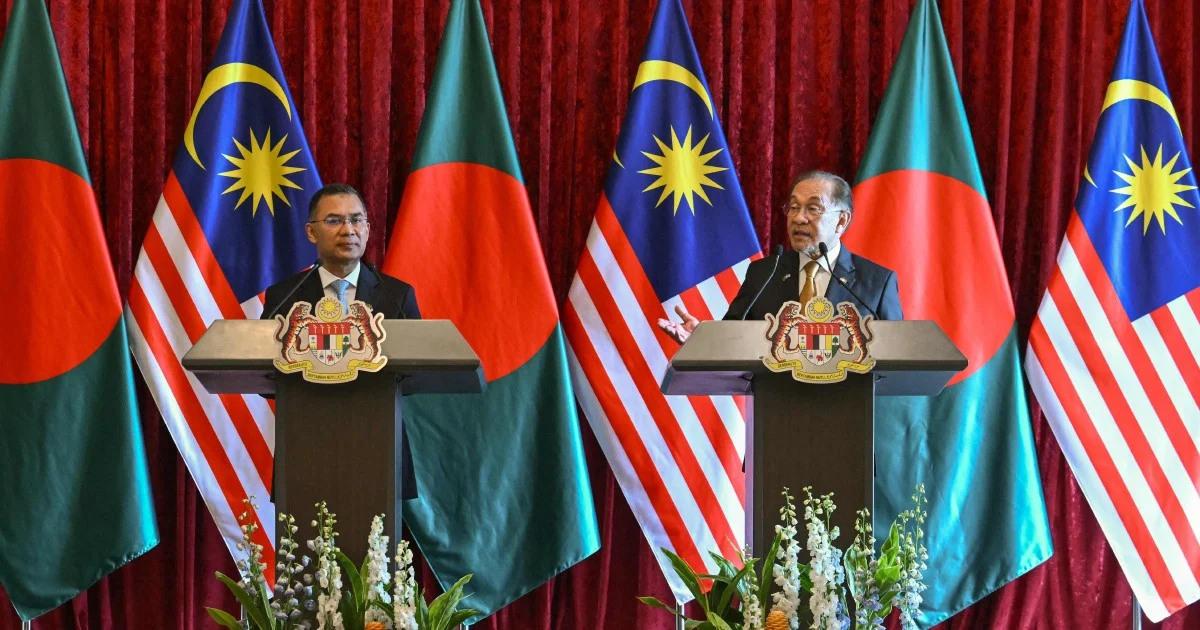
Prime Minister Datuk Seri Anwar Ibrahim has drawn a firm line against the mistreatment of Bangladeshi migrant workers, pledging comprehensive action to dismantle systems of labour exploitation that have long plagued the construction, manufacturing, and domestic work sectors across Malaysia. His public commitment represents a significant political statement on worker rights at a time when abuse allegations involving foreign labourers have drawn international scrutiny and strained bilateral relationships between Malaysia and source countries including Bangladesh.
The Prime Minister's remarks underscore a critical economic reality that often remains obscured in public discourse: Bangladeshi workers form a substantial pillar of Malaysia's labour force, contributing essential skills and labour across industries essential to sustaining growth. Construction projects, palm oil operations, and hospitality businesses have become heavily reliant on workers from Bangladesh and other South Asian countries. Removing or severely restricting this workforce would create significant economic disruption, a fact that makes the government's stated commitment to worker protection simultaneously a matter of pragmatic economic interest and moral obligation.
Migrant worker exploitation in Malaysia has documented patterns stretching across multiple sectors and jurisdictions. Workers frequently experience wage theft, passport confiscation, excessive working hours, unsafe conditions, and restricted freedom of movement. Recruitment practices often involve fraudulent promises regarding compensation and working conditions, leaving vulnerable individuals trapped in situations far worse than what they were promised. The involvement of multiple intermediaries—from overseas recruitment agents to local labour contractors—creates opacity and diffuses responsibility, making enforcement of basic labour standards extraordinarily difficult.
The government's approach must navigate competing pressures from multiple stakeholders. Employers reliant on low-wage labour resist stricter regulations, framing compliance costs as threats to business viability. Labour-sending countries like Bangladesh, facing diplomatic pressure to protect their citizens and recover remittances vital to their own economies, have periodically threatened or implemented restrictions on worker placement. Malaysian civil society organisations and international bodies continue documenting violations and demanding accountability. Within this complex landscape, Anwar's unequivocal framing of exploitation as something that "cannot be tolerated" signals an attempt to establish a clear policy baseline.
Implementing such pledges demands structural reform beyond rhetoric. This includes strengthening labour inspection regimes, particularly in sectors and states where oversight has historically been minimal. It requires revising recruitment regulations to eliminate predatory practices such as excessive placement fees charged to workers rather than employers. Reviewing employment contracts to ensure transparency and enforceability of promised terms represents another essential step. Critically, mechanisms enabling workers to report abuse without fear of deportation or employer retaliation must be established and adequately resourced.
The digital economy offers potential tools for improvement. Blockchain-based systems tracking worker movements and earnings, cloud-based complaint mechanisms accessible across language barriers, and data integration across labour departments could enhance transparency and accountability. However, technology alone cannot substitute for political will, adequate funding, and coordination among enforcement agencies that have historically operated in silos.
Bangladeshi workers themselves remain largely invisible in policy discussions, their voices rarely heard in forums determining regulations affecting their livelihoods. Meaningful reform should create structured channels for worker input into labour standards development and complaint mechanisms. Civil society organisations working directly with migrant communities possess crucial on-the-ground knowledge that government agencies often lack. Partnership approaches involving government, employers, worker representatives, and advocacy groups have produced results in other contexts.
Regional dynamics complicate unilateral Malaysian action. Thailand, Singapore, and Brunei compete for migrant labour, and inconsistent enforcement across the region creates arbitrage opportunities for employers. Harmonising minimum standards across Southeast Asia through mechanisms like ASEAN agreements could prevent a race to the bottom. Bangladesh, which sends approximately 400,000 workers annually to Malaysia, possesses leverage through bilateral agreements but has historically prioritised placement volumes over worker conditions.
The financial mechanisms underpinning worker exploitation deserve particular attention. Recruitment fees and illegal deductions from wages constitute primary mechanisms through which workers are impoverished despite working. Capping fees, redirecting their burden onto employers rather than workers, and establishing transparent wage systems administered through banks rather than cash payments could substantially reduce opportunities for theft. Enforcement of these mechanisms requires sophisticated auditing capabilities many Malaysian employers currently lack.
Recent international attention through both positive and critical lenses provides opportunity for the government to demonstrate commitment through concrete measures rather than statements. The United States, European Union, and other major trading partners increasingly scrutinise labour standards in supply chains. Better worker conditions can become a competitive advantage for Malaysian producers entering markets with ethics-conscious consumers. Conversely, continued exploitation risks further reputational damage and potential trade complications.
Implementing Anwar's pledge will require budget allocation, training of enforcement personnel, and political capital to overcome employer resistance. Quarterly transparency reports on investigation numbers, violations found, and penalties imposed would signal serious commitment and allow public assessment of progress. Establishing an independent ombudsman office specifically for migrant worker grievances could provide both oversight and political cover.
The test of the Prime Minister's commitment lies not in statements but in sustained policy implementation, resource allocation, and willingness to impose meaningful consequences on violators regardless of their economic importance. Bangladeshi workers have become economically essential to Malaysia; they deserve protection commensurate with that importance.