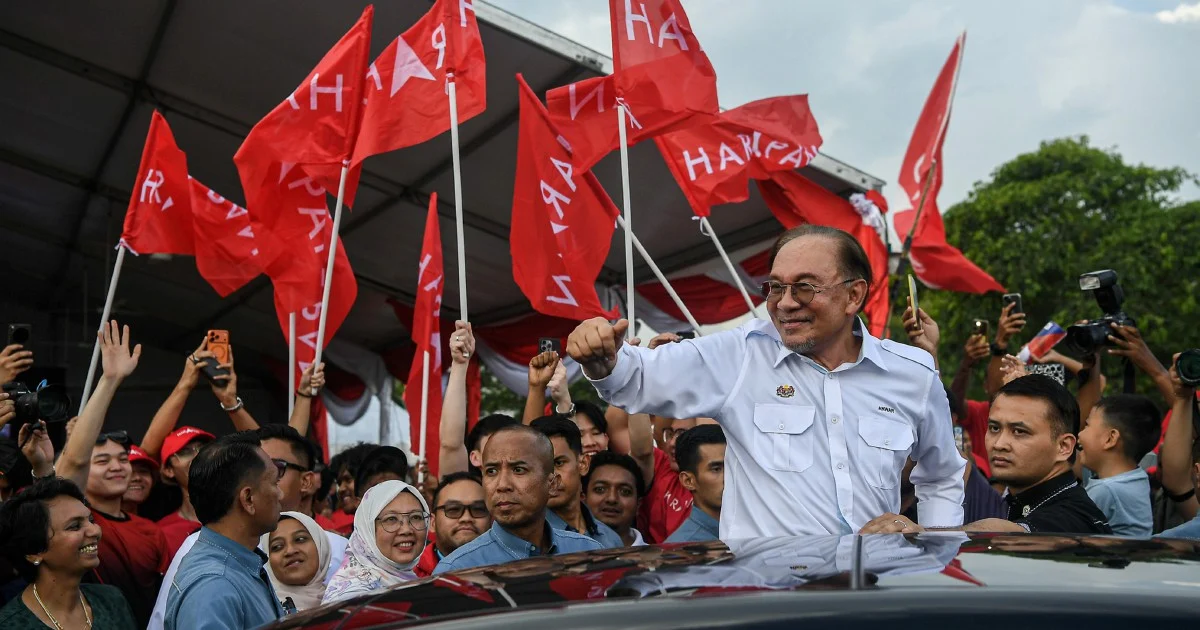
In a pointed rebuke to political opponents, Pakatan Harapan chairman Datuk Seri Anwar Ibrahim has called for greater civility within the Malaysian political establishment, specifically objecting to a pattern among rivals who refuse to participate in events alongside the Democratic Action Party. The Prime Minister's comments, delivered in Segamat, reflect growing tensions surrounding the treatment of DAP, a significant component of Malaysia's ruling coalition despite longstanding reservations among certain political circles about its secular-oriented policies and predominantly Chinese constituency representation.
Anwar's intervention highlights a persistent challenge within Malaysian politics: the willingness of elected representatives to honour electoral outcomes while maintaining professional interactions with coalition partners. When voters cast their ballots in support of Pakatan Harapan, the Prime Minister argued, they simultaneously endorsed the coalition's constituent parties, including DAP. This principle underpins the legitimacy of any governing arrangement, yet some politicians appear reluctant to acknowledge this fundamental democratic reality. His comments represent an implicit warning that selective rejection of coalition members undermines the coherence and credibility of the government itself.
The reluctance of certain politicians to share platforms with DAP traces deeper roots into Malaysia's communal politics. Historically, DAP has functioned as the primary political vehicle for urban, educated Chinese voters seeking progressive policies and secular governance. This positioning has occasionally provoked criticism from Bumiputera-focused parties and conservative Malay-Muslim organisations, who interpret DAP's policies as potentially threatening Malay-Muslim interests or the Federal Constitution's Article 153 protections. Such sensitivities persist even within ostensibly secular coalitions, making DAP a lightning rod for political theatre designed to appeal to particular voter blocs.
Anwar's statement carries particular weight given his position as Prime Minister and head of the Pakatan Harapan coalition. Unlike his predecessors, he has consistently emphasised multiracialism and pluralism as cornerstones of governance, though implementing these principles has proven complicated. His intervention suggests that internal cohesion within the ruling coalition—never guaranteed in Malaysia's fragmented political landscape—requires active management and public reinforcement. Without such messaging, the coalition risks appearing divided, potentially inviting opportunistic attacks from opposition parties seeking to exploit perceived weaknesses.
The timing of Anwar's remarks also carries significance in the context of Malaysia's broader political calculus. State-level politics in Johor, where Segamat is located, remains sensitive to questions of racial representation and Islamic governance. The Johor state government, controlled by Barisan Nasional, maintains some distance from federal coalition dynamics. By speaking publicly in Segamat, Anwar signals that federal-level coalition discipline is non-negotiable, regardless of local political variations. This assertion of authority helps prevent the fragmentation that could undermine the coalition's effectiveness in parliament.
DAP itself has occupied an uneasy position within Malaysian political coalitions for decades. During the Pakatan Rakyat era and subsequently, the party has repeatedly faced accusations from conservative political quarters of harbouring anti-Islam or anti-Malay agendas, accusations DAP leaders consistently deny. The party emphasises its commitment to constitutional frameworks and has moderated its rhetoric in government. Nevertheless, the stigma persists among portions of the electorate, making some politicians wary of association. This dynamic places Anwar in the position of defending coalition integrity while managing the sensitivities that make such defence necessary.
The principle that Anwar articulated—respecting voters' choices by respecting their chosen representatives—extends beyond DAP to encompass the legitimacy of proportional coalition governance. In Malaysian politics, no single party consistently commands majority support nationwide, necessitating coalitions. These arrangements are inherently compromises; politicians must work alongside figures with whom they may disagree on policy. Anwar's intervention reinforces the notion that accepting election outcomes means accepting this reality, not merely the parts one finds personally palatable.
For Southeast Asian observers and regional stability, Malaysian coalition dynamics matter substantially. Malaysia's ethnic and religious diversity has made political stability contingent on inclusive governance frameworks. When leading politicians refuse platforms with minority-backed parties, however tactically appealing domestically, it sends concerning signals about the sustainability of multiracial democracy. Anwar's counter-message, therefore, serves both immediate domestic political purposes and the longer-term imperative of maintaining systems where minority communities retain meaningful political participation.
The effectiveness of Anwar's criticism ultimately depends on whether his stated principles translate into enforcement mechanisms and behavioural change. Saying politicians should work together means little without consequences for those who refuse. Whether Anwar possesses sufficient authority within Pakatan Harapan to compel such compliance remains uncertain, given the coalition's structural diversity and the substantial autonomy enjoyed by constituent parties in state-level politics. His statement represents a clear position, but enforcing it presents genuine practical challenges.
Looking forward, Anwar's remarks suggest ongoing internal coalition management will consume considerable political energy. Rather than progressing beyond identity-based concerns, Malaysian politics appears locked in cycles where questions of racial and religious representation perpetually resurface. Breaking these patterns requires not just rhetorical appeals for unity but substantive policy choices that demonstrate DAP and other minority-backed parties can effectively govern while honouring constitutional protections. Until voters perceive such evidence, politicians will continue hedging their platform appearances, and Prime Ministers will continue issuing exhortations for respectability.

