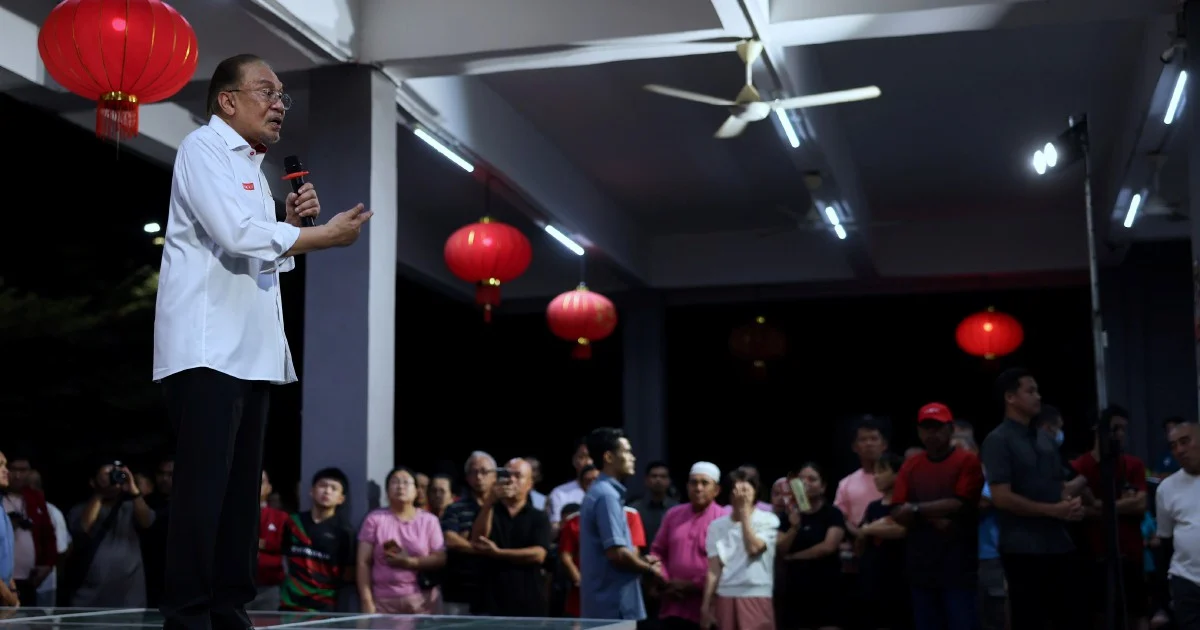
Prime Minister Datuk Seri Anwar Ibrahim is set to prioritise Malaysia's struggling durian sector during high-level talks with Chinese Premier Li Qiang next month, signalling the government's determination to address a deepening crisis affecting thousands of growers across the country. The pledge, made during a visit to Tangkak in Johor's heartland, reflects growing concern within the agriculture ministry over how sharply global demand for the nation's premium fruit has contracted, leaving farmers with mounting inventory and shrinking margins.
The timing of Anwar's commitment underscores the political sensitivity surrounding the durian industry in Malaysia, where production has become intertwined with rural livelihoods and regional economic identity. Johor, Pahang, and Perak collectively account for the majority of Malaysia's durian output, and the recent price collapse threatens not only individual orchardists but entire supply chains that depend on consistent export volumes. By placing the issue on the bilateral agenda with one of Malaysia's largest trading partners, the prime minister is signalling that solving the glut requires diplomatic intervention rather than market forces alone.
China's role in the Malaysian durian market cannot be overstated. The People's Republic has become the primary destination for Malaysian durian exports, accounting for the vast majority of the nation's foreign sales and often absorbing seasonal surges that might otherwise devastate domestic prices. However, Chinese demand has cooled considerably in recent months, likely reflecting broader economic headwinds in China combined with increased competition from other Southeast Asian suppliers and domestic Thai durian production ramping up. When Chinese buyers retreat, Malaysian exporters have few alternative outlets capable of absorbing the volume, leaving warehouses full and farmers frustrated.
The diplomatic approach reflects a shift in how Malaysian authorities are handling the crisis. Rather than relying solely on domestic interventions such as subsidy schemes or marketing campaigns, officials are now seeking to unlock greater access to the Chinese market itself. Anwar's discussions with Li Qiang may include proposals for preferential trade treatment, tariff reductions, or expanded quotas that could make Malaysian durians more competitive against Thai rivals. For Malaysian growers, success in Beijing could mean the difference between breaking even and operating at a loss during the critical off-season.
The oversupply affecting Malaysian growers stems partly from years of aggressive plantation expansion driven by soaring prices during the post-pandemic boom. Many smallholders and larger operators invested heavily in new orchards, expecting the lucrative export demand to persist indefinitely. When market conditions reversed—accelerated by Thailand's aggressive expansion of durian acreage and China's weaker consumer spending—the sector found itself with far more supply than demand could absorb. The lag between planting and mature yields means relief will not come quickly, even if prices stabilise.
Beyond China, the Malaysian government is also exploring diversification of export markets, though few countries outside Asia currently consume durian in meaningful quantities. Some smaller suppliers to Japan, South Korea, and Vietnam are performing marginally better, but these markets cannot conceivably replace the scale of demand that China historically provided. Strategic discussions with Beijing thus become crucial not merely as short-term crisis management, but as the foundation for a sustainable future export architecture.
The Tangkak remarks also hint at internal government coordination challenges. Agriculture and federal-level officials have been working to address grower concerns through various schemes, yet local and state-level authorities often possess more direct knowledge of the sector's constraints. By making a public commitment to raise the issue at the highest diplomatic level, Anwar is also signalling to growers and their political representatives that the government takes their plight seriously and is deploying every available tool to help them.
For Malaysian readers, the durian crisis encapsulates broader vulnerabilities in the nation's agricultural export base. Unlike manufactured goods or services, primary agricultural commodities are subject to weather, disease, and demand shocks that no single country can entirely control. Malaysia's heavy reliance on China for durian sales exemplifies how regional economic interdependence can rapidly translate into domestic vulnerability when external conditions shift. The prime minister's diplomatic initiative acknowledges this reality while attempting to mitigate it through relationship-building and market-access negotiations.
Preliminary discussions between Malaysian and Chinese agricultural officials have reportedly been underway for weeks, laying groundwork for any formal agreements that might emerge from higher-level talks. The scope of what Anwar might negotiate remains unclear, but observers expect proposals centring on reduced tariffs, faster customs clearance, and perhaps expanded market allocations for Malaysian producers during peak harvest periods. Such measures, while modest in appearance, could substantially improve the economics for growers struggling with razor-thin margins.
The path forward will likely involve both bilateral engagement and participation in multilateral forums where agricultural trade issues are debated. ASEAN mechanisms, which both Malaysia and China are parties to, could also provide supplementary channels for advancing the sector's interests. As durian prices remain under pressure and the 2024–2025 harvest season approaches, the stakes for Anwar's Beijing discussions grow ever larger for an industry that many Malaysians regard as emblematic of national agricultural prowess and regional competitive advantage.

