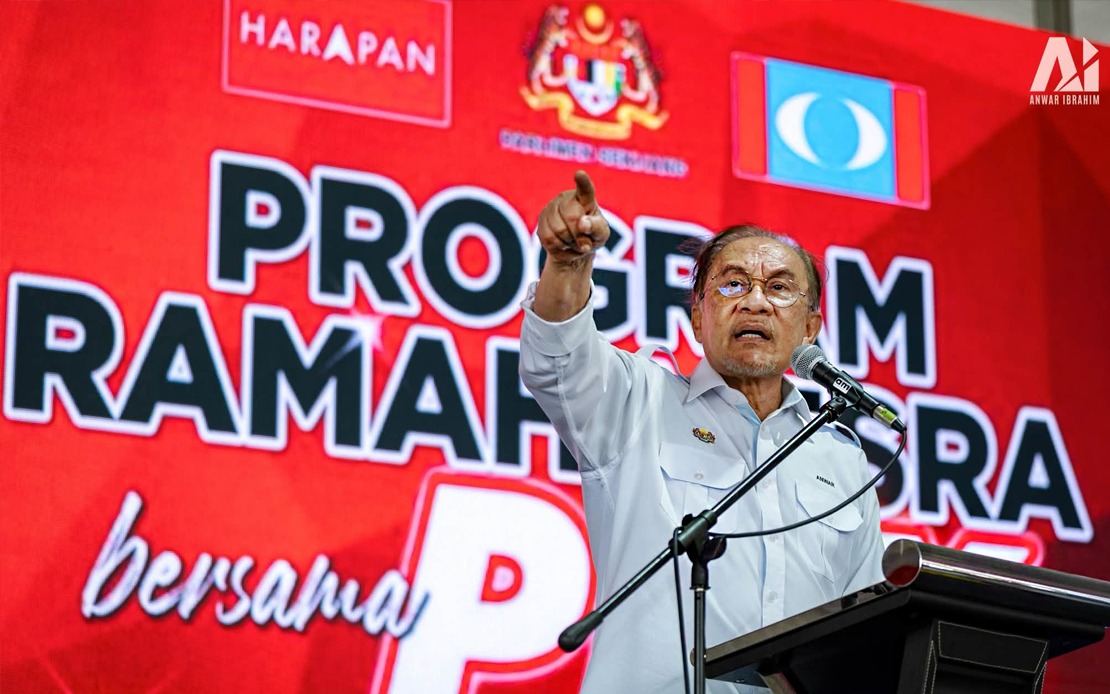
Prime Minister Datuk Seri Anwar Ibrahim has made a direct appeal to address the financial distress engulfing Malaysia's durian farming sector, pledging to leverage high-level diplomatic channels to resolve a mounting oversupply crisis. Speaking at a constituency gathering in Tangkak last week, Anwar signalled his intention to place durian market expansion at the forefront of bilateral trade discussions with Chinese Premier Li Qiang during his forthcoming visit to Beijing next month. The intervention reflects mounting concern over the simultaneous ripening of durian crops across Peninsular Malaysia, which has triggered a sharp contraction in farmgate prices and threatens the livelihoods of growers dependent on export revenues.
The timing of Anwar's pledge underscores the urgency facing the industry. Malaysian durian farmers have experienced a significant income squeeze as the convergence of harvest seasons across major producing regions has flooded domestic and regional markets with fruit, depressing prices precisely when growers expected stronger demand and higher returns. This predictable but nonetheless damaging market cycle has become a recurring challenge in the durian sector, where production volumes and seasonal concentration create vulnerability to price volatility. By directing his diplomatic efforts towards China, which represents both a critical consumer base and a stringent regulatory environment, Anwar is targeting the primary mechanism through which Malaysian growers could expand volume sales and stabilise their income streams during periods of domestic oversupply.
China's role as a potential demand anchor for Malaysian durian is not incidental to this strategy. The Chinese market possesses the purchasing power and consumption appetite to substantially absorb additional Malaysian supply, potentially altering the regional price dynamics that currently penalise local farmers. However, Chinese import standards for durian are notoriously exacting, involving phytosanitary requirements, certification protocols, and quality specifications that create formidable barriers to entry and expansion. Anwar's acknowledgment that China maintains stringent regulatory frameworks suggests an understanding of the negotiation landscape ahead; his commitment to pursue discussions despite these challenges indicates confidence in the bilateral relationship and the potential for pragmatic commercial arrangements.
The Prime Minister's framing of the initiative as a mutual benefit arrangement rooted in Malaysia-China strategic relations reveals a broader diplomatic architecture beyond immediate agricultural relief. By positioning durian market access within the context of leveraging Malaysia-China bilateral ties to create trade opportunities, Anwar situates the issue within a framework of developmental partnership and mutual economic interest. This approach appeals to the commercial logic that governs high-level negotiations between trading nations, transforming a sectoral crisis into a potential structural enhancement of bilateral trade relationships. The emphasis on expanding market access during periods of oversupply also reflects an implicit acknowledgment that the Malaysian government recognises its role in creating conditions for producer stability, rather than leaving market-clearing to price mechanisms alone.
The durian crisis intersects with broader questions about Malaysia's agricultural competitiveness and export diversification. The sector generates substantial foreign exchange and provides incomes to farming communities across key constituencies, particularly in Johor, Pahang, and other major producing states. The presence at the Tangkak event of state-level political figures, including Pakatan Harapan Johor Election director Datuk Seri Amirudin Shari and the Deputy Natural Resources Minister, underscores the political sensitivity of the issue and its significance across government hierarchies. Agricultural challenges that threaten farmer incomes carry proportionate political weight, particularly in rural constituencies where agricultural employment remains substantial and electoral competition reflects sensitivity to sector-specific grievances.
Parallel to his durian market commitment, Anwar invoked Malaysia's distinctive position on fuel subsidies, characterising the government's intervention in petroleum pricing as exceptional within the global economy. Current retail prices of RM3.37 per litre for RON95 and RM3.97 per litre for diesel contrast sharply with subsidised rates of RM1.99 and RM2.10 respectively under the BUDI MADANI initiative, a gap that represents substantial fiscal commitment by the government. Anwar's assertion that Malaysia maintains among the world's lowest fuel prices, achieved through deliberate government intervention against fundamental economic and supply-side pressures, positioned fuel subsidies as a reflection of governmental commitment to protecting household purchasing power and cost-of-living concerns. The framing suggests that government action to shield consumers and producers from external economic shocks constitutes a defining feature of the administration's economic philosophy.
Anwar's invocation of Middle East geopolitical instability as a pressure point on global crude prices contextualises Malaysia's fuel subsidy programme within broader international economic dynamics. Supply disruptions and uncertainty affecting global petroleum markets have created structural upward pressure on crude costs, fundamentally altering the price environment within which Malaysia's fuel subsidy system operates. Against this backdrop, the government's commitment to maintaining subsidised rates rather than allowing market prices to equilibrate becomes increasingly costly, requiring explicit budgetary allocation and implicit acceptance of fiscal opportunity costs. Anwar's rhetorical emphasis on the government's resistance to price increases—framed as a principled economic stance reflecting concern for public welfare rather than economically rational policy—situates fuel subsidies within a protective framework rather than as a distortionary market intervention.
The dual commitments on durian market access and fuel price containment, articulated in the same public forum, suggest an integrated approach to managing supply-side pressures and farmer/consumer protections. Both initiatives involve government willingness to intervene in commodity markets and price formation mechanisms, whether through diplomatic market expansion or through direct fiscal subsidy. The consistency of this approach across different commodities and sectors reflects a coherent economic philosophy emphasising state intervention to stabilise incomes and living standards against volatile international market conditions. For Malaysian constituencies dependent on agricultural livelihoods or sensitive to energy cost pressures, these commitments represent explicit recognition of government responsibility to cushion the distributional consequences of global economic volatility.
The effectiveness of these pledges will depend substantially on implementation capacity and diplomatic negotiating leverage. Anwar's personal commitment to raise durian access with Premier Li Qiang provides political momentum, but converting bilateral political goodwill into structural market access improvements requires navigating China's regulatory framework and negotiating commercial terms acceptable to both parties. The government will need to demonstrate that expanded Malaysian durian supply meets Chinese standards while offering commercial advantages sufficient to justify regulatory accommodation. Similarly, sustaining fuel subsidies against persistent international price pressures requires ongoing fiscal commitment and may create long-term budgetary pressures as crude prices potentially fluctuate or escalate further. These implementation challenges will test whether political pledges translate into durable solutions for the constituencies affected by commodity market volatility.

