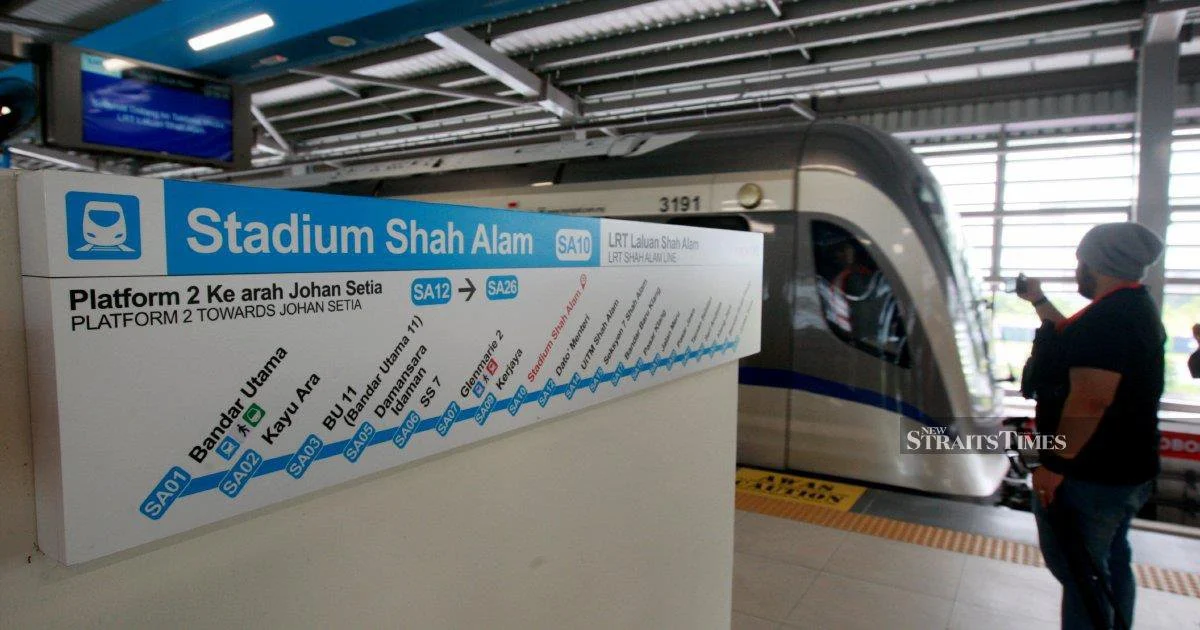
Prime Minister Datuk Seri Anwar Ibrahim is set to officiate the opening of the Light Rail Transit Line 3 (LRT3) Shah Alam extension this Sunday, marking a significant milestone in the Klang Valley's public transportation infrastructure. The newly constructed rail corridor will enter full commercial operations on Monday, providing an alternative connectivity option for commuters traversing the Shah Alam and surrounding areas.
The LRT3 Shah Alam line represents an expansion of Kuala Lumpur's rapid transit network, a project that underscores the federal government's commitment to enhancing urban mobility across the metropolitan region. The completion of this extension follows years of planning and construction, with the scheme intended to alleviate traffic congestion and provide a more efficient transportation alternative for residents and workers in the Shah Alam district and beyond.
The official launch ceremony, scheduled for Sunday, will showcase the readiness of the new line's infrastructure, including stations, signalling systems, and rolling stock. Such ceremonial inaugurations typically involve demonstrations of operational capabilities and statements emphasizing the project's broader significance within Malaysia's transport development strategy. The timing of the inauguration immediately before commercial operations begin is standard practice, allowing authorities to verify all safety protocols and systems are functioning optimally.
Shah Alam, as Selangor's state capital and a major industrial and residential hub, has long required enhanced transportation connectivity. The LRT3 extension addresses this infrastructure deficit by linking key areas within and around the city, potentially reducing travel times and dependency on private vehicles for a considerable portion of the population. The line's integration with the existing rapid transit network enables seamless transfers and encourages multimodal commuting patterns.
The expansion of the LRT system reflects broader aspirations within Southeast Asia's major metropolitan areas to modernize public transit infrastructure. Malaysia's commitment to developing comprehensive rail networks positions the nation among regional peers investing substantially in sustainable urban mobility solutions. For comparison, cities across the region continue expanding their metro and light rail systems as populations grow and urbanization accelerates, making efficient public transportation increasingly critical to economic competitiveness and quality of life.
The Shah Alam extension's launch arrives amid ongoing discussions about transportation funding, route optimization, and service quality standards across Malaysian transit systems. Stakeholders have long advocated for expanded rapid transit coverage, particularly connecting secondary urban centers to primary business districts. The completion of LRT3's Shah Alam line partially addresses these demands, though broader aspirations for comprehensive regional connectivity remain under discussion among policymakers and urban planners.
Commuter expectations surrounding the new line's operations will be carefully monitored in the weeks following Monday's opening. Passenger volumes, fare structures, frequency of services, and reliability metrics will collectively determine the extension's impact on transportation behavior within the Klang Valley. Early adoption patterns and user feedback will inform operational adjustments and potentially influence future expansion planning decisions.
The project's completion also carries implications for property development and urban planning in Shah Alam and surrounding municipalities. Transit-oriented development strategies often accompany new rail infrastructure, with areas near stations attracting heightened commercial and residential investment. The LRT3 extension may thus catalyze broader economic transformation within its corridor, creating opportunities for mixed-use development and supporting long-term sustainable urban growth frameworks.
From a technical standpoint, the LRT3 Shah Alam line incorporates modern rail technology and operational standards befitting contemporary rapid transit systems. The infrastructure's design accommodates anticipated future capacity increases, reflecting forward-thinking engineering that acknowledges the Klang Valley's continued population and economic expansion. Such future-proofing approaches contrast with some earlier transit systems and demonstrate evolved understanding of infrastructure longevity and adaptability requirements.
The launch ceremony's symbolic importance extends beyond mere infrastructure inauguration, serving as a tangible demonstration of government delivery on major infrastructure commitments. For Prime Minister Anwar Ibrahim, the event provides opportunity to highlight administration achievements in addressing urban development needs, a priority resonating with voters across metropolitan constituencies. The visible completion of substantial capital projects reinforces narratives surrounding economic development and improved living standards.
Looking forward, the operational performance of the LRT3 Shah Alam line will establish benchmarks for integrated transit planning across the Klang Valley and potentially influence transport policy trajectories for other Malaysian cities. Lessons learned regarding construction timelines, cost management, operational efficiency, and user adoption will inform evaluations of proposed transit expansions elsewhere. Success metrics will extend beyond ridership figures to encompass safety records, service reliability, environmental benefits, and broader urban livability improvements.