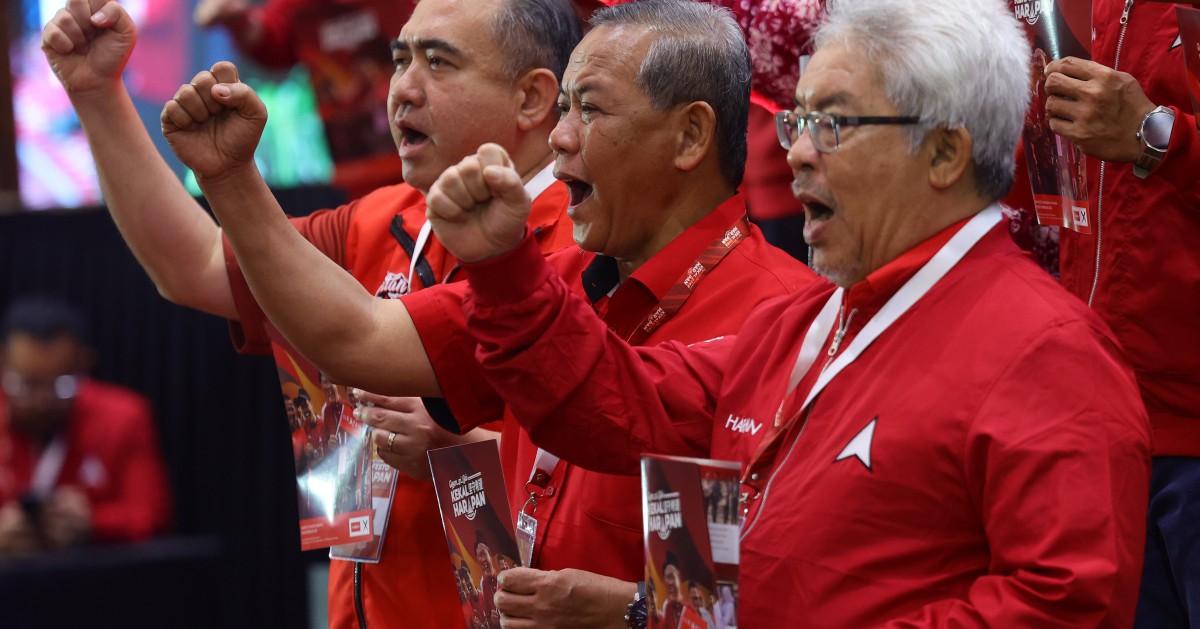
Prime Minister Datuk Seri Anwar Ibrahim is set to mobilise his presence for Pakatan Harapan's campaign drive in Negri Sembilan, bringing the coalition chairman's political weight to bear on the state election scheduled for Wednesday. His personal engagement signals the coalition's determination to consolidate support across the key peninsular state, where electoral fortunes remain competitive and margins potentially decisive.
Anwar's direct participation in ground-level campaigning underscores the broader strategy Pakatan Harapan has adopted for the Negri Sembilan contest. As both Prime Minister and party chairman, his appearance carries symbolic importance beyond typical campaign visits, framing the election as a referendum on federal coalition governance and its ability to translate national policy priorities into regional electoral support. The timing of his involvement suggests the coalition regards the state as winnable territory despite existing political complexities.
Negri Sembilan has long occupied an important position within Malaysia's political landscape, serving as a bellwether for electoral trends affecting the broader Klang Valley and central region. The state's composition of Malay-majority constituencies alongside urban centres with more diverse electorates creates a microcosm of challenges faced by coalitions attempting to build cross-community appeal. Anwar's presence acknowledges these dynamics and represents an attempt to strengthen Pakatan Harapan's positioning among both rural and urban voters across the state.
The decision to deploy the Prime Minister reflects confidence within the coalition's hierarchy about electoral prospects, yet also recognises the inherent risks of competitive state-level politics in post-2022 Malaysia. Since the 15th general election, state contests have delivered mixed results for the federal coalition, with some states falling to opposition control and others requiring delicate coalition management to maintain government. Negri Sembilan therefore represents an opportunity to demonstrate Pakatan Harapan's electoral resilience and to counter narratives of declining popularity.
Campaign operations at this scale typically involve coordinated outreach across multiple constituencies, leveraging the Prime Minister's visibility to draw media attention and energise party machinery. Campaign rallies and walkabouts featuring Anwar provide platforms for articulating the coalition's legislative achievements at federal level while addressing state-specific development concerns. Such events also serve to reinforce party discipline and messaging consistency among candidates and party workers across constituencies.
For Negri Sembilan's electorate, Anwar's participation offers direct engagement with federal decision-makers and an opportunity to present grievances relating to infrastructure, economic development, and social services. State elections increasingly function as forums where constituents evaluate both state and federal governance, particularly when the Prime Minister becomes personally involved in campaigning. This confluence of state and national politics intensifies voter focus on coalition performance across both levels of government.
The coalition's investment in securing Negri Sembilan reflects strategic calculations about seat numbers and parliamentary stability at federal level. While state governments operate with constitutionally distinct authority, maintaining electoral momentum across multiple states strengthens the broader political narrative around Pakatan Harapan's governance model. Conversely, defeat in any state risks reinforcing opposition arguments that the coalition's appeal has diminished since the 2022 general election.
Anwar's campaign participation also demonstrates the continued centrality of the Prime Minister's personal political standing to coalition fortunes. His journey from opposition to leadership, combined with his management of complex inter-coalition dynamics, has rendered his public presence strategically valuable for addressing skeptical voters and reinforcing commitments to reform agendas. Negri Sembilan voters, like those elsewhere, assess whether federal coalition promises translate into improved governance outcomes, and Anwar's direct engagement provides an avenue for such evaluation.
The state election represents a test of Pakatan Harapan's organisational effectiveness and its ability to mobilise resources across constituencies. Campaign intensity, candidate quality, and ground organisation often determine outcomes in competitive states. By injecting the Prime Minister's profile into the campaign, the coalition seeks to overcome potential organisational disadvantages or candidate weaknesses in specific areas, concentrating attention and resources on contested territories.
Looking forward, the Negri Sembilan election result will provide data points for assessing broader coalition strength ahead of potential future elections, whether at state or federal level. Political analysts across the region monitor such contests for signals about Malaysia's electoral trajectory and the durability of post-2022 coalition arrangements. A strong showing for Pakatan Harapan would validate its governing model, while underperformance would prompt recalibration of campaign strategies and coalition composition calculations.
The Prime Minister's campaign involvement also carries symbolic weight for international observers monitoring Malaysia's political stability. Foreign investors and diplomatic partners increasingly view domestic electoral performance as an indicator of political predictability and economic policy continuity. Successful coalition campaigns reinforce perceptions of stable governance, whereas electoral uncertainty can affect investor confidence and regional diplomatic positioning.

