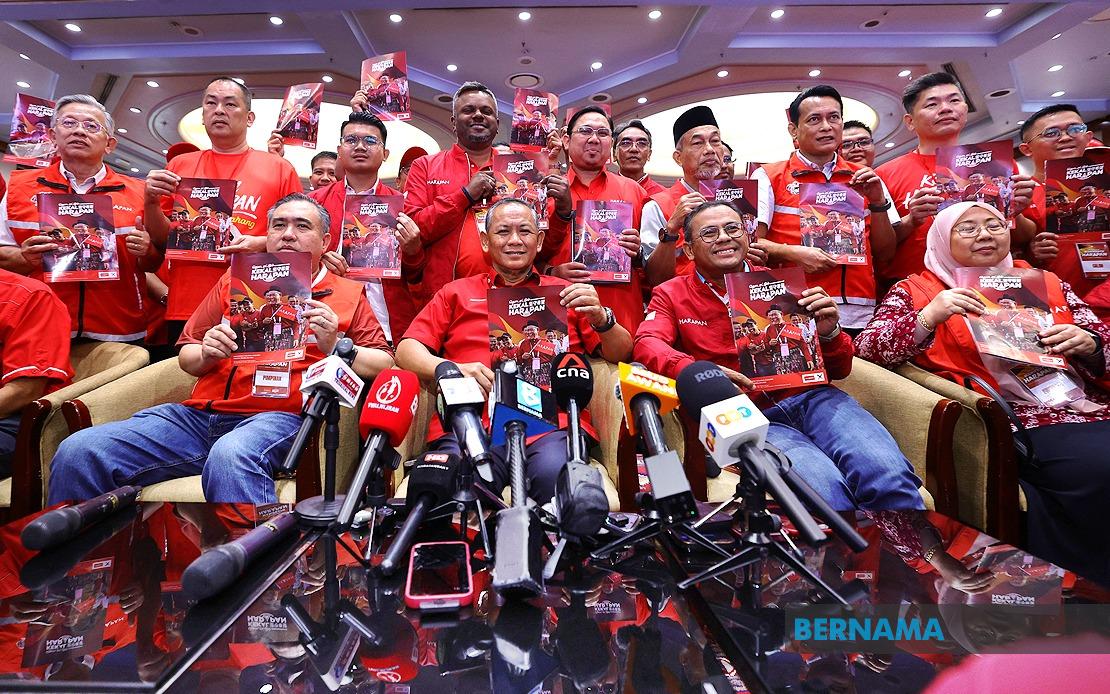
Prime Minister Datuk Seri Anwar Ibrahim is set to intensify his involvement in the Negeri Sembilan state election campaign this week, joining several Pakatan Harapan events scheduled for Wednesday in key constituencies. According to PH Negeri Sembilan chairman Datuk Seri Aminuddin Harun, the Prime Minister will participate in a series of major campaign activities in Sikamat and Paroi alongside senior party officials and grassroots machinery.
The announcement came shortly after Aminuddin launched the coalition's comprehensive state election manifesto in Seremban on July 20. While Anwar's absence from the evening manifesto launch drew some attention, party leaders stressed that his participation in the mid-week campaign trail represents a crucial show of force ahead of polling day on August 1. Aminuddin, who is contesting the Linggi seat, told reporters that the Prime Minister's confirmed attendance underscores PH's confidence and organisational readiness for the electoral contest.
Negeri Sembilan's 16th state election marks a significant political test for the coalition government. The manifesto unveiled by Aminuddin and other party leadership emphasizes administrative stability as a cornerstone, reflecting PH's focus on delivering competent governance to state residents. Beyond stability, the coalition has centred its campaign messaging on tangible improvements to public welfare, positioning itself as the party capable of translating policy commitments into real outcomes for ordinary Malaysians.
The economic dimension of PH's manifesto carries particular weight for Negeri Sembilan, a state with a diversified industrial base spanning manufacturing, agriculture, and services. The coalition's pledge to foster a competitive economy signals an intention to attract investment and create employment opportunities, issues that resonate with voters facing cost-of-living pressures. Equally important are commitments to education and housing, challenges that have consistently ranked high in state-level electoral calculations across Malaysia.
Youth development emerged as another central plank in the manifesto, reflecting broader PH strategy to mobilise younger voters who have demonstrated greater volatility in recent elections. Women and family empowerment initiatives address demographic shifts and changing expectations regarding gender representation in political decision-making. These pillars suggest the coalition is adopting a relatively expansive policy agenda rather than narrowing its appeal to traditional support bases.
Tourism and customary heritage feature prominently in the manifesto, touching on Negeri Sembilan's cultural identity and economic potential. Modern agriculture and strategic infrastructure development initiatives appeal to rural constituencies and reflect recognition that state development must balance urban and hinterland needs. Social unity and harmony, listed as a final priority area, implicitly addresses interethnic and interfaith relations—a perpetually sensitive dimension of Malaysian politics.
The campaign trail appearances in Sikamat and Paroi are strategically significant, as both constituencies carry electoral weight and may represent competitive battlegrounds between PH and opposition parties. Anwar's direct involvement signals that the federal government views these races as consequential, and his presence alongside established state and federal leaders amplifies the campaign's visibility. The assemblage of senior figures—including DAP secretary-general and PH candidate for Chennah Anthony Loke, Selangor Menteri Besar Datuk Seri Amirudin Shari (also PH election director), PKR secretary-general Datuk Dr Fuziah Salleh, and Amanah vice-president Datuk Dr Mohd Hatta Md Ramli—demonstrates high-level party commitment to the Negeri Sembilan contest.
Electoral logistics are now in motion, with early voting scheduled for July 28 and the main polling day set for August 1. This compressed timeline means that campaign activities over the coming days will prove decisive in shaping voter sentiment. PH's manifesto launch and Anwar's planned Wednesday appearances represent the coalition's attempt to cement messaging and consolidate support during this critical window.
For Malaysian observers, the Negeri Sembilan election carries implications beyond the state itself. As one of several state-level contests scheduled across the nation, the outcome will offer early indicators of the electorate's mood regarding the federal PH government's performance. Voter verdicts in individual state races often cascade into national political calculations, influencing perceptions of government strength and opposition viability heading toward future federal elections.
The coalition's decision to prioritise multiple policy areas simultaneously—from agriculture to infrastructure to social harmony—reflects a bid to appeal across diverse voter segments. Whether this expansive agenda proves mobilising or diffuse remains a key variable. Anwar's frontline participation suggests PH leadership is taking few electoral safeguards for granted and recognises that state outcomes can carry disproportionate symbolic weight in shaping narrative momentum in Malaysian politics.
For Negeri Sembilan residents, the contest presents a straightforward choice between incumbent PH administration and opposition alternatives. The manifesto pledges and campaign trail events offer voters substantive grounds for evaluation, though the degree to which campaign promises translate into executed policy remains a perennial question in Malaysian electoral democracy. The coming fortnight will determine whether PH's integrated messaging strategy and high-profile leadership presence prove sufficient to secure a mandate continuation or expansion in one of Malaysia's historically competitive states.

