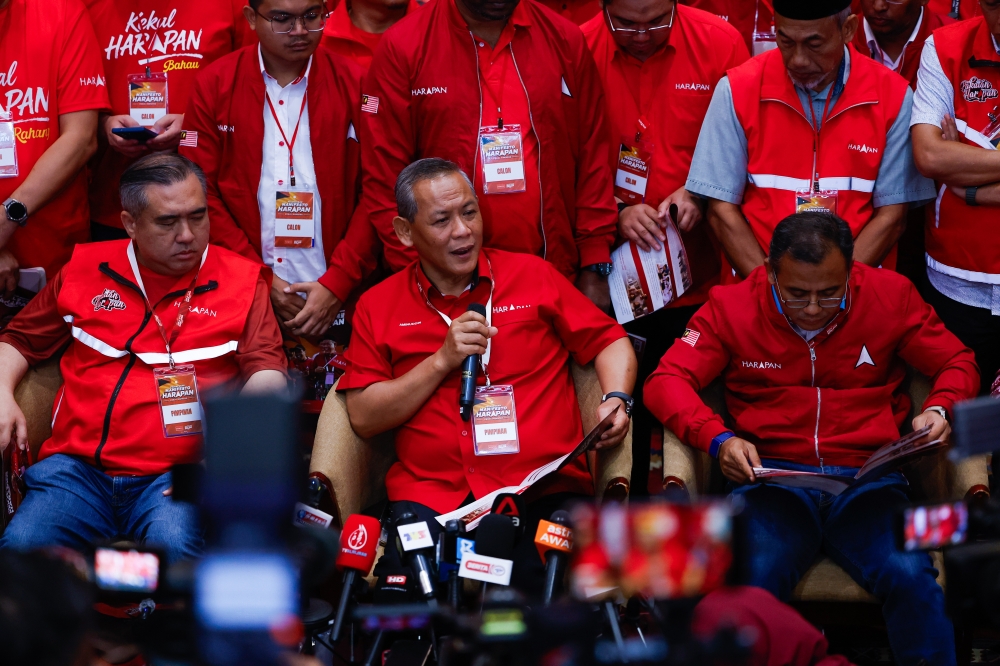
Prime Minister Datuk Seri Anwar Ibrahim is poised to inject fresh momentum into Pakatan Harapan's electoral machinery in Negeri Sembilan this week, marking a significant escalation in the coalition's campaign rhythm as the state election draws closer. Selangor Menteri Besar Aminuddin Harun confirmed that the PH Chairman would grace the party's campaign activities on Wednesday, signalling the national leadership's direct engagement with grassroots mobilisation efforts in the central state.
The decision to have Anwar personally campaign in Negeri Sembilan underscores the coalition's strategic importance placed on the state, where political dynamics have shifted considerably in recent years. Negeri Sembilan, traditionally a competitive battleground between federal coalitions, has become increasingly crucial for Pakatan Harapan's calculus as the party seeks to consolidate its control and broaden its electoral footprint beyond its traditional strongholds. The state represents a microcosm of Malaysian electoral competition, with swing constituencies that often determine broader political trajectories.
Anwar's presence on the campaign trail carries particular weight given his role as Prime Minister, lending institutional gravitas and media prominence to local contests. His involvement signals that the federal government is treating the Negeri Sembilan election as consequential rather than peripheral, reflecting broader PH strategy to maintain momentum following its resurgence in the 2022 general election. The coalition's leadership recognises that state-level victories consolidate party machinery and provide platforms for articulating policy achievements to voters at the community level.
Aminuddin's announcement of Anwar's participation comes as Malaysian political parties escalate campaign intensity across multiple states simultaneously. The coordinated deployment of senior national figures to state campaigns has become standard practice, with coalition leaders and opposition figures shuttling between constituencies to deliver speeches, attend party rallies, and engage with local populations. This distribution of high-profile political capital reflects calculations about where electoral outcomes are most contested and where party presence can move voter sentiment.
Negeri Sembilan's electoral significance extends beyond its state assembly seats. The state serves as a political laboratory for testing campaign messages and voter engagement strategies before their broader implementation. Successful ground operations in central Malaysian states like Negeri Sembilan often forecast how these approaches will perform in similar demographic and geographical contexts elsewhere. Moreover, state governments increasingly serve as administrative proving grounds for federal policies, making control of state machinery valuable for both incumbent and opposition coalitions.
For Pakatan Harapan specifically, Negeri Sembilan represents territory where the coalition can demonstrate its capacity to govern effectively and deliver constituent services. The party's performance in state elections influences internal coalition dynamics, affecting perceptions of which partner organisation carries greater electoral weight and consequently claiming greater influence over future government formation negotiations. Anwar's personal campaigning effort therefore carries implications that extend well beyond immediate state election outcomes.
The timing of Anwar's Negeri Sembilan visit follows months of intensified political competition across Malaysian states as various coalitions jockey for advantage ahead of anticipated electoral contests. Political analysts view such state-level campaigns as de facto rehearsals for national political positioning, with successful campaigns building party credibility and unsuccessful ones exposing vulnerabilities that opponents will exploit. The Negeri Sembilan campaign thus functions within a larger ecosystem of competing national political narratives.
Aminuddin's announcement also reflects the close coordination between PH's federal leadership and state-level party organisations. As Selangor Menteri Besar, Aminuddin occupies a senior position within the coalition's state-level hierarchy, making his statements about campaign schedules authoritative indications of party strategy. His confirmation of Anwar's participation suggests extensive prior coordination between federal party headquarters and Negeri Sembilan's campaign leadership, indicating systematic rather than impromptu decision-making about high-profile political appearances.
The campaign activity in Negeri Sembilan occurs against the backdrop of Malaysia's fragmented political landscape, where coalitional stability remains perpetually contingent. Pakatan Harapan's unity depends partly on visible demonstrations of national leadership cohesion and commitment to collective electoral objectives. Anwar's campaigning presence in Negeri Sembilan serves this coalition-maintenance function, reinforcing that PH operates as an integrated political force rather than a collection of autonomous parties pursuing separate agendas.
For Southeast Asian observers monitoring Malaysian political developments, the Negeri Sembilan campaign illuminates how Malaysia's democratic systems operate through continuous electoral contestation at multiple administrative levels. Unlike some regional democracies where national elections completely overshadow state-level politics, Malaysia's federal structure ensures that state elections command significant attention and resources from national political leaderships. This multi-layered electoral competition reflects Malaysia's constitutional architecture and shapes how political parties organise their strategic activities.
The presence of prime ministerial campaigning in Negeri Sembilan also indicates public confidence in electoral security and coalition stability. That Anwar publicly commits his schedule to state campaign activities suggests confidence that his position as PM remains secure and that the coalition's internal dynamics are sufficiently stable to permit top leadership attention to subsidiary electoral contests. Such calculations would be different in contexts of governmental instability or coalition fragmentation.

