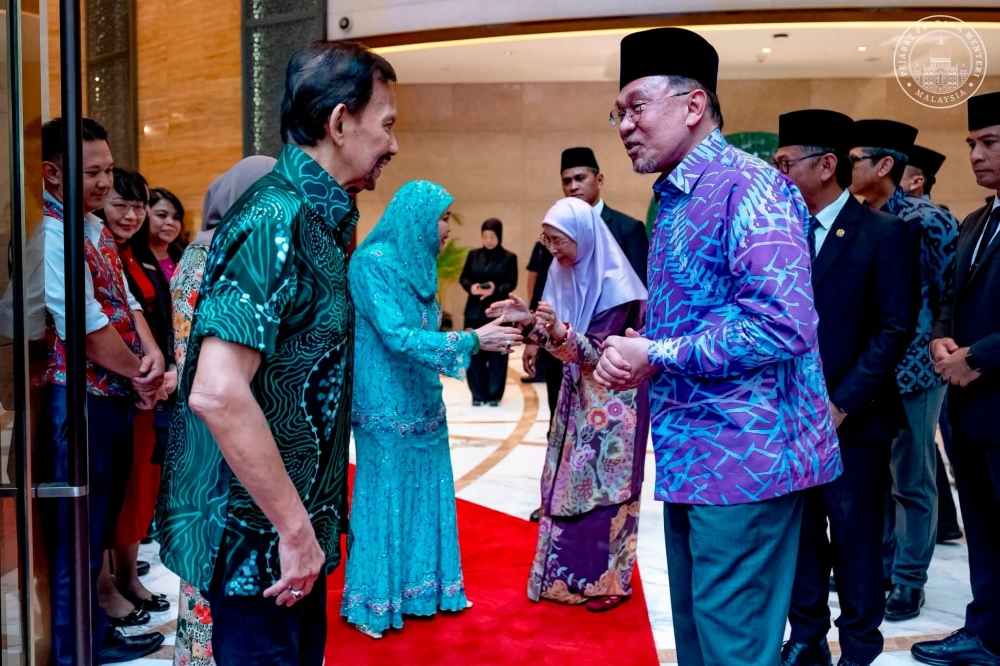
Prime Minister Datuk Seri Anwar Ibrahim has extended formal birthday greetings to the Sultan of Brunei, using the occasion to reinforce the strategic partnership between the two neighbouring Southeast Asian nations. The gesture reflects the ceremonial importance both countries place on maintaining high-level diplomatic ties through symbolic gestures and personal courtesies exchanged at the leadership level.
The birthday message carries particular significance in the context of Malaysia-Brunei relations, which have historically been built on close cultural ties, shared Islamic heritage, and overlapping economic interests. Both nations, as members of the Association of Southeast Asian Nations, coordinate on regional security matters and increasingly on cross-border economic collaboration. Such exchanges between heads of government serve as regular reminders of the bilateral commitment to sustaining these foundational relationships.
Anwar's message emphasised the importance of continued cooperation between Kuala Lumpur and Bandar Seri Begawan across multiple sectors. The Prime Minister likely referenced ongoing dialogues in areas ranging from trade and investment to educational partnerships and people-to-people exchanges. Malaysia and Brunei have long maintained robust ties spanning cultural and religious affairs, with numerous initiatives bringing citizens from both nations together through academic programmes, tourism, and business ventures.
The timing of such diplomatic communications often coincides with broader regional strategic considerations. In recent years, both Malaysia and Brunei have navigated complex geopolitical dynamics in Southeast Asia, including questions around the South China Sea, maritime security, and economic integration within ASEAN. By reaffirming bilateral bonds through such formal expressions, both governments signal their commitment to a united front on regional issues while managing their individual national interests.
For Malaysia specifically, maintaining strong ties with Brunei holds particular relevance given the sultanate's significant oil and gas reserves and its role in ASEAN decision-making. Though Brunei is considerably smaller in population and economic output compared to Malaysia, its wealth and diplomatic weight in regional forums mean that harmonious relations serve Malaysian interests well. Similarly, Brunei values its relationship with the larger and more economically diverse Malaysia as a stabilising force in the region.
The exchange also reflects the personal diplomatic style that Anwar has cultivated since assuming office, emphasising engagement with neighbouring leaders and a commitment to strengthening ASEAN solidarity. Through such gestures, he seeks to project Malaysia as a reliable and respectful regional partner interested in collaborative approaches to shared challenges. This approach contrasts with more transactional diplomatic models and instead emphasises the human and relational dimensions of international relations.
Matters of bilateral importance that likely inform such messages include ongoing discussions about maritime boundaries, cross-border trade facilitation, and coordination on Islamic affairs. Malaysia and Brunei have occasionally navigated sensitive historical issues, including disputes over territorial boundaries and resource-sharing arrangements. Maintaining warm diplomatic channels through regular high-level communication helps manage these matters constructively and prevents minor disagreements from escalating into larger disputes.
The broader Malaysian audience would note that Anwar's outreach to regional leaders, including ceremonial gestures such as birthday messages, forms part of a deliberate strategy to enhance Malaysia's diplomatic standing in Southeast Asia. After a period of political uncertainty and domestic focus, the government has sought to re-engage actively with neighbouring countries and reassert Malaysia's traditional role as a steady and constructive regional player. Such consistent diplomacy builds goodwill that can be leveraged when addressing more complex bilateral or multilateral issues.
Business communities on both sides of the Malaysia-Brunei border also benefit from cordial governmental relations. When political ties remain strong, regulatory barriers tend to ease, investment flows more freely, and cross-border projects proceed with fewer complications. The energy sector, in particular, represents an area where cooperation between the two nations could yield significant benefits, though such collaborations require sustained political will at the highest levels.
Moving forward, observers expect Malaysia and Brunei to continue deepening their partnership through existing mechanisms such as bilateral commission meetings and ASEAN-level coordination. The ceremonial dimension of diplomacy, while sometimes dismissed as mere protocol, serves important functions in maintaining the personal relationships between leaders that facilitate more substantive negotiations and agreements. Anwar's birthday message to the Brunei Sultan exemplifies this principle, reinforcing bonds that underpin the broader architecture of Malaysia-Brunei cooperation.

