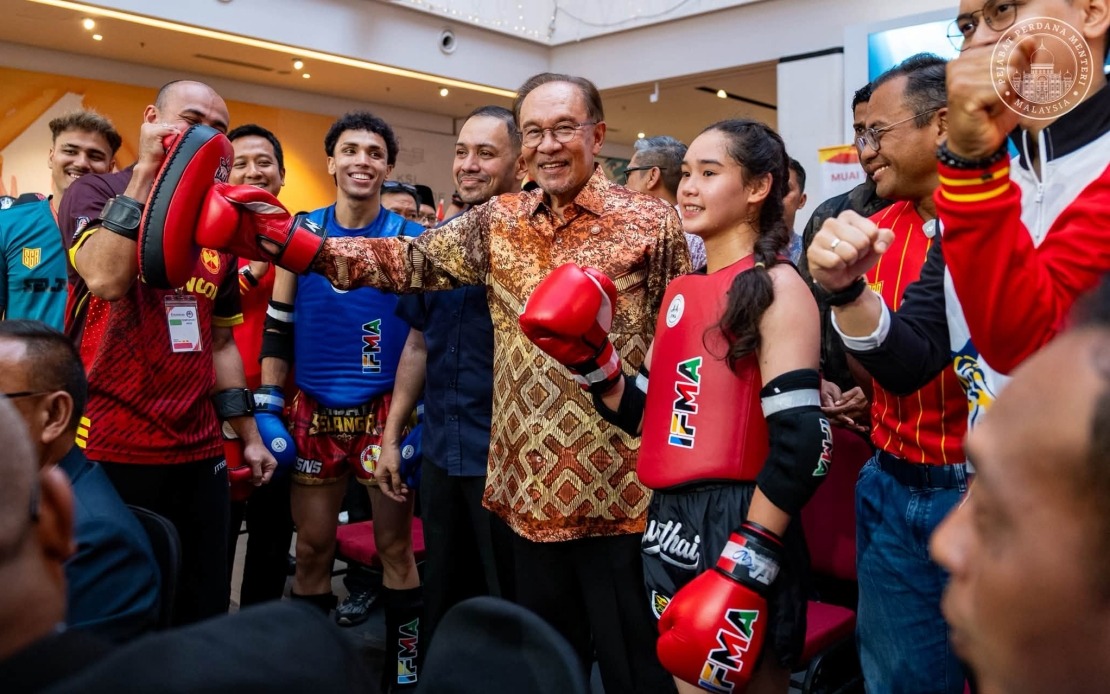
Prime Minister Datuk Seri Anwar Ibrahim has thrown his weight behind young competitors at the 2026 Selangor Malaysia Games, signalling the government's commitment to nurturing emerging sporting talent that could elevate Malaysia's standing in international competitions. Speaking through social media, Anwar commended the athletes participating in the biennial multi-sport event, particularly highlighting the calibre of performances he witnessed whilst observing Muay Thai competitions and interacting with participants.
The Prime Minister's endorsement carries particular significance given Malaysia's ongoing efforts to strengthen its sports development pipeline at the grassroots level. By publicly recognising the potential of SUKMA athletes, Anwar has underscored the strategic importance placed on identifying and supporting young talents early in their sporting careers. His remarks reflect a broader policy orientation toward building sustainable excellence across multiple disciplines, rather than relying solely on established competitors.
Selangor's hosting of SUKMA represents a major showcase for regional athletic talent, with the 2026 edition marking a notable return for the state after a 28-year interval since last hosting the games. The scale of the event underscores its significance within Malaysia's sports calendar. Over 5,000 young athletes from every state are converging on Selangor to compete for medals across 37 different sports, with 468 gold medals up for grabs. The competition runs until August 24, drawing sustained attention from national sporting bodies, government officials, and the media.
The breadth of sporting disciplines featured at SUKMA—encompassing traditional Malaysian favourites alongside Olympic sports and combat disciplines—creates opportunities for talent scouts and coaches to identify promising individuals across multiple domains. Muay Thai, which notably caught Anwar's attention during his visit, represents one of Southeast Asia's most culturally significant combat sports and has growing international appeal. Young Malaysian competitors in such disciplines are increasingly competitive on regional and global circuits, making SUKMA a critical testing ground.
Anwar's emphasis on discipline and spirit as defining characteristics of the young athletes reflects qualities that sporting bodies consistently identify as differentiating factors between good and exceptional competitors. These attributes—alongside technical skill—often determine whether athletes succeed in transitioning from domestic competition to international representation. The Prime Minister's observation suggests these fundamentals are being developed within Malaysia's grassroots sporting structure, a prerequisite for long-term competitive success.
The pathway from SUKMA participation to international representation remains a critical consideration for Malaysia's sports development strategy. Many SUKMA alumni have indeed progressed to representing Malaysia at Commonwealth Games, Southeast Asian Games, Asian Games, and Olympic competitions. However, consolidating and expanding this pipeline requires sustained investment in coaching infrastructure, sports science facilities, and competitive opportunities at intermediate levels. Anwar's public backing of current SUKMA athletes implicitly signals government recognition that such infrastructure demands merit attention and resources.
For the young competitors themselves, receiving encouragement from the nation's highest political office carries psychological and motivational weight. Prime ministerial recognition validates their efforts and potentially helps attract sponsorship, media coverage, and support from national sporting federations. It also signals to state and federal agencies that SUKMA participants merit investment in their continued development beyond the games themselves.
The timing of Anwar's remarks—during an active competition period—indicates sustained government engagement with sporting events beyond ceremonial opening and closing proceedings. This hands-on approach contrasts with previous administrations and reflects a potentially more integrated approach to sports policy within the broader national development agenda. Regular ministerial attendance at competitions also provides direct channels for feedback and observation regarding infrastructure needs, athlete welfare, and competitive standards.
Selangor's role as host carries implications for the state's own sporting development agenda. Successfully hosting a major multi-sport event provides opportunities to enhance facilities, demonstrate organisational capacity, and develop local sporting infrastructure with lasting benefits. The presence of thousands of young athletes provides a natural testing environment for venue operations, accommodation, transportation, and logistics systems that will form a template for future events.
For Southeast Asia more broadly, SUKMA functions as a significant talent showcase. Regional sporting organisations, coaches, and scouts frequently attend to identify emerging competitors who might eventually compete across broader Asian platforms. A SUKMA performance often serves as a springboard for regional recognition and selection to representative teams for higher-level competitions. Anwar's elevation of the games' significance through his direct engagement reinforces Malaysia's positioning as a serious sporting nation within the region.
The Prime Minister's implicit call for pathway development—suggesting that today's SUKMA medalists should become tomorrow's international representatives—aligns with successful sports nation models globally. Countries that dominate international competition typically invest heavily in systematic talent identification and development programmes beginning at primary school level and progressing through to elite competition. Malaysia's ability to transform SUKMA participation into sustained international competitiveness depends on such systematic approaches between competitions.
Moving forward, stakeholders including the Malaysian Olympic Council, state sports councils, and individual national sports associations will likely face implicit expectations—given Anwar's public statements—to demonstrate concrete progress in developing SUKMA athletes into senior representatives. This creates accountability at institutional levels and may facilitate prioritisation of investment and support mechanisms. The games therefore function not merely as a competitive event but as a critical junction point in Malaysia's broader talent development ecosystem.

