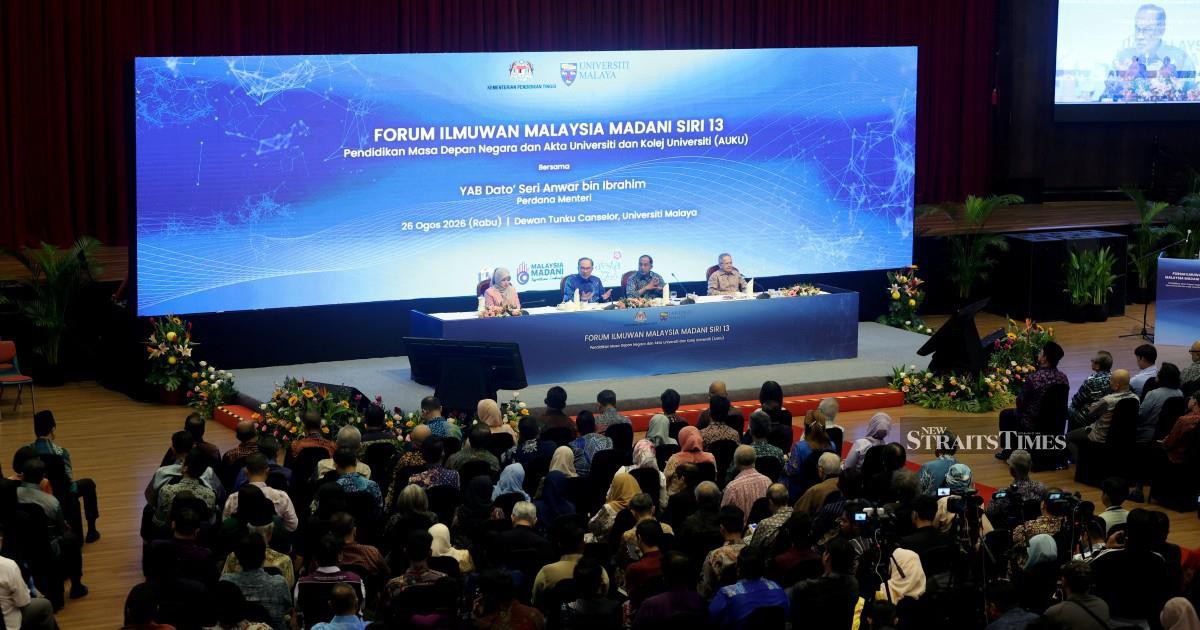
Prime Minister Datuk Seri Anwar Ibrahim has made a direct appeal to the university community and broader stakeholders to exercise patience as the government works towards repealing the Universities and University Colleges Act (AUKU), a controversial statute that has long restricted student activism and political participation on campus. The request underscores the complexity and sensitivity of addressing one of Malaysia's most contentious pieces of legislation governing higher education, signalling that reform will proceed through deliberate steps rather than swift legislative action.
The AUKU, a 1971 law that grants the government extensive regulatory powers over universities, has faced sustained criticism from student activists, civil society organisations, and academic freedom advocates who argue that its restrictive provisions violate fundamental freedoms of expression and assembly. The law's restrictions on political participation have made Malaysian universities notably controlled environments compared with peer institutions across the Asia-Pacific region, limiting the ability of students to organise, protest, or engage in partisan political activities on campus premises. This regulatory framework has created a distinctive governance model where university authorities maintain significant enforcement power over student conduct and political expression.
Anwar's appeal for understanding and forbearance reflects the political and institutional obstacles inherent in advancing such a fundamental legislative change. Repealing or substantially reforming AUKU requires navigating multiple layers of government bureaucracy, reconciling diverse stakeholder interests, and addressing concerns from university administration bodies that may resist loosening restrictions they have long used to maintain campus order. The Prime Minister's language suggests recognition that simply announcing an intention to repeal the law will not translate immediately into legislative action, and that the government faces genuine implementation challenges that demand time to resolve.
The government has framed its approach as targeting comprehensive improvement measures rather than merely striking down existing regulations. This suggests that reform will likely involve crafting replacement frameworks that address underlying governance concerns while expanding student freedoms. Such an approach would require drafting new legislation, consulting stakeholders including university leadership, student representatives, and academic bodies, and ensuring that any new framework commands sufficient parliamentary and institutional support. The multi-faceted nature of higher education governance means that AUKU repeal cannot be treated as a standalone legislative exercise but must be integrated into broader university modernisation efforts.
University students in Malaysia have consistently mobilised around the AUKU repeal issue, viewing the law as emblematic of the constraint placed on their generation's political engagement and development as democratic citizens. Youth activism concerning educational freedoms has grown more vocal in recent years, with student organisations regularly calling for immediate action on this issue. Anwar's direct engagement with this constituency through an explicit request for patience indicates that the government takes student sentiment seriously, even as it signals that solutions will not arrive on the accelerated timeline some activists advocate.
The Malaysian context makes AUKU reform particularly significant regionally. Universities are primary institutions where democratic participation, civic literacy, and political culture are developed, and restrictions on student political engagement shape the broader trajectory of democratic practice in Southeast Asia. Several neighbouring countries have grappled with similar tensions between campus autonomy and state oversight, making Malaysia's experience with university governance relevant beyond its borders. The willingness of a government to contemplate loosening restrictions on campus political activity represents a notable inflection point in Malaysian educational policy.
The institutional complexity surrounding AUKU extends to questions about how campus governance should balance competing interests. University administrators must maintain learning environments conducive to academic work whilst respecting student political development; governments must provide regulatory frameworks that ensure institutional stability without becoming instruments of political control; and students require spaces to develop political consciousness and organisational skills. Finding equilibrium among these interests demands careful redesign rather than simple deregulation, explaining why the government's approach emphasises comprehensive improvement rather than mere abolition.
Anwar's statement also reflects understanding that trust-building between government and the student constituency requires transparent communication about timelines and processes. By explicitly requesting confidence in the government's intentions whilst acknowledging that implementation will take time, the Prime Minister addresses both the substantive policy challenge and the relationship dimension that has historically characterised student-government dynamics around educational freedoms. This framing suggests a government attempting to manage expectations whilst demonstrating genuine commitment to reform.
The broader political economy of this issue includes consideration of how university reform fits within Malaysia's wider agenda of democratic renewal and governance modernisation. AUKU repeal represents one element of a larger conversation about civic space, political participation, and institutional accountability that extends throughout Malaysian society. The government's deliberate approach suggests recognition that sustainable reform requires building institutional capacity, developing new regulatory frameworks, and achieving a degree of consensus that cannot be rushed through legislative process alone.
As this reform process unfolds, the international dimension bears monitoring. AUKU's restrictiveness has periodically drawn attention from international academic and human rights organisations concerned with freedom of expression and campus autonomy in developing democracies. Malaysia's handling of university reform will contribute to its international profile on educational freedom and democratic governance, with implications for international academic partnerships, student mobility, and the nation's standing among knowledge-based economies.
The months ahead will likely see continued engagement between government, student organisations, university leadership, and civil society over the shape of AUKU reform. Anwar's appeal for patient trust suggests the government remains committed to the substantive objective whilst signalling that the path forward involves careful negotiation of interests and methodical institutional redesign rather than immediate legislative action.

