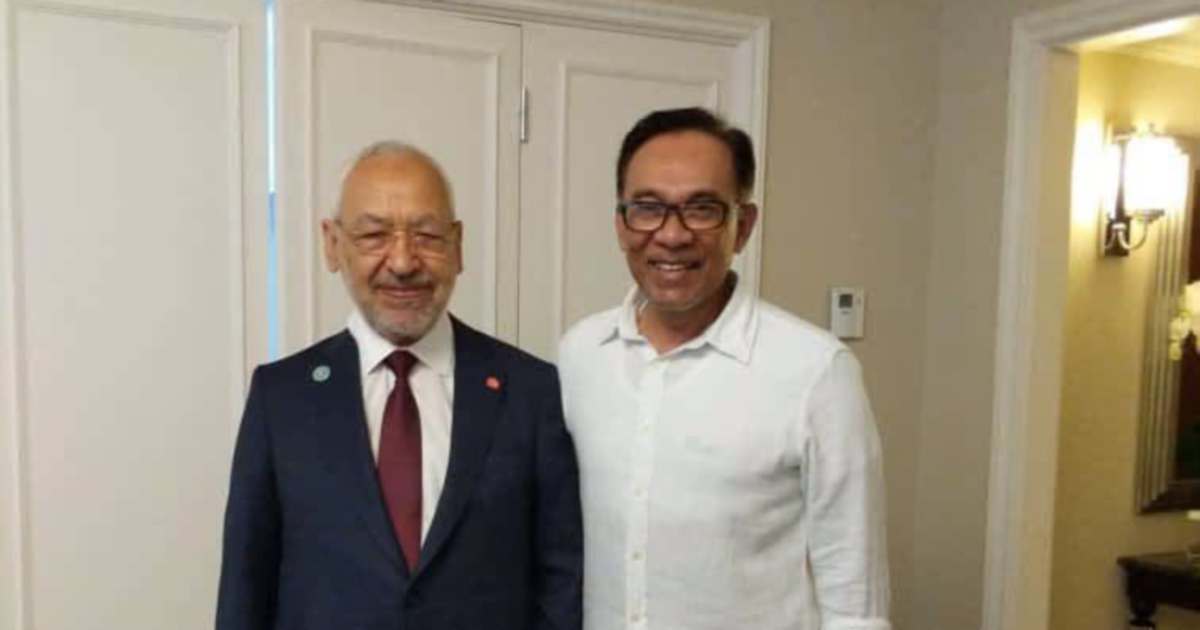
Prime Minister Datuk Seri Anwar Ibrahim has taken a diplomatic step by dispatching a letter to Tunisian President Kais Saied, urging the release of influential political figure Sheikh Rached Ghannouchi on humanitarian grounds. The appeal reflects Malaysia's broader commitment to humanitarian concerns and its willingness to engage with regional and international matters affecting prominent political figures, particularly those with connections to Muslim majority nations across the globe.
Ghannouchi, a significant political voice in North Africa, has found himself at the centre of Tunisia's complex political landscape in recent years. His detention has drawn international attention, with various global observers and leaders expressing concern about the circumstances surrounding his continued imprisonment and the broader implications for political freedoms in the country.
Anwar's intervention demonstrates Malaysia's diplomatic approach toward neighbouring and allied nations, particularly Muslim-majority countries where religious and political considerations intersect. As a leader with his own extensive experience navigating political challenges, the Prime Minister brings a distinctive perspective to discussions surrounding detention and political reconciliation. His appeal underscores Malaysia's position as a voice in the global Muslim community that advocates for fair treatment and humanitarian consideration in politically sensitive cases.
Tunisia has experienced significant political turbulence over the past several years, with tensions between various political factions creating an unstable environment. The situation involving Ghannouchi must be understood within this broader context of institutional strain and competing political interests that have characterised the nation's governance. These complexities have made Tunisia's domestic political situation a subject of concern for regional observers.
The timing of Anwar's letter suggests Malaysia's strategic interest in promoting dialogue and peaceful resolution of political disputes within the Muslim world. By appealing on humanitarian rather than explicitly political grounds, the Prime Minister employs diplomatic language designed to resonate with international human rights concerns while respecting Tunisia's sovereignty. This measured approach reflects contemporary diplomatic practice, where humanitarian framing often proves more effective than direct political intervention.
Such appeals typically carry weight within diplomatic circles, particularly when they emanate from established leaders like Anwar, whose credibility on matters of political justice and human rights is recognised internationally. Malaysia's intervention also signals to other nations that humanitarian considerations remain central to its foreign policy agenda, regardless of the specific political complexities involved in individual cases.
For Malaysian readers, this development illustrates how the country's leadership engages with international affairs affecting Muslim communities. It demonstrates the government's willingness to employ diplomatic channels to advocate for principles aligned with Islamic values of mercy and humanitarian treatment, even in complex situations involving countries with different political systems and circumstances.
Ghannouchi's case has attracted attention from various international observers concerned with political freedom and the treatment of detained figures. The religious and political dimensions of his detention have made his situation particularly sensitive within Muslim communities globally, creating a situation where humanitarian appeals carry both moral and practical significance.
Anwar's appeal represents Malaysia's nuanced engagement with global affairs, balancing respect for national sovereignty with advocacy for humanitarian principles. The letter signals that Malaysia continues to view itself as a responsible actor within the Muslim world, one prepared to voice concerns about fair treatment and basic human dignity through appropriate diplomatic channels.
The success of such appeals often depends on broader diplomatic relationships and the receptiveness of recipient governments to international advocacy. Tunisia's response to Anwar's letter may also reflect the nation's own calculations regarding international relations and its standing within the global community, particularly among Islamic nations and Western democracies monitoring governance standards.
This intervention illustrates how Southeast Asian nations, through their leaders' networks and relationships, can exercise soft power on matters extending beyond their immediate region. Malaysia's diplomatic engagement with North African political situations demonstrates the interconnectedness of global Muslim communities and their leaders' sense of shared responsibility for humanitarian outcomes.

