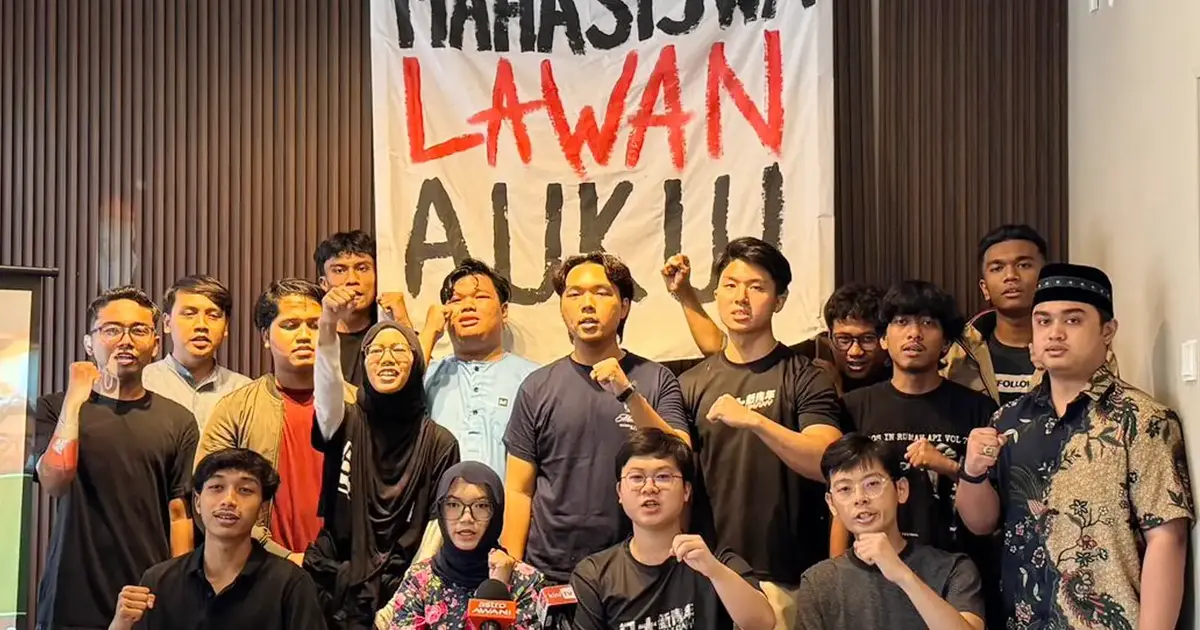
Prime Minister Anwar Ibrahim has made clear his opposition to enacting fresh legislation that would impose targeted curbs on student activities, marking a significant policy stance in the wake of the government's decision to scrap the long-standing AUKU restrictions that have governed campus life for decades.
The position represents a departure from decades of regulatory frameworks that have restricted student political engagement and activism. AUKU, the Universities and University Colleges Act of 1971, contained provisions that severely limited students' rights to participate in political activities, hold demonstrations, or engage in certain forms of campus organisation. The repeal of these measures signals a broader shift toward greater democratic freedoms within tertiary institutions, aligning with the current administration's broader reform agenda.
Anwar's assurance carries particular weight given Malaysia's history of student activism and the various attempts by successive governments to manage campus life through legislative measures. The statement suggests the government recognises the importance of allowing students greater latitude to organise and express themselves during their university years, a position that stands in contrast to the paternalistic approach that characterised earlier administrations.
The decision not to introduce replacement legislation reflects a nuanced understanding of higher education policy. Rather than simply removing old restrictions and immediately imposing new ones, the government appears committed to allowing a period of transition where campus governance can evolve through consultation with university administrators, student bodies, and other stakeholders. This approach reduces the risk of unintended consequences that might arise from hastily crafted replacement laws.
For Malaysian universities, the removal of AUKU restrictions and the commitment against new student limitation laws creates an opportunity to foster more vibrant intellectual communities. Students will have greater freedom to establish clubs and societies, organise events, and participate in discussions about national issues without fear of legal consequences. This liberalisation could enhance the international standing of Malaysian institutions, which have sometimes struggled to attract top talent partly due to perceptions of restricted academic freedom.
The ripple effects extend beyond campuses themselves. University students often serve as catalysts for broader social change, and greater student freedoms may contribute to a more engaged civil society. However, this freedom will likely come with responsibilities, requiring students and institutions to demonstrate maturity and self-governance in the absence of rigid statutory controls.
University administrators face a new challenge in this environment. Without legal restrictions to fall back on, managing campus affairs will require stronger institutional policies, clearer community standards, and better communication with student bodies. This shift places greater emphasis on building consensus and trust between authorities and students, rather than relying on top-down enforcement mechanisms.
The Anwar government's position also reflects changing international perspectives on student rights and campus democracy. Many established democracies have moved away from restrictive legislation governing student political expression, recognising that such freedoms are integral to developing informed, engaged citizens. By aligning Malaysia with this broader trend, the government signals its commitment to democratic principles and generational change.
For opposition parties and those who favour stricter controls, the commitment against new restriction laws may prove contentious. Critics may argue that without legislative safeguards, student activism could become disruptive or that campus activities could be exploited for partisan purposes. Balancing these concerns with the need for genuine freedom remains a delicate challenge, and questions will likely arise about how universities should handle situations involving serious misconduct or threats to safety.
The practical implementation of this policy will depend heavily on how universities themselves establish new governance frameworks. Progressive institutions may view this as an opportunity to develop more inclusive decision-making processes, while others might struggle with the transition from rule-based management to relationship-based approaches. The diversity of Malaysian universities suggests implementation will be uneven across the sector.
Regionally, Malaysia's move toward greater student freedoms positions the country as a progressive player in Southeast Asian higher education. Other nations in the region grapple with similar questions about balancing student expression with institutional stability, and Malaysia's experience could offer valuable lessons. If universities can successfully manage expanded freedoms while maintaining academic quality and institutional integrity, the model could influence policy discussions elsewhere in Asia.
Looking ahead, the government's commitment to avoid new restriction laws suggests a confidence in Malaysia's maturity as a democracy. This confidence may be tested as student activism inevitably becomes more visible, and instances of campus controversy arise. How the government responds to those inevitable flashpoints—whether with restraint or temptation to legislate anew—will ultimately determine whether this current policy shift represents a genuine and lasting change in approach to student freedoms or merely a temporary phase in Malaysia's continuing evolution of educational policy.

