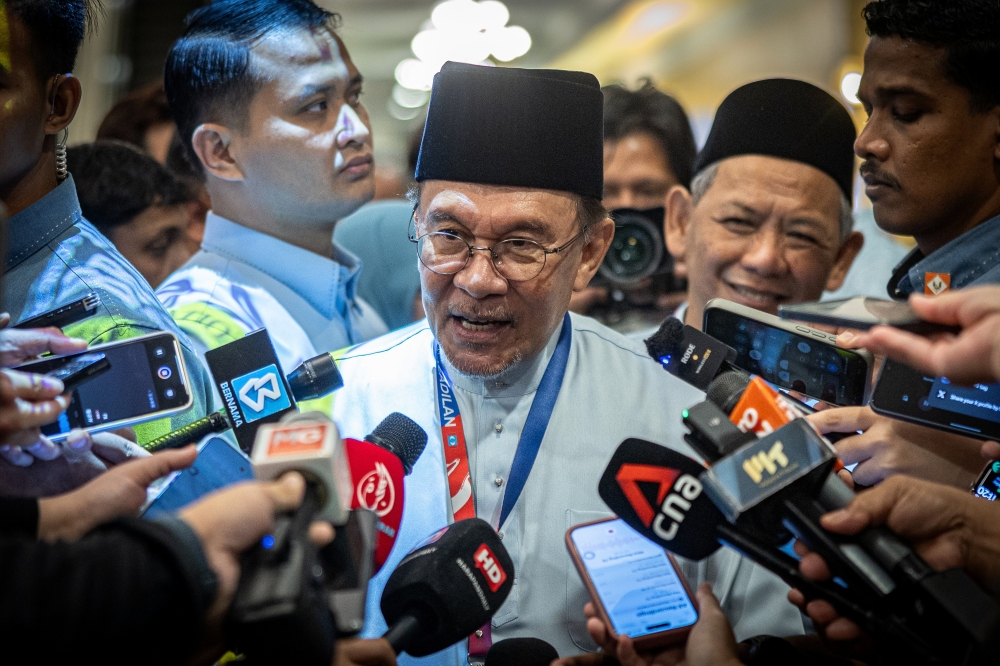
Prime Minister Datuk Seri Anwar Ibrahim has moved swiftly to quell mounting speculation about internal strife within Malaysia's governing coalition, declaring his unwavering commitment to working harmoniously with Deputy Prime Minister Datuk Seri Ahmad Zahid Hamidi. Speaking in Melaka on August 15, Anwar adopted a notably conciliatory tone when addressing questions about fractures within the alliance, emphasising that he consciously navigates political challenges through dialogue rather than confrontation.
The Prime Minister's remarks came in direct response to recent suggestions from Khairy Jamaluddin that tensions exist between Anwar's leadership and Zahid's position within the administration. Anwar's measured response underscores a deliberate political strategy: by publicly affirming his partnership with the Deputy Prime Minister, the Prime Minister aims to project an image of administrative stability even as underlying strains within the broader coalition become increasingly visible to observers and the general public.
Anwar's emphasis on pursuing "the peaceful path" carries particular significance given the fractious history of Malaysian coalition politics. His framing represents a calculated departure from the adversarial politics that characterised previous administrations, positioning his leadership as fundamentally different in tone and approach. This rhetorical positioning matters considerably for public perception, especially among voters who grew fatigued by years of political acrimony and institutional turbulence during earlier regimes.
The timing of these comments warrants close attention. Coalition tensions have periodically surfaced in recent months, with various party leaders occasionally signalling discontent with how government portfolios and influence have been distributed. By addressing potential rift narratives directly and forcefully, Anwar seeks to prevent speculation from hardening into substantive political divisions that could undermine legislative effectiveness or ministerial cooperation on critical policy matters.
Deputy Prime Minister Zahid represents a particularly significant relationship for Anwar to maintain. Zahid's United Malays National Organisation controls substantial numbers within Parliament, making his continued loyalty to the coalition mathematically essential for maintaining the government's majority. Any genuine rupture between the two figures could precipitate parliamentary instability and create opportunities for opposition parties to exploit governmental weakness through parliamentary manoeuvres or calculated defections.
The broader political context makes Anwar's unity messaging strategically intelligent. Malaysia faces considerable economic challenges, including inflationary pressures affecting ordinary households, ongoing fiscal constraints limiting government spending capacity, and structural economic vulnerabilities requiring sustained policy coordination. Coalition divisions would inevitably distract governmental attention from these pressing issues, potentially undermining the administration's capacity to respond effectively to citizen concerns about cost of living and employment security.
Khairy's suggestion of coalition friction reflects genuine complexities within Malaysia's diverse ruling alliance. Different component parties bring distinct ideological priorities, regional constituencies, and leadership interests that don't always align seamlessly. Managing such heterogeneous coalitions requires constant diplomatic effort, particularly when distributing resources, honours, and political credibility among member organisations. Anwar's previous experience leading Pakatan Harapan has equipped him with experience navigating multi-party arrangements, though each coalition configuration presents unique management challenges.
Anwar's public statements function as signals not merely to political rivals or media observers, but also to coalition members who monitor leadership communications carefully. By rejecting rift narratives and affirming his partnership with Zahid, Anwar provides reassurance to potentially anxious partners that the government remains cohesive and capable. This preemptive reputation management helps prevent coalition partners from hedging their bets or exploring alternative political alignments born from uncertainty about administrative durability.
The emphasis on peaceful governance carries resonance beyond immediate coalition management. Many Malaysian citizens value stability and predictability, having experienced extended periods of political turbulence, institutional conflicts, and leadership controversies that disrupted normal governance. Anwar's commitment to dialogue-based problem-solving appeals to voters prioritising normalcy and administrative functionality over ideological purity or factional dominance.
Yet the very necessity of Anwar making such statements underscores underlying realities that public denials cannot entirely obscure. Coalition governments inherently involve tension between shared governance and individual party interests. Zahid's position remains complicated by his ongoing legal challenges, which periodically occupy public attention and complicate his political standing. Managing these dynamics while maintaining effective government requires sustained attention and considerable political skill.
The path forward likely involves continued calibration of coalition relationships. Anwar must balance maintaining genuine partnerships with component parties while preserving sufficient leadership authority to drive governmental priorities. This requires demonstrating that coalition participation offers tangible benefits—ministerial positions, resource allocation, policy influence—sufficient to outweigh the temptations of opposition alternatives or political isolation.
Anwar's Melaka comments represent part of an ongoing project to stabilise Malaysia's political system after decades of institutional instability. Whether these efforts ultimately succeed depends partly on sustained commitment to partnership-based governance and partly on circumstances beyond any leader's immediate control. For now, the Prime Minister's emphasis on peaceful dialogue and coalition unity provides the framework within which Malaysia's complex governing arrangements must operate.

