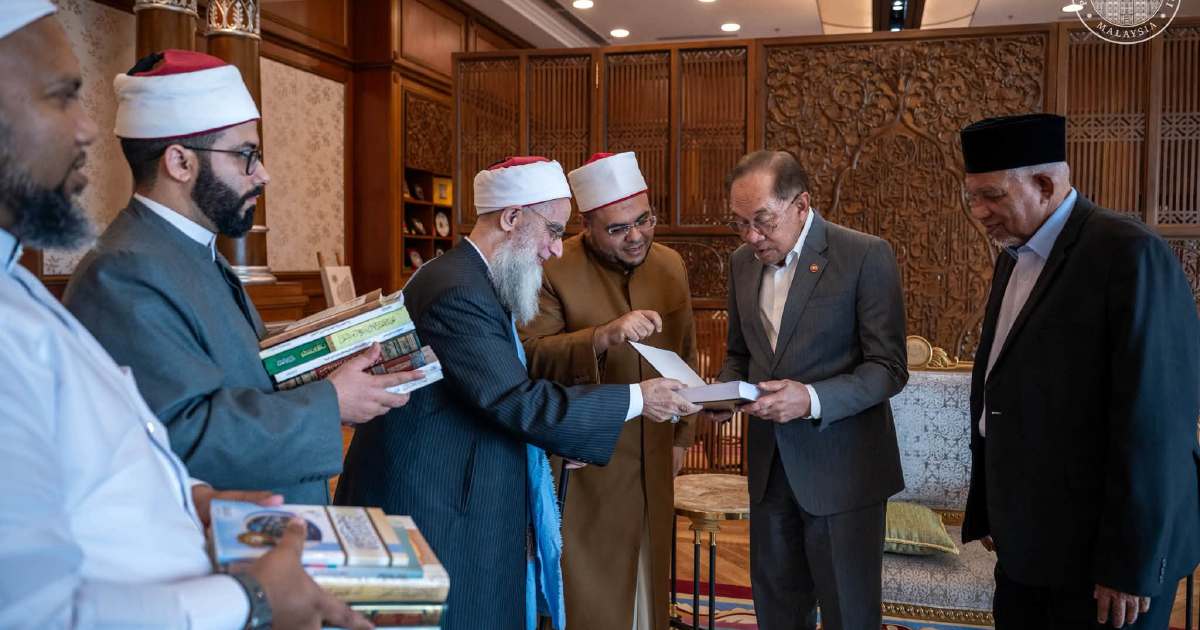
Prime Minister Datuk Seri Anwar Ibrahim has received Sheikh Dr Mustafa An-Nadwi Al-Hasani Mansurah, one of Egypt's most respected Islamic scholars, at his official office in Putrajaya. The engagement represents another significant moment in Malaysia's ongoing efforts to strengthen bilateral relations with Egypt and the broader Arab world through intellectual and religious dialogue.
Sheikh Dr Mustafa An-Nadwi, whose scholarly credentials carry considerable weight across Islamic academic circles, brings decades of expertise in Islamic jurisprudence and theological education. His prominence in Egypt's religious establishment makes visits such as this one strategically important for Malaysia, a nation increasingly positioning itself as a bridge between Southeast Asian Muslim communities and the Arab Islamic heartland. The reception at Putrajaya's highest office level signals the Malaysian government's appreciation for cross-cultural and interfaith scholarly engagement.
The timing of this visit carries particular significance given Malaysia's evolving foreign policy priorities under Anwar Ibrahim's administration. Since assuming the premiership, Anwar has consistently emphasised the need for Malaysia to play a more active role in promoting Islamic scholarship and thought that is moderate, inclusive, and responsive to contemporary challenges facing Muslim-majority societies. Such high-level meetings with respected religious scholars from key Arab nations help amplify this messaging both domestically and internationally.
Egypt, as the Arab world's most populous nation and home to Al-Azhar University, one of Islam's oldest and most influential educational institutions, occupies a special place in the Muslim world's intellectual landscape. Egyptian scholars wield considerable influence over Islamic discourse across the Middle East, North Africa, and Southeast Asia. A visit by someone of Sheikh Dr Mustafa An-Nadwi's standing suggests that Malaysia's leadership recognises the value of maintaining robust connections with Egypt's religious establishment.
For Malaysian policymakers and Islamic institutions, such exchanges serve multiple purposes beyond diplomatic courtesy. They provide opportunities to discuss contemporary issues affecting Muslim communities globally, from education reform to interfaith relations and the role of Islam in modern governance. These conversations between Southeast Asian and Arab Islamic thought leaders help inform Malaysia's approach to religious affairs and foreign engagement.
The reception also reflects Anwar Ibrahim's personal commitment to theological and scholarly pursuits. Throughout his political career, the Prime Minister has positioned himself as an advocate for progressive Islamic thought and has maintained connections with influential Muslim intellectuals worldwide. His willingness to personally receive visiting scholars demonstrates that these interactions remain a priority within his administration's broader diplomatic strategy.
From an international relations perspective, Malaysia's cultivation of ties with prominent Egyptian figures extends beyond ceremonial exchanges. Egypt remains a crucial ally within the Arab League and the Organisation of Islamic Cooperation, both multilateral forums where Malaysia seeks to amplify Southeast Asian interests. Strong personal and institutional relationships with Egyptian religious and political leaders facilitate Malaysia's participation in these wider Muslim world conversations.
The visit also underscores Malaysia's role as a pluralistic Muslim-majority nation capable of hosting and engaging with diverse Islamic perspectives. In an era when various strands of Islamic thought sometimes compete for influence, Malaysia's openness to receiving scholars representing different traditions and schools of interpretation demonstrates the country's commitment to intellectual diversity within Islam. This positioning helps Malaysia distinguish itself on the global stage as a nation where religious tolerance and scholarly exchange coexist.
For Malaysian Islamic institutions, universities, and religious departments, exposure to leading Arab scholars provides valuable knowledge transfer opportunities. Egyptian Islamic scholarship, shaped by centuries of institutional development and engagement with Western academic traditions, offers important insights for Malaysian educators developing curricula and research programmes in Islamic studies. Visits such as Sheikh Dr Mustafa An-Nadwi's create pathways for deeper collaboration between Malaysian and Egyptian centres of learning.
The engagement also resonates with Malaysia's substantial Egyptian expatriate community and the broader Arab population residing in the country. Such high-profile receptions of respected Arab scholars validate the contributions of these communities to Malaysian society and reaffirm the government's appreciation for Malaysia's Arab heritage and connections. This symbolic aspect should not be underestimated in maintaining social cohesion among Malaysia's diverse Muslim population.
Looking ahead, such visits likely presage deeper institutional cooperation between Malaysia and Egypt in areas ranging from Islamic education to interfaith dialogue initiatives. The personal attention of the Prime Minister signals that bilateral relations in these spheres warrant serious investment and development. Future partnerships may include exchange programmes for scholars, collaborative research projects, or joint initiatives addressing shared challenges within the Muslim world.
As Malaysia navigates an increasingly complex global landscape marked by geopolitical shifts and evolving challenges to religious harmony, the country's investment in relationships with respected Muslim intellectuals and leaders becomes ever more valuable. The reception of Sheikh Dr Mustafa An-Nadwi exemplifies how high-level diplomatic engagement can serve both immediate symbolic purposes and longer-term strategic objectives in advancing Malaysia's interests within the wider Islamic world.

