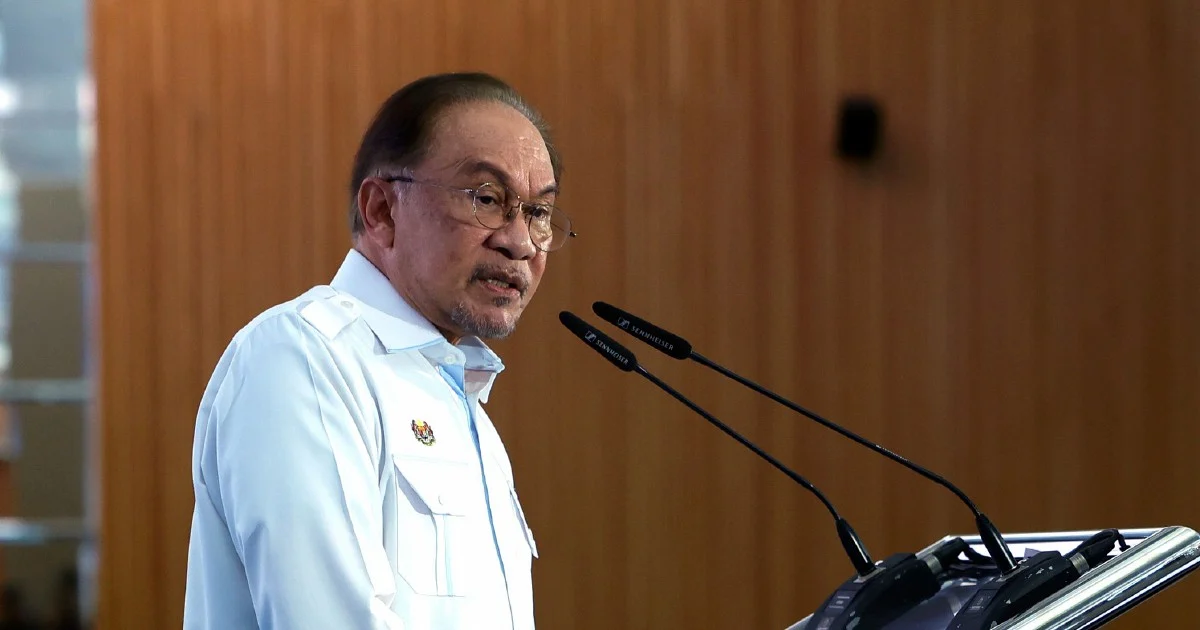
Prime Minister Datuk Seri Anwar Ibrahim has firmly rejected allegations suggesting that Putrajaya distributes development funds to states according to partisan preferences or regional bias, addressing recurring criticism that federal allocations perpetuate inequality across Malaysia's diverse geography.
The Prime Minister's statement represents a direct response to mounting concerns among state governments and civil society observers who have scrutinised how federal development budgets flow to different regions. Questions about equitable resource distribution have long troubled Malaysian federalism, with opposition-controlled states and poorer regions particularly vocal about perceived disadvantages in accessing centralised funding pools.
Anwar's dismissal of these claims carries significant weight given Malaysia's ongoing constitutional arrangements governing federal-state fiscal relations. The Prime Minister's position suggests the government views existing allocation mechanisms as fundamentally fair, though this assertion invites scrutiny from economists and governance experts who have documented substantial variations in per-capita development spending across states. Understanding these mechanisms remains crucial for Malaysians seeking to evaluate whether their home states receive proportionate investment.
The timing of the Prime Minister's remarks reflects broader political tensions within Malaysia's federal system. Since Putrajaya came under Pakatan Harapan leadership, questions about development equity have persisted across state lines, with some governing coalitions expressing frustration over perceived funding constraints compared to predecessors' tenure. The federal administration's insistence on fairness requires examination against objective data regarding actual expenditure patterns, budget allocations, and infrastructure project distribution across peninsular and East Malaysian states.
Development allocations traditionally comprise the bulk of federal investment in state economies, encompassing everything from transport infrastructure and educational facilities to healthcare systems and industrial parks. These funds represent concrete expressions of federal policy priorities and reveal which regions receive preferential attention for growth initiatives. For states struggling with fiscal constraints or developmental lag, federal support often constitutes the difference between progressing toward prosperity and remaining trapped in economic disadvantage.
The Prime Minister's position assumes significance against Malaysia's historical geography of inequality, where peninsular states and developed urban centres have historically captured disproportionate development resources compared to rural areas and East Malaysian states. Sarawak and Sabah, despite their size and population, have long advocated for greater developmental investment, while poorer states on the peninsula similarly contend that allocation formulas inadequately reflect their needs or potential.
Anwar's remarks warrant comparison with publicly available data on federal development spending, which specialists can analyse to assess whether allocations genuinely follow equitable principles or whether political considerations influence distribution. Transparency regarding allocation criteria and actual expenditure patterns would strengthen the government's position and restore public confidence in federal fiscal management. Citizens deserve clarity on how Putrajaya decides which projects receive funding and which states benefit from major initiatives.
The federal government's allocation frameworks ostensibly incorporate needs-based components that account for state development status, population size, and infrastructure gaps. However, critics argue these formulas occasionally yield counterintuitive results, with wealthier states securing substantial allocations while poorer regions struggle to access proportionate resources. Anwar's blanket dismissal of unfairness claims sidesteps opportunities to demonstrate how federal mechanisms actually address regional disparities or whether reforms might improve equity.
For Malaysian readers across various states, the Prime Minister's assertion invites examination within their own contexts. Residents in states experiencing visible infrastructure deficits or lagging economic performance may instinctively question whether they receive fair federal support, regardless of official positions. Public perception of development equity significantly influences political confidence and social cohesion, making transparent communication about allocation decisions essential for maintaining trust in federal governance.
East Malaysia's particular position warrants attention, given historical constitutional arrangements recognising Sarawak and Sabah's special status and entitlement to petroleum royalties and developmental support. Federal allocations to these states represent not merely policy preferences but contractual obligations underpinning Malaysia's federation. Anwar's dismissal of allocation concerns must convincingly address whether federal mechanisms adequately honour these commitments.
The Prime Minister's statement occurs amid broader regional competition for federal resources and attention. As states vie for investment in renewable energy projects, digital infrastructure, and manufacturing hubs, allocation decisions increasingly reflect which regions receive priority in national economic strategy. This competition fundamentally shapes state prosperity trajectories and influences whether Malaysia's development achieves greater geographical balance or deepens existing regional disparities.
Moving forward, the government might strengthen confidence in federal allocation systems through enhanced transparency, detailed public reporting on spending patterns, and clear articulation of criteria determining which projects and states receive support. Demonstrating fairness through measurable outcomes and accessible information represents a more persuasive approach than simple assertions that current systems operate equitably. For Malaysia's continued stability and equitable development, citizens across all states deserve to understand and verify that federal resources truly distribute fairly according to genuine developmental needs rather than political considerations.

