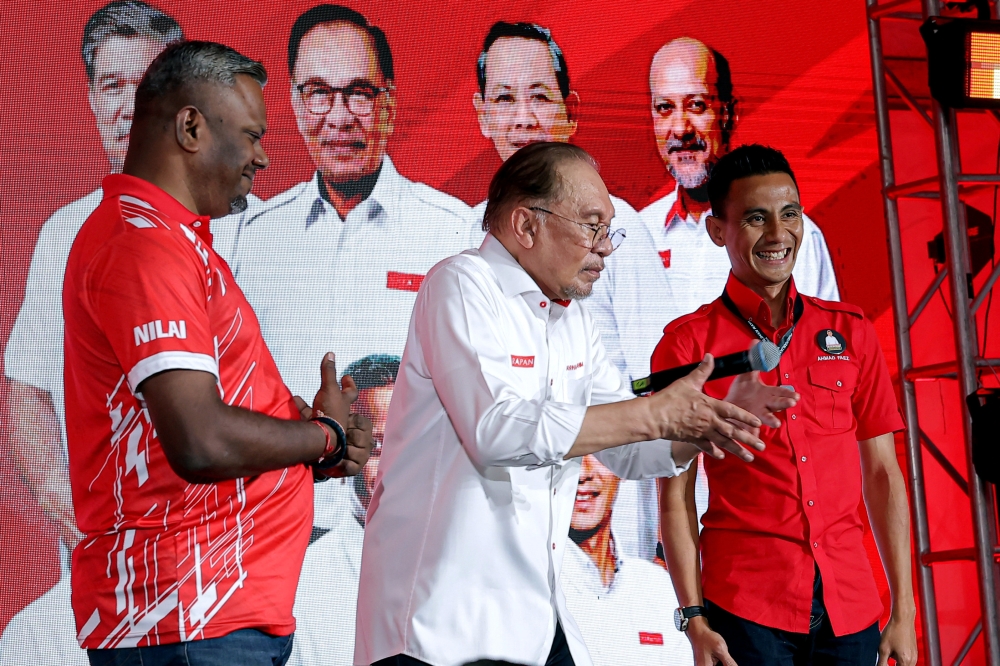
Prime Minister Datuk Seri Anwar Ibrahim has doubled down on his commitment to national unity, issuing a reiterated apology to the Indian community following comments that sparked controversy within the ethnic group. Speaking in Seremban on July 30, the premier sought to reinforce the message that Malaysia is a nation built on the foundations of inclusivity and belonging for all its citizens, regardless of ethnic or religious background.
The statement comes at a sensitive moment in Malaysia's ongoing journey toward racial and religious harmony. The apology underscores the delicate balance that national leaders must maintain when addressing specific communities, particularly on matters that touch on identity and representation. For the Indian Malaysian community, which comprises roughly 7 per cent of the population, such gestures carry symbolic weight in affirming their place within the national fabric.
Anwar's reiteration of his apology reflects broader efforts within the current administration to project an image of inclusive governance. The Prime Minister's willingness to address concerns raised by minority communities signals an approach that seeks to incorporate diverse voices into the national dialogue. This positioning is particularly relevant as Malaysia continues to grapple with questions of social cohesion in an increasingly plural society.
The incident highlights the significance of careful communication from the highest levels of government. In a multicultural nation where historical grievances and contemporary sensitivities often intersect, statements made by national leaders can either bridge divides or inadvertently widen them. The fact that Anwar felt compelled to reiterate his apology suggests he views this matter as worthy of sustained attention rather than a fleeting controversy.
For the Indian community specifically, the response carries implications beyond the immediate remarks. Indian Malaysians have historically sought recognition of their contributions to the nation's development, from colonial-era plantation workers to modern professionals across all sectors. Periodic friction over representation in government, educational opportunities, and economic advancement has meant that community leaders remain vigilant about political messaging that could be perceived as dismissive or exclusionary.
The Prime Minister's emphasis that Malaysia belongs to all citizens echoes constitutional principles enshrined in the Federal Constitution, though the gap between formal guarantees and lived experience remains a persistent concern for many Malaysians. By explicitly restating this principle, Anwar attempts to reinforce the foundational contract binding the nation together, even as disagreements emerge over specific policies or statements.
From a regional perspective, Malaysia's approach to managing ethnic relations holds relevance for other Southeast Asian nations wrestling with similar challenges. The relative stability of Malaysian society, despite its diversity, offers lessons in conflict avoidance and dialogue, though critics note that these mechanisms sometimes mask underlying tensions rather than resolving them comprehensively.
The apology also reflects evolving standards within Malaysian political discourse regarding accountability. Compared to previous decades, contemporary political leaders face greater scrutiny from both mainstream media and social networks when their remarks provoke community concern. This increased transparency and responsiveness, while sometimes appearing reactive, represents a shift toward more participatory governance structures.
Anwar's governing coalition, which includes representatives from various ethnic and religious backgrounds, depends partly on maintaining coalition harmony. The Indian Malaysian community, though not a decisive electoral bloc in most constituencies, influences coalition dynamics in specific urban and rural areas. Preserving goodwill across different communities therefore remains a practical political necessity alongside a matter of principle.
Moving forward, the challenge for the administration lies in translating such statements of unity into tangible policies that address specific community concerns. Indian Malaysians, like other minority groups, evaluate their leaders not solely on rhetorical commitments but on concrete outcomes in education, economic opportunity, and representation in public institutions.
The incident ultimately reinforces that building an inclusive nation requires sustained effort and consistent messaging from political leaders. For Malaysia to deepen its social cohesion, such moments of potential division must be addressed promptly and sincerely, while also creating space for deeper conversations about how different communities can strengthen their collective national project.

