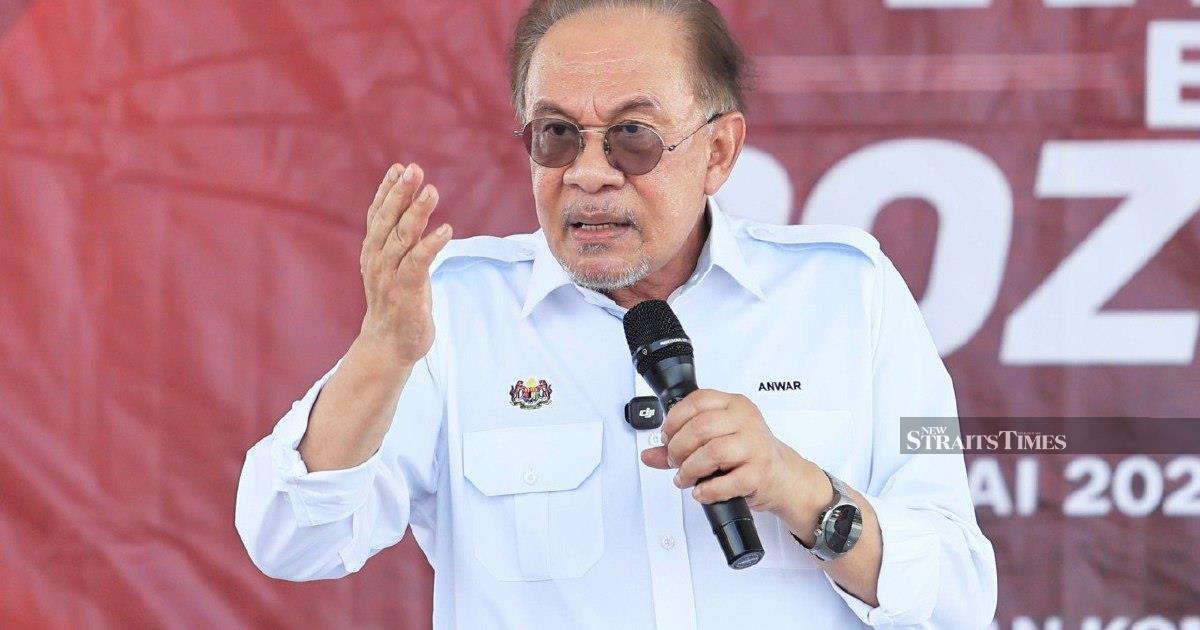
Speaking during a campaign stop in Segamat, Pakatan Harapan chairman Datuk Seri Anwar Ibrahim has leveled criticism at caretaker Menteri Besar Datuk Onn Hafiz Ghazi, highlighting what he characterizes as a pattern of non-attendance at crucial federal-state coordination meetings. The remarks underscore growing tensions within Malaysia's political leadership as the nation navigates complex governance issues requiring seamless cooperation between federal and state authorities.
Anwar's public questioning of Onn Hafiz's participation in these coordination meetings reflects broader concerns about administrative continuity during the caretaker period. Such federal-state meetings serve as essential platforms for addressing cross-cutting policy matters, resource allocation, and the implementation of national initiatives that depend on state-level cooperation. The absence of a key state leader from these forums potentially undermines the efficiency of governance structures designed to coordinate responses to pressing national challenges.
The timing of Anwar's criticism carries particular significance given Malaysia's ongoing political transitions. Caretaker arrangements create periods of administrative uncertainty, yet the necessity for functional governance does not diminish. State menteri besar, regardless of their political affiliations or caretaker status, retain responsibilities for their respective territories and populations. The federal government's expectation that state leaders maintain engagement with coordination mechanisms reflects a standard principle of administrative accountability.
Onn Hafiz's position as caretaker Menteri Besar of Johor carries substantial weight given the state's economic importance and demographic size. Johor's role in Malaysia's development agenda, its port facilities, and its integration with Singapore make state-level administrative performance particularly consequential for broader national interests. Consistent absence from federal-state forums potentially signals disengagement at a moment when coordinated action is essential.
The public nature of Anwar's criticism suggests this issue extends beyond routine administrative disagreements. By raising the matter publicly during a campaign engagement, the Pakatan Harapan chairman is signaling to constituents that questions about administrative performance and political responsibility remain relevant campaign topics. This reflects a broader pattern in Malaysian politics where governance competence and institutional commitment feature prominently in electoral discourse.
Federal-state coordination meetings typically address matters spanning infrastructure development, public health implementation, educational initiatives, and economic policy alignment. When senior state officials decline participation in these forums, the consequences ripple across multiple policy domains. Implementation delays, inconsistent approaches to national programs, and reduced information flow between administrative tiers can all result from such absences. For citizens depending on coordinated service delivery, the practical effects manifest in slower project completion and policy implementation gaps.
The Johor context adds layers of complexity to this dispute. As Malaysia's second-largest state by population and a significant economic contributor, Johor's governance standards influence perceptions of national administrative health. Any perception that Johor's leadership is disengaging from federal coordination mechanisms invites scrutiny about whether political considerations are overriding administrative necessities. This becomes particularly sensitive during caretaker periods when questions about the legitimacy and effectiveness of temporary arrangements already occupy public attention.
Onn Hafiz's response to these accusations, or his explanation for the meeting absences, would clarify whether scheduling conflicts, principled objections to particular meetings, or other factors account for his non-attendance. Political rivals frequently differ on whether caretaker officials should engage fully with incoming administrations on major initiatives. Some argue caretaker roles demand constrained participation, while others contend that temporary status does not justify administrative disengagement. These philosophical differences occasionally mask deeper political calculations about cooperation between competing political movements.
The incident illustrates tension points in Malaysia's governance architecture between political competition and institutional continuity. Caretaker periods create inherent friction: outgoing administrations may feel unmotivated to cooperate fully with successor governments perceived as political opponents, while incoming leaders may view such cooperation as compromising their electoral mandate. Federal-state meetings that require collaboration across these divides become flashpoints for deeper political disagreements about authority, legitimacy, and the pace of policy transition.
For Malaysian observers and regional analysts tracking Southeast Asian governance developments, this public dispute highlights how political polarization affects administrative functionality. The willingness of senior officials to engage in institutional cooperation, particularly during transitional periods, reflects broader health of democratic governance systems. When political leaders publicly question each other's administrative commitments, citizens reasonably wonder whether partisan interests are superseding institutional responsibilities.
Moving forward, this episode raises questions about mechanisms for ensuring continuity in federal-state coordination regardless of political complexities. Whether through institutional reforms, procedural clarifications, or political understanding about expectations for caretaker officials, Malaysia's political system may need to strengthen expectations for administrative engagement across political divides. The public criticism suggests current informal understandings are insufficient to ensure consistent participation in essential coordination forums.
The broader implications extend beyond Johor or the current caretaker arrangement. As Malaysia continues managing political transitions and coalition formations, establishing clearer norms about administrative responsibility during interregnum periods would strengthen governance. Anwar's public challenge to Onn Hafiz's participation patterns essentially invites political and public debate about what standards should govern caretaker officials' engagement with federal coordination mechanisms.

