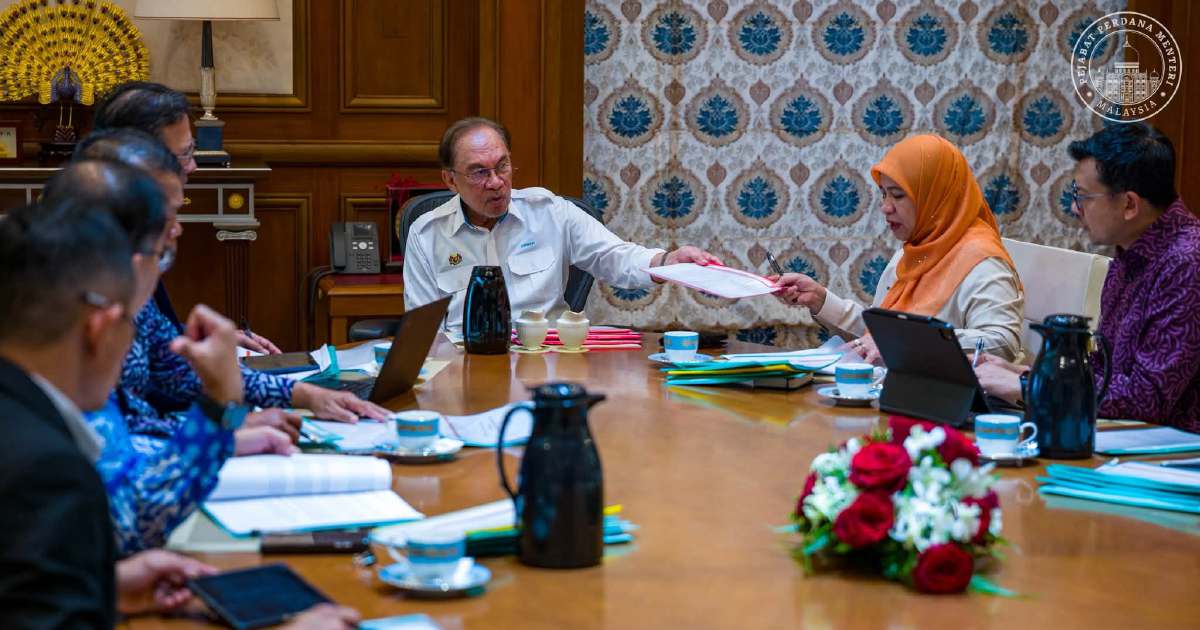
Prime Minister Datuk Seri Anwar Ibrahim has pressed for a comprehensive and fair approach to resolving chronic challenges facing Federal Land Development Authority (Felda) settlers, with particular emphasis on land ownership clarity and inadequate housing provisions for younger generations.
The premier's intervention signals renewed attention to grievances that have accumulated over decades within the Felda scheme, one of Malaysia's largest agricultural settlement programmes. Felda settlers have long struggled with uncertain land tenure, complicated by inheritance disputes and insufficient accommodation for adult children who wish to remain within their communities. These structural problems have created economic hardship and social tension across numerous settlements nationwide.
Felda was established as a flagship development initiative to transform rural livelihoods and provide smallholder farming opportunities. Yet the scheme has faced mounting criticism from residents who cite inadequate infrastructure investment, unclear regulatory frameworks governing land transfer, and the failure to anticipate housing needs for subsequent generations. Many settlers now face the prospect of their children unable to afford or legally occupy family land, creating intergenerational equity concerns.
The land ownership issue remains particularly contentious. Original Felda titles frequently contain restrictive covenants limiting alienation and inheritance rights, leaving many families unable to leverage their primary assets for economic advancement or secure housing for heirs. Bureaucratic processes for resolving these constraints have proven lengthy and opaque, frustrating residents seeking clarity over their own property. Meanwhile, the second-generation housing crisis has left thousands of young adults without viable accommodation options within their settlement communities, forcing migration to urban centres or reliance on inadequate temporary structures.
Anwar's call for action arrives amid broader policy reassessment within the current administration regarding rural development and agricultural sector sustainability. Felda settlements represent approximately 900,000 people across Malaysia, making reform efforts politically significant and economically consequential. The agricultural sector, already facing headwinds from commodity price volatility and climate pressures, cannot afford to sideline the welfare and stability of its primary smallholder base.
An expedited resolution process would need to balance multiple competing interests. Settlers require certainty regarding asset ownership and inheritance, enabling proper financial planning and family security. The government must establish clear pathways for land transfer while maintaining scheme integrity. Meanwhile, housing solutions must accommodate both immediate needs and longer-term demographic shifts, potentially involving collaborative approaches between government agencies, financial institutions, and private developers.
The Malaysian context makes Felda reform particularly relevant for regional observers. Across Southeast Asia, rural development schemes face similar tensions between modernisation pressures and the protection of smallholder interests. How Malaysia addresses these challenges may offer lessons for neighbouring countries managing comparable agricultural programmes and settler communities. Effective solutions could strengthen rural economic resilience region-wide.
Implementing fair and swift resolution requires institutional coordination. Multiple government departments oversee different aspects of Felda operations, from land administration to housing policy to agricultural support. Previous reform attempts have foundered partly due to bureaucratic fragmentation. Anwar's intervention suggests potential political will to streamline decision-making and prioritise settler welfare within administrative structures that have sometimes appeared more concerned with protecting institutional prerogatives than serving constituents.
The financial dimension cannot be overlooked. Resolving land disputes and constructing adequate housing requires substantial investment that must ultimately come from government coffers, land reallocation schemes, or public-private partnerships. Settlers themselves often lack the capital to fund housing improvements independently, particularly younger generation members without established incomes. Any sustainable solution must confront these resource constraints directly rather than deferring them through procedural complexity.
Public consultation will likely prove essential to building consensus around reform proposals. Felda settlers are neither homogeneous nor passive stakeholders. Some benefit from current arrangements while others suffer acutely. Representative voices from across settlement communities must inform policy design to ensure solutions address diverse circumstances and gain grassroots legitimacy. Without inclusive engagement, even technically sound reforms may face implementation resistance.
The premier's statement marks a recognition that prolonged inaction perpetuates economic waste and social frustration. Young people unable to secure housing in their home communities represent lost human capital and reduced agricultural productivity. Land uncertainty depresses investment in improvements and productive capacity. Swift, fair resolution offers potential gains for individual families, settlement communities, and Malaysia's broader development trajectory.
Moving forward, clarity regarding timelines and concrete mechanisms will matter more than rhetorical commitment. Settlers have heard reform promises before without seeing transformative change. Establishing measurable benchmarks, transparent processes, and genuine authority to implement decisions will test whether this intervention represents genuine policy shift or familiar political positioning. The coming months will reveal whether Anwar's emphasis on fairness and speed translates into institutional action that genuinely improves lives within Malaysia's Felda communities.

