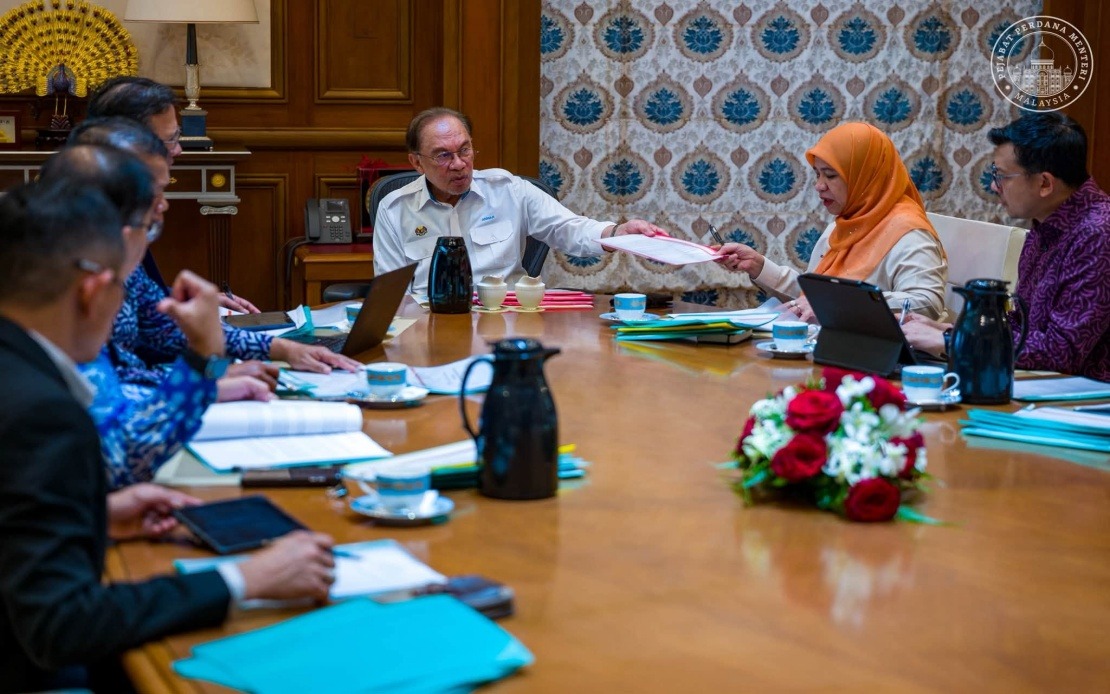
Prime Minister Datuk Seri Anwar Ibrahim has called for the Federal Land Development Authority (FELDA) to accelerate its efforts in resolving long-standing grievances affecting settlers, with particular emphasis on second-generation housing and land ownership disputes that have accumulated over decades.
Through a Facebook statement released on July 6, Anwar articulated the administration's stance that these matters can no longer remain unresolved and demanded that FELDA prioritize immediate, concrete action that serves the genuine interests of its resident communities. The intervention reflects growing political attention to an issue that has festered within FELDA constituencies, where successive generations of settlers have faced bureaucratic hurdles in securing proper housing upgrades and clarifying land tenure rights.
The Prime Minister's emphasis on systematic problem-solving underscores the MADANI Government's broader commitment to administrative efficiency. He stressed that every grievance merits thorough examination coupled with transparent and implementable resolution pathways, signalling that vague promises or delayed timelines will no longer satisfy stakeholder expectations. This directive carries particular weight given that FELDA settlers represent a significant political constituency across multiple states, with second-generation issues touching hundreds of thousands of Malaysians who inherited development scheme participation from their parents.
Second-generation land and housing complications have emerged as one of FELDA's most intractable problems. Many young settlers inherited unclear land rights or faced restrictions on selling inherited plots, while inadequate housing infrastructure meant that replacement units or renovation assistance remained inaccessible through standard channels. These constraints have bred frustration across FELDA communities, with residents pointing to slow bureaucratic processing, unclear ownership documentation, and limited financial mechanisms to facilitate housing improvements.
The MADANI Government's positioning reflects a strategic recalibration of how federal authorities engage with long-neglected rural constituencies. By publicly directing FELDA leadership to expedite solutions, Anwar is signalling that governance effectiveness and responsiveness to settler concerns represent core administration values. This approach contrasts with previous periods when such issues received sporadic attention or were managed through piecemeal initiatives rather than comprehensive policy review.
FELDA's institutional capacity to implement solutions remains a critical variable in determining whether these directives translate into tangible outcomes. The authority operates across multiple states and manages diverse settlement schemes established over different decades, each presenting distinct administrative and legal challenges. Consolidating case management, streamlining verification processes, and clarifying ownership documentation will require coordinated effort across FELDA's regional offices and collaboration with state land authorities whose cooperation remains essential for finalizing transactions.
The housing dimension proves particularly pressing given demographic shifts within FELDA communities. Many first-generation settlers have aged substantially, creating urgent succession planning needs for their children. Without clarity on housing standards and upgrade pathways, second-generation beneficiaries cannot plan family expansion or make informed decisions about remaining within schemes versus seeking alternative arrangements. Resolving this backlog represents both a moral imperative for communities that have invested decades in development schemes and a practical governance challenge requiring resource allocation and institutional coordination.
For Malaysian policymakers, the FELDA situation illuminates broader tensions between development scheme legacies and contemporary expectations. These communities were established under mid-twentieth-century frameworks that often proved inadequate as demographic, economic, and social conditions evolved. Contemporary settlers expect housing standards, infrastructure quality, and administrative transparency comparable to other federal development initiatives, yet inherited structures sometimes perpetuate outdated arrangements that frustrate residents and underutilize assets.
The political dynamics surrounding FELDA constituencies lend weight to the Prime Minister's intervention. These areas have historically delivered significant electoral support to governing coalitions, yet residents frequently articulate grievances suggesting that political loyalty has not translated into proportionate investment or administrative priority. Anwar's public directive addresses this sentiment by elevating settler concerns to the highest governmental level and establishing accountability expectations for FELDA leadership implementation.
Regional implications extend beyond individual settlement schemes to Malaysia's broader rural development narrative. Neighbouring Southeast Asian nations managing comparable land settlement programmes face similar tensions between development scheme sustainability and beneficiary satisfaction. Malaysia's approach to resolving second-generation FELDA complications could inform contemporary thinking about maintaining relevance and credibility of established development institutions as societies mature and expectations evolve.
Implementation timelines will prove crucial in measuring whether this intervention produces substantive change or remains an aspirational statement. FELDA leadership will require clear benchmarks, resource commitments, and accountability mechanisms to translate policy direction into tangible settler outcomes. The coming months will reveal whether the administration's commitment to urgency manifests in accelerated case processing, clarified land documentation procedures, and accessible housing improvement pathways that genuinely serve second-generation communities whose patience with unresolved disputes has long since exhausted.

