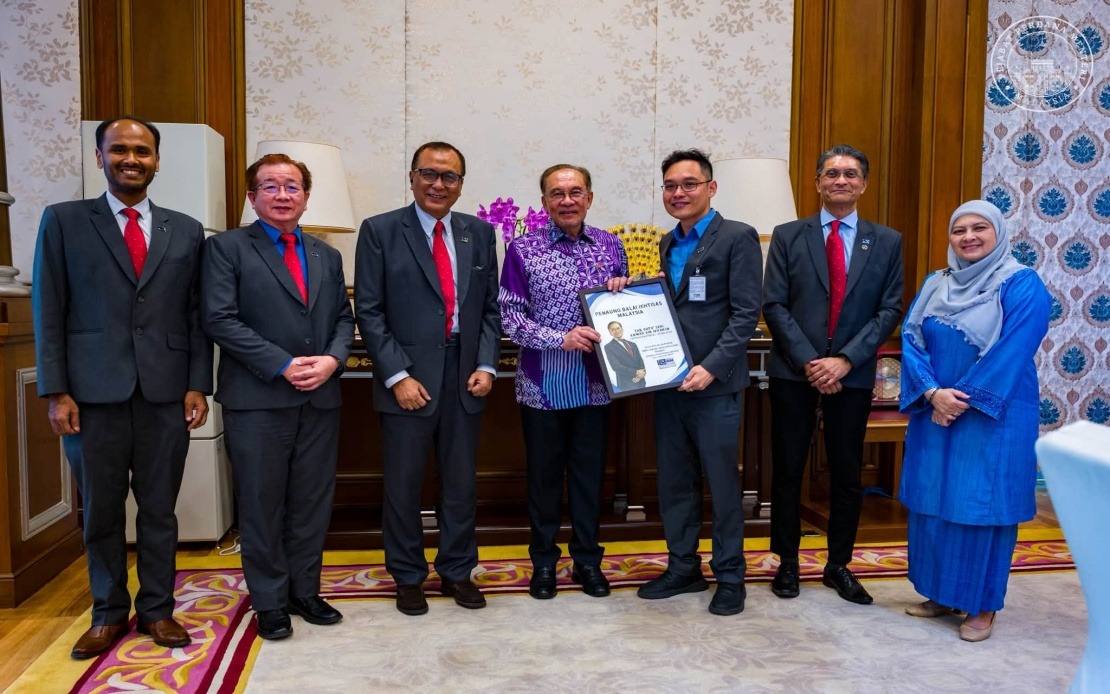
Prime Minister Datuk Seri Anwar Ibrahim has placed artificial intelligence capability and professional talent development at the centre of the government's economic strategy, signalling their critical importance to Malaysia's future competitiveness during a meeting with Balai Ikhtisas Malaysia (BIM), the Malaysian Professional Centre. The discussion, held when the BIM delegation led by president Prof ChM Dr Juan Joon Ching visited the Prime Minister's office on July 16, reflected the administration's commitment to ensuring the nation's workforce remains equipped to compete in an increasingly technology-driven global marketplace.
The emphasis on these twin pillars reveals how Malaysia's leadership views the relationship between human capital development and digital transformation. Rather than treating artificial intelligence as a purely technical challenge, the government's framing places professional upskilling at the intersection of innovation and national competitiveness. This approach acknowledges that technological adoption succeeds only when the workforce understands and can harness these tools effectively. For Malaysia's diverse professional community—spanning engineering, finance, healthcare, law, and other sectors—the readiness agenda suggests targeted programmes to help practitioners integrate AI into their respective fields.
Anwar's comments underscore a strategic calculation that Malaysia must position itself as a regional hub for professional excellence rather than merely as a location for manufacturing or offshore services. This positioning carries significant implications for Southeast Asia's broader talent ecosystem. Countries across the region compete for skilled professionals and investment; a Malaysia that actively develops its professional base through government-industry partnership stands to attract both international professionals seeking growth opportunities and multinational firms seeking sophisticated local expertise. The MADANI agenda, the government's overarching social contract framework, here finds expression through investment in people rather than through infrastructure alone.
The relationship between government and professional bodies has historically been functional but sometimes distant in Malaysia. The visible engagement between Anwar and BIM signals an intention to deepen this partnership, treating professional organisations not merely as advisory bodies but as strategic partners in national development. This shift potentially opens pathways for more collaborative policymaking, where practitioners can shape regulations and incentives that genuinely reflect industry needs. For professionals themselves, the signal carries weight: their expertise is valued at the highest levels of decision-making, potentially translating into greater influence over policies affecting their sectors.
The artificial intelligence readiness emphasis deserves particular attention given Malaysia's current position in the region's AI adoption curve. The nation has emerging strength in AI applications and research but faces challenges in widespread professional implementation across traditional sectors. Government backing for professional-level AI education and training could accelerate this transition, moving beyond pilot projects and academic research toward practical deployment in healthcare, finance, legal services, and manufacturing. This democratisation of AI skills prevents concentration of technological capability among a narrow elite and enables broader economic participation in the AI-driven economy.
Anwar's acceptance of the invitation to Hari Ikhtisas Malaysia, the professional community's flagship annual event honouring its contribution to national development, carries symbolic and practical significance. Prime ministerial attendance elevates the event's profile, sending signals to government agencies, the private sector, and educational institutions about the importance the administration places on professional development. For practitioners gathering at this event, it creates a direct line of communication with leadership and potential platforms for advocating sector-specific concerns and opportunities.
The emphasis on nurturing talent with integrity and competitiveness reflects concerns about not only technical capability but also ethical standards and professional conduct. As Malaysia develops its professional base, the government appears conscious that quantity of skilled workers matters little without corresponding emphasis on professional ethics and integrity. This holistic approach to talent development—combining technical skills, competitive edge, and moral foundation—distinguishes genuine professional development from mere training programmes and suggests the government understands that professional excellence depends on institutional integrity and trust.
For Malaysia's competitive positioning in Southeast Asia, this initiative carries regional implications. Thailand, Indonesia, Vietnam, and the Philippines are simultaneously investing in professional development and digital transformation. Malaysia's advantage lies in its existing professional institutions, higher baseline of regulatory sophistication, and relative stability. If the government can translate today's stated commitment into concrete investment in professional AI programmes, scholarship support for further education, and incentive structures that reward continuous learning, Malaysian professionals will enjoy competitive advantage over peers in neighbouring countries facing similar economic transitions.
The partnership model implicit in Anwar's statements—where government, professional bodies, and individual practitioners collaborate toward shared competitiveness objectives—offers lessons beyond Malaysia's borders. Many developing and middle-income economies struggle to align professional development with national economic strategy precisely because these conversations occur sporadically and without sustained commitment. Malaysia's willingness to position professional excellence as a top-tier policy agenda suggests institutional maturity and economic confidence. Whether this translates into sustained investment and specific policy outcomes remains to be seen, but the rhetorical commitment at least creates space for meaningful dialogue between policymakers and practitioners about the future shape of Malaysia's professional workforce in an AI-inflected global economy.

