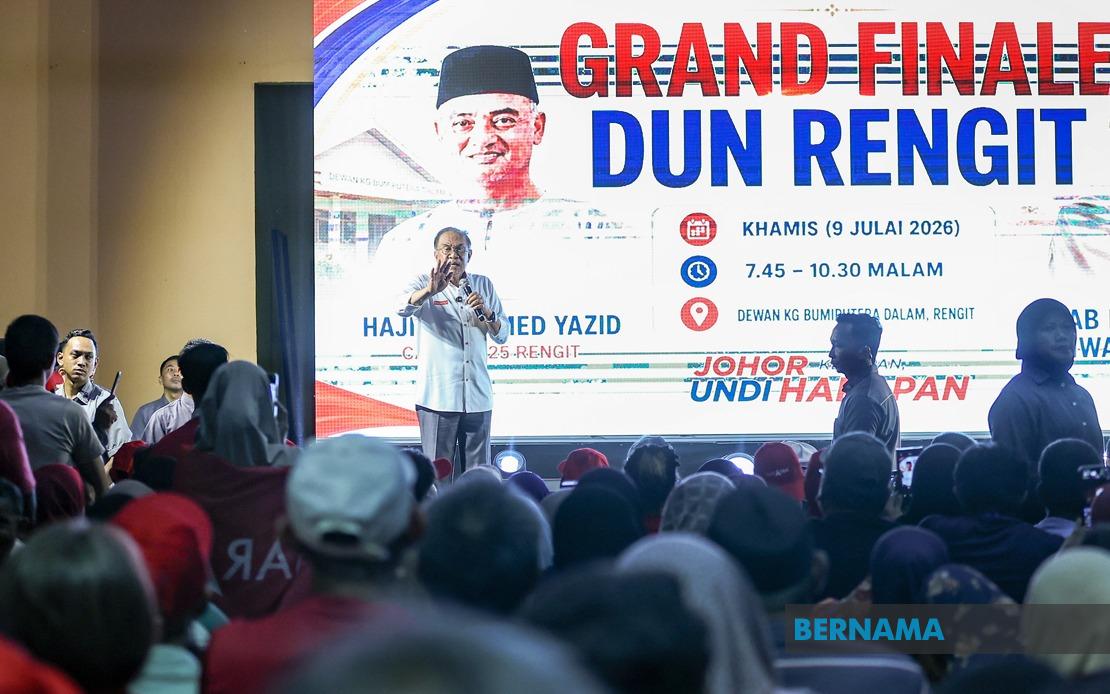
Prime Minister Datuk Seri Anwar Ibrahim has pledged immediate action to tackle the infrastructure crisis confronting residents in Rengit, where deteriorating health facilities and recurring water supply failures have become entrenched community grievances. Speaking at a Pakatan Harapan campaign event in Batu Pahat, Anwar framed these basic service failures as incompatible with Johor's status as a developed state, signalling that his administration views remedying such deficits as non-negotiable. The commitment reflects growing electoral pressure in urban and semi-urban constituencies where infrastructure quality increasingly determines voter preferences, particularly among younger demographics and young families who view reliable utilities as prerequisites for economic productivity and quality of life.
Anwar's remarks crystallised a broader political message that access to functioning healthcare and potable water should be treated as fundamental rights rather than privileges, emphasising that medical facilities cannot effectively serve residents when the facilities themselves are in disrepair. His pointed observation—that clinics should be places where patients recover, not locations that themselves require treatment—carried a implicit critique of years of deferred maintenance and budgetary neglect. This framing appeals to voters fatigued by chronic service interruptions and the sense that public infrastructure has deteriorated while political elites remained disconnected from ground realities. The statement also positioned Pakatan Harapan as responsive to longstanding local grievances that previous administrations had either ignored or deprioritised.
The Rengit campaign stop formed one component of Anwar's three-event swing through Johor on the eve of Saturday's 16th state election, underscoring the importance federal leadership attributes to the contest. The Serumpun Kasih Sejiwa Harmoni Grand Finale programme featured Sri Gading MP Aminolhuda Hassan, who chairs Johor's Parti Amanah Negara (Amanah) chapter, alongside PH candidate for Rengit Yazid Abu Bakar. This configuration reflected the coalition's strategy of mobilising federal-level political capital to strengthen state-level candidacies, betting that alignment between state representatives and federal government structures would accelerate the delivery of development projects and infrastructure upgrades.
Anwar expanded his policy commitments beyond healthcare and water to encompass housing and education, presenting these as interconnected pillars of equitable development that governments must privilege above competing budgetary demands. This holistic framing responds to voter concerns about cost-of-living pressures, housing affordability, and educational access that cut across Johor's diverse socioeconomic landscape. By grouping these services together, Anwar reinforced the narrative that comprehensive infrastructure investment generates multiplier effects across sectors, ultimately enhancing productivity and social cohesion. The emphasis on prioritisation also addressed suspicions among some voters that development spending is scattered across prestige projects or concentrated in politically favourable zones.
A secondary but significant theme in Anwar's remarks targeted public sector accountability, specifically cautioning government officials and community leaders against abusing their positions for personal enrichment. This messaging responds to persistent concerns about corruption and the politicisation of resource allocation, particularly acute in contexts where infrastructure projects have been repeatedly delayed or mismanaged. By publicly emphasising integrity as a governance standard, Anwar attempted to differentiate Pakatan Harapan's approach from voter perceptions of incumbent administrations, though scepticism about such pledges remains widespread given Malaysia's historical struggles with accountability. Nevertheless, the emphasis signals that anti-corruption positioning remains central to coalition electoral strategy, especially in constituencies where trust in institutions has eroded.
Anwar's electoral appeal also hinged on a pragmatic argument: voters should elect representatives ideologically and organisationally aligned with the federal government to ensure development initiatives flow more smoothly and rapidly. This argument, while straightforward, carries significant weight in states where federal-state friction has historically obstructed infrastructure projects or created bureaucratic inefficiencies. Johor's experience with alternating periods of aligned and divided government provides voters with experiential reference points for evaluating this claim. The logic essentially positions a vote for Pakatan Harapan candidates as an investment in expedited delivery of promised improvements, framing political alignment as an instrumental means to concrete outcomes rather than an end in itself.
Packatan Harapan's overall electoral configuration for the Johor contest reflects careful coalition management, with the 56 contested seats distributed among PKR (20 seats), Amanah (19 seats), and DAP (17 seats). This allocation attempts to balance internal coalition dynamics while positioning each partner for growth in their respective stronghold regions. The broader Johor election, attracting 172 candidates across all competing parties and coalitions, reflects the state's strategic importance to Malaysia's overall political trajectory. Johor has historically served as a barometer of electoral trends and coalition viability, with its outcomes influencing federal political calculations in profound ways.
For Pakatan Harapan specifically, the Johor election represents a critical test of whether the coalition can maintain or expand its 2022 federal election performance in a state-level context where incumbent structures and local patronage networks remain formidable obstacles. The coalition's messaging on infrastructure deficits taps into genuine frustrations but also requires demonstrable follow-through on promised improvements. Rengit's healthcare and water challenges are symptomatic of broader infrastructure maintenance deficits across many Malaysian constituencies, suggesting that Pakatan Harapan's infrastructure-focused campaign narrative could resonate across multiple constituencies where similar grievances exist.
The timing of infrastructure-focused campaign promises immediately before polling reflects the assumption that voters prioritise tangible service delivery above ideological positioning, particularly in contexts where daily life is shaped by infrastructure reliability. This voter preference for material improvements over political symbolism has been evident in Malaysian electoral behaviour across multiple cycles, suggesting that Anwar's emphasis on healthcare and water represents a strategic calculation about what moves voters in constituency-level contests. Whether such promises prove persuasive will depend partly on voter confidence that a Pakatan Harapan state government, potentially in partnership with other state-level actors, possesses the budgetary resources and administrative capacity to deliver visible improvements within reasonable timeframes.

