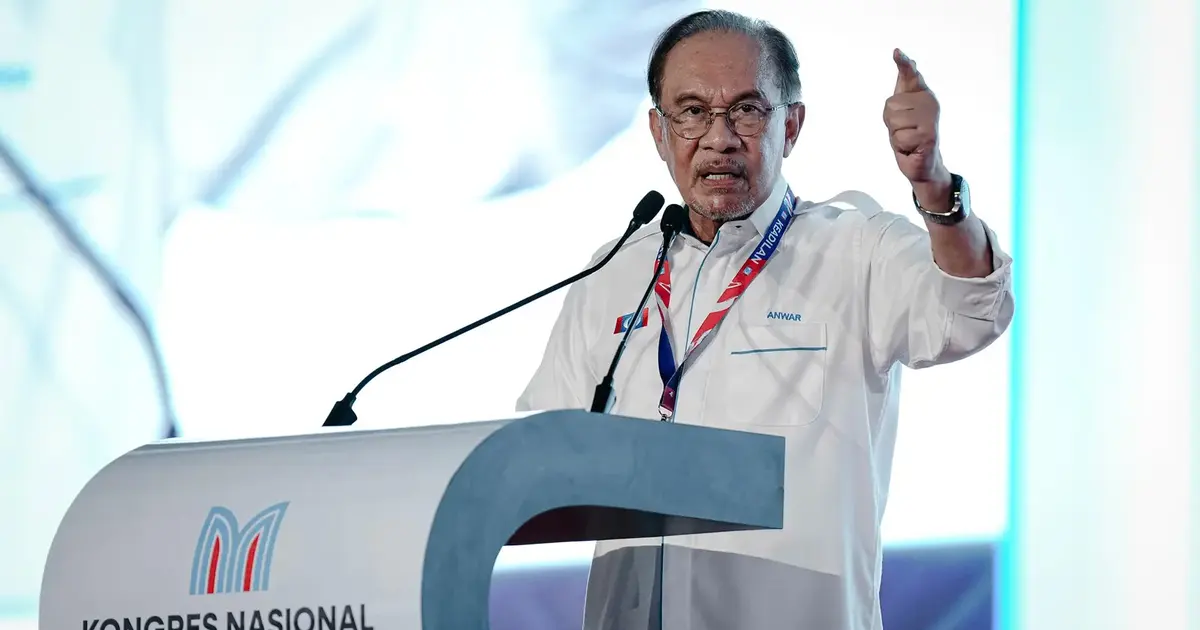
Prime Minister Anwar Ibrahim has declared a fresh cash injection of RM1 million earmarked for each of Malaysia's 222 parliamentary constituencies, moving swiftly to counter mounting criticism over the distribution of federal development resources across the nation. The announcement comes as the government faces persistent scrutiny regarding whether certain states governed by opposition parties have been disadvantaged in access to development funding.
The premier's move represents a significant gesture aimed at reinforcing his administration's commitment to nationwide development regardless of electoral outcomes. By allocating these funds to constituencies on an equal basis, the government appears intent on demonstrating that development decisions are not influenced by partisan considerations. The universal approach—applying the same financial commitment to every parliamentary seat—serves as a direct rebuttal to opposition claims that federal resources are being deliberately steered toward government-friendly regions.
The broader context of this announcement reflects deeper tensions within Malaysia's political landscape. Since Anwar's election as prime minister, his Pakatan Harapan coalition has navigated complex relationships with both state governments and opposition parties that control significant portions of the country. Questions about equitable resource distribution have become a frequent talking point, with opposition leaders and civil society organizations raising concerns about transparency and fairness in how development projects are prioritized and funded.
From a constitutional perspective, the matter touches on fundamental issues of federalism and the relationship between the federal government and state administrations. Malaysia's system divides responsibilities between federal and state authorities, but federal funding mechanisms profoundly influence development trajectories at the state level. Opposition-governed states have occasionally claimed that they encounter bureaucratic obstacles or receive lower allocations despite contributing substantially to federal revenue collection, a grievance that extends beyond simple partisan dispute into questions of constitutional equity.
The timing of this announcement carries political weight as well. The government has been working to consolidate its parliamentary majority and build broader consensus around its policy agenda. By announcing this universal fund allocation, Anwar signals a willingness to invest political capital in appearing above partisan calculation, even as his coalition seeks to strengthen its electoral positioning ahead of potential future contests. This balancing act—appearing fair while maintaining coalition cohesion—represents one of the central challenges his administration faces.
For ordinary Malaysians, particularly those in parliamentary constituencies across different states, the RM1 million per constituency allocation raises practical questions about implementation and tangible impact. The funds could theoretically address various community needs, from infrastructure improvements to social programs. However, the mechanism through which these resources will be distributed and whether they represent genuinely additional spending or reallocation of existing budgets remain important details that require clarification.
The announcement also reflects international expectations around democratic governance. Malaysia's image as a functioning democracy with peaceful power alternation depends partly on perceptions that public resources are managed fairly across political boundaries. Developed democracies routinely face similar accusations, but Malaysia's relatively recent democratic consolidation means that concerns about resource equity carry heightened salience among voters and international observers monitoring the country's political health.
Regional implications merit consideration as well. Southeast Asia's political stability partly depends on democratic norms being upheld within individual nations. Malaysia's handling of resource distribution across ruling and opposition territories could influence how neighboring countries approach similar questions. The transparency and fairness with which federal resources flow to opposition-governed areas might become a benchmark that regional stakeholders monitor.
Opposition figures will likely scrutinize the fine print of this allocation. Key questions include whether the RM1 million genuinely represents fresh expenditure or reallocated funds, the timeline for disbursement, who controls the distribution at the constituency level, and whether the allocation addresses historical disparities that opposition states claim to have experienced. The details of implementation could determine whether this announcement succeeds in defusing criticism or merely creates new controversies around execution.
The Anwar administration's approach also suggests an evolving understanding within government that perceived unfairness in resource distribution carries political costs that outweigh short-term advantages of patronage-based allocation. This represents a potentially mature shift toward more systematic and transparent governance, though skeptics will await evidence that the rhetoric translates into consistent practice across various development initiatives and disbursement mechanisms.
Moving forward, this announcement sets a precedent that may shape expectations around future federal expenditure. If implemented transparently, it could establish a norm of equal-basis funding that becomes harder for any future administration to abandon. Conversely, if the actual distribution contradicts the principle of universal allocation, it could deepen cynicism about government fairness and intensify calls for constitutional reforms that would further enshrine protections against partisan resource allocation.

