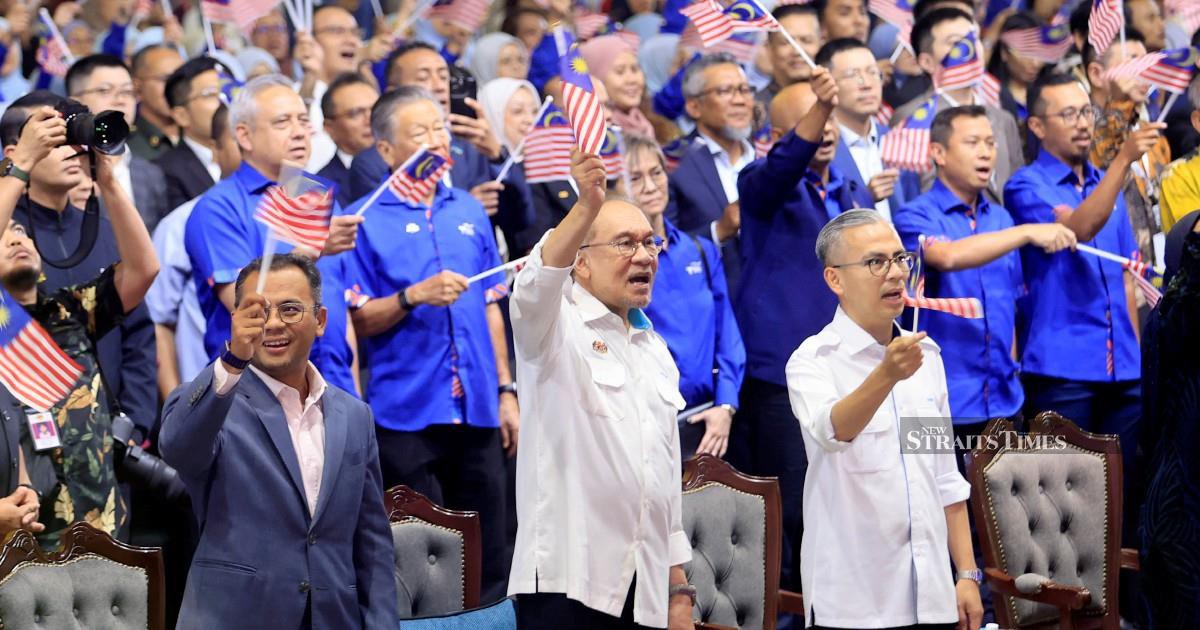
Prime Minister Datuk Seri Anwar Ibrahim has directed Malaysian universities to extend full democratic freedoms to their student populations effective immediately, bypassing the lengthy parliamentary process required for formal legislative repeal of the Universities and University Colleges Act (AUKU). This executive action represents a substantial acceleration of reform efforts at tertiary institutions across the country, enabling students to exercise rights long constrained by decades-old regulations.
The directive eliminates the need for universities to await the completion of formal legislative abolition procedures, which typically involve multiple parliamentary readings, committee reviews, and bureaucratic processing. Instead, institutions have been instructed to begin dismantling restrictions immediately, signalling the government's commitment to democratic liberalisation on campuses. This pragmatic approach acknowledges the political momentum behind AUKU reform while recognising the administrative realities of legislative reform timelines that can extend over months or years.
AUKU, enacted during an earlier era of Malaysian governance, has long been a focal point of student activism and civil liberties advocacy. The legislation has historically restricted student political activities, including participation in political parties, attendance at political rallies, and engagement in advocacy work deemed political in nature. Student representatives have contended that these constraints limit academic discourse and prevent meaningful civic participation during formative years when young people develop political consciousness and understanding of democratic processes.
For decades, AUKU restrictions have created a peculiar environment within Malaysian universities where campus governance operates under notably different rules than the broader society. Students have faced disciplinary action for activities that citizens outside campus gates exercise freely. This disconnect has prompted consistent criticism from human rights organisations, student unions, and opposition political parties, who argue the law infantilises young adults and undermines educational institutions' roles in developing informed, engaged citizens.
The Prime Minister's intervention reflects broader commitments outlined in his administration's reform agenda, which prioritises human rights improvements and democratic opening. By directing universities to grant freedoms unilaterally, the government signals that it will not allow procedural delays to obstruct substantive progress on civil liberties. This demonstrates a willingness to use executive authority to advance policy objectives when legislative pathways prove cumbersome, though the eventual formal repeal will likely still proceed through parliament to create permanent legal framework changes.
University administrators now face the responsibility of translating this directive into operational reality within their institutions. This involves reviewing disciplinary codes, retraining student affairs staff on new guidelines, communicating changes to student bodies, and establishing processes for handling activities previously prohibited. Many institutions will need to revise student handbooks, update codes of conduct, and clarify administrative boundaries for behaviour previously subject to punitive action under AUKU provisions.
The immediate implementation creates practical considerations for campus leadership. Universities must balance newly granted freedoms with institutional interests in maintaining academic environments conducive to learning. Questions inevitably arise regarding campus space allocation for political events, protocols for managing large assemblies, and administrative oversight of student organisations undertaking political activities. These operational details will likely vary across institutions, potentially creating inconsistencies in how freedoms manifest across different campuses.
For Malaysian students, this directive represents a transformative moment in campus life. Young people who have previously graduated never experiencing political freedom on campus will now study within markedly different institutional environments. Students can organise political activities, attend political rallies, and participate in political organisations without fear of disciplinary consequences. This expanded space for student engagement may energise campus political discourse, student unionism, and youth civic participation more broadly.
The timing of this directive carries significance within Malaysia's broader political context. Coming at a period when the government emphasises democratic reforms and institutional modernisation, the move reinforces messaging about commitment to civil liberties. It also potentially addresses longstanding criticisms from younger voters and civil society organisations that have viewed AUKU as emblematic of restrictions on freedom of expression and association. By acting decisively on this visible, symbolic issue, the government demonstrates responsiveness to demands from constituencies prioritising democratic openness.
The eventual formal repeal of AUKU through parliament will likely encounter procedural smoothness given the government's clear policy direction. However, the executive directive's immediate implementation means legislative action becomes technically confirmatory rather than transformative. This approach maximises practical benefits for current students while the formal legal machinery proceeds at its natural pace, representing pragmatic policymaking that prioritises outcomes over procedural formality.
Sector observers anticipate that universities will implement these freedoms progressively, with some institutions moving more rapidly than others. Differences in institutional culture, administrative capacity, and campus political dynamics will likely produce variable implementation speeds. Nevertheless, the Prime Minister's directive establishes a unified ceiling preventing institutions from maintaining restrictions, while allowing variation in how liberalisation manifests. Students can now reasonably expect consistent baselines of political freedom across Malaysian campuses despite potential variations in specific operational arrangements.
This decision fundamentally resets the relationship between Malaysian universities and their student populations regarding political participation and civil liberties. Rather than operating within a restrictive legal framework that treats students as requiring special governance rules, institutions now function within parameters recognising students as citizens entitled to constitutional freedoms. This alignment between campus governance and broader constitutional principles marks a significant institutional transition with implications extending far beyond administrative procedural changes.

