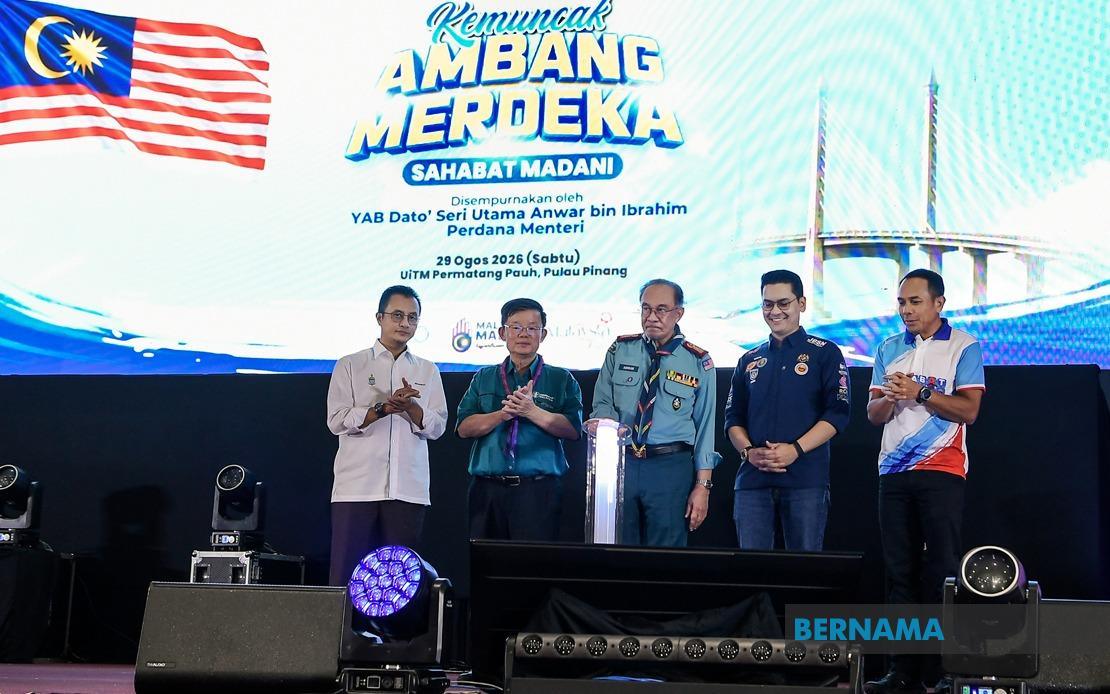
Prime Minister Datuk Seri Anwar Ibrahim has formally launched Sahabat MADANI, a nationwide volunteer initiative designed to harness civic participation across ethnic, religious and socioeconomic divides. The programme was unveiled at an event in Bukit Mertajam at Universiti Teknologi MARA (UiTM) Permatang Pauh, where organisers announced that 11,060 volunteers have already registered to participate in the movement since its inception.
The Sahabat MADANI initiative represents a structured approach to community engagement, embedding volunteerism within the government's broader Malaysia MADANI development agenda. Rather than functioning as a conventional charity or relief organisation, the movement operates as a coordinated network connecting state institutions, volunteer organisations and local communities to identify and address pressing social needs. This three-way partnership model is intended to ensure that interventions respond directly to community priorities rather than being imposed from above.
According to the Implementation Coordination Unit of the Prime Minister's Department (ICU JPM), the volunteer network will concentrate its efforts on several key areas of need. Priority initiatives include targeted support for economically disadvantaged households, educational outreach to children who have abandoned formal schooling, skills development and entrepreneurship programmes for youth seeking sustainable employment or business opportunities, and rapid-response assistance during emergencies and natural disasters. By focusing on concrete, measurable outcomes rather than symbolic gestures, the programme aims to deliver tangible improvements in living standards among Malaysia's most vulnerable populations.
The ideological foundation of Sahabat MADANI emphasises values that resonate across Malaysia's multicultural society. Organisers frame the initiative as embodying principles of mutual respect, dignity and collective responsibility—concepts embedded within the Malaysia MADANI framework of shared prosperity. By deliberately recruiting volunteers from diverse backgrounds and explicitly encouraging cross-community participation, the programme seeks to cultivate social cohesion while simultaneously addressing material hardship. This dual focus on both harmony-building and poverty reduction distinguishes Sahabat MADANI from purely service-delivery models.
For Malaysian policymakers, the 11,060 registered volunteers represent a significant mobilisation of civic energy, though the true test will lie in sustained engagement and measurable outcomes. The scale of registration suggests considerable public receptiveness to structured volunteering opportunities, particularly among populations seeking meaningful avenues to contribute beyond electoral participation or party membership. The inclusive recruitment approach—emphasising that volunteers come from across ethnic and religious communities—positions the movement as a deliberate counter-narrative to divisive political discourse that has periodically strained Malaysia's social fabric.
The programme's emphasis on transparency and accountability reflects lessons learned from previous development initiatives. By establishing clear linkages between identified community needs, volunteer actions and tangible results, the ICU JPM is attempting to build public trust through demonstrable effectiveness. This stands in contrast to top-down welfare approaches that often fail to address actual priorities or create dependency rather than capacity-building. The involvement of local communities in needs assessment should theoretically improve the relevance and sustainability of interventions.
Sahabat MADANI also carries implications for youth engagement in Malaysia's development trajectory. By channelling young people's energy and skills toward constructive community service, the initiative seeks to counter what organisers perceive as divisive political messaging or extremist recruitment narratives. The emphasis on rejecting "divisive sentiments" and using professional expertise for national progress reflects concerns among policymakers about polarisation and the need to redirect youthful idealism toward unifying causes. This generational focus may prove particularly consequential in maintaining social stability during a period of political and economic transition.
The programme's connection to National Day celebrations—the timing of Sahabat MADANI's formal launch during Malaysia's independence commemoration period—carries symbolic weight. Rather than limiting patriotic expression to flag displays or ceremonial observances, organisers are attempting to redefine national service as active participation in community welfare and social development. This reframing encourages citizens to embody independence values through practical commitment to collective wellbeing, transforming abstract notions of patriotism into concrete volunteer hours and measurable community improvements.
Regional observers may view Sahabat MADANI as indicative of broader governance trends across Southeast Asia, where governments increasingly seek to supplement state capacity through structured volunteer mobilisation. Malaysia's approach—combining central coordination through the Prime Minister's Department with grassroots volunteer agency—represents an intermediate model between purely centralised welfare systems and fragmented community-led initiatives. As other ASEAN nations grapple with poverty persistence and social cohesion challenges, Sahabat MADANI's design may offer instructive lessons regarding volunteer programme architecture and sustainability.
The financial and administrative sustainability of Sahabat MADANI remains an open question. While initial enthusiasm has generated substantial volunteer registrations, maintaining engagement beyond the launch phase typically proves challenging. The programme's success will depend on providing volunteers with meaningful work, reliable coordination infrastructure and demonstrable community impact. Whether the ICU JPM possesses sufficient operational capacity to manage over 11,000 volunteers across diverse initiatives nationwide, while ensuring both accountability and local responsiveness, will determine whether Sahabat MADANI evolves into an enduring social infrastructure or recedes into symbolic gesture.
Looking forward, the Sahabat MADANI movement represents an attempt to institutionalise civic participation as a complement to formal government service delivery. If successfully implemented, the initiative could address genuine gaps in social support while simultaneously strengthening Malaysia's social cohesion—two outcomes that are neither inevitable nor easily achieved. The coming months will reveal whether the initial enthusiasm translates into sustained volunteer commitment and whether the programme delivers the material improvements in community wellbeing that organisers have promised.

