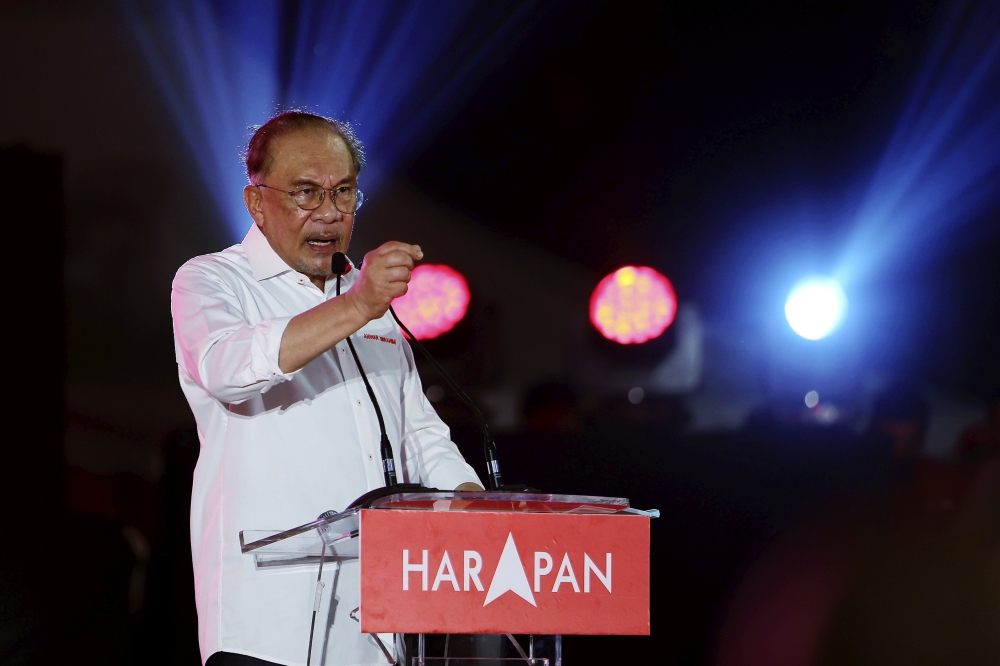
Prime Minister Datuk Seri Anwar Ibrahim is launching an intensive campaign push in Negeri Sembilan with a four-stop tour, marking the beginning of what is expected to be a sustained effort to energise the ruling coalition's grassroots machinery in the state. The back-to-back events underline the government's determination to maintain momentum in a state where electoral dynamics remain consequential for the broader political landscape.
The campaign schedule reflects a carefully choreographed strategy to reach diverse demographic segments across Negeri Sembilan's key constituencies. By condensing multiple events into a single day, Anwar's team is attempting to maximise media exposure while demonstrating the Prime Minister's personal commitment to the state. This approach has become standard practice in Malaysian politics, where prime ministerial appearances serve as crucial morale boosters for party members and signal central leadership's priorities to voters.
Negeri Sembilan holds particular significance within the federal coalition's broader electoral calculations. As a relatively compact state with manageable geographic spread, it offers opportunities for intensive ground-level organising while serving as a testing ground for messaging strategies that may later be deployed in larger battlegrounds. The state's mixed urban-rural composition also makes it representative of broader voter preferences across the peninsula.
Anwar's personal involvement in the campaign underscores recognition that state-level contests increasingly function as referendums on federal government performance. The Prime Minister's decision to lead from the front, rather than delegating campaign responsibilities to state-level figures, suggests internal assessments indicating the need for direct reassurance to supporters. This approach carries both advantages and risks — while it mobilises party faithful, it also places the federal government's credibility directly on the line should results disappoint.
The timing of this campaign push reveals strategic calculations about momentum and electoral scheduling. By establishing a visible presence early, the government aims to shape the narrative around state-level contests before opposition parties consolidate alternative platforms. Early campaign activity also allows parties to test messaging, identify organisational gaps, and recalibrate strategies before critical voting phases.
From a Malaysian perspective, such state-level campaigns demonstrate how national politics increasingly cascade downward, with federal personalities and issues dominating state-level discourse. This centralisation of campaign dynamics reflects broader shifts in how Malaysian voters form political preferences, with federal government performance increasingly overshadowing local issues that historically dominated state contests.
The four-event structure suggests targeting of specific constituencies or voter groups within Negeri Sembilan. Prime ministerial campaign stops typically concentrate on areas where coalition support requires reinforcement or where opposition presence threatens traditionally safe seats. The number and placement of events within the state will likely reveal which constituencies the government considers most contested or electorally valuable.
For Southeast Asian observers, Malaysia's state-level campaign mechanics illustrate how competitive federalism operates within the region. Unlike some neighbouring democracies where state contests remain largely autonomous, Malaysian state elections increasingly function as integral components of national political strategy, with federal prime ministers personally driving state-level campaigns.
The campaign's success will be measured not merely in attendance figures but in whether Anwar's presence translates into strengthened party organisation and improved electoral prospects. Malaysian campaign history demonstrates that even high-profile leadership visits produce variable results depending on underlying party strength, local organisational capacity, and voter sentiment on substantive issues affecting daily life.
Negeri Sembilan's geographic proximity to Kuala Lumpur means the state serves as a testing laboratory for federal government policy messaging. Local voters, many employed in the federal capital or familiar with national affairs, frequently vote based on federal government performance rather than state-specific considerations. Anwar's tour therefore functions simultaneously as state campaign and federal government promotion.
The breadth of this campaign initiative reflects awareness that electoral competition in Malaysia remains fierce despite the ruling coalition's structural advantages. Opposition parties similarly conduct intensive campaigns in states where they sense opportunity, meaning government campaigns require substantial effort merely to maintain existing support levels rather than guarantee growth.
Looking forward, the success of this Negeri Sembilan initiative will likely influence the scope and intensity of similar campaigns across other states. A well-received tour could prompt expansion of this model, while disappointing results might prompt strategic recalibration. Malaysian political strategists closely monitor such campaigns for indicators about broader voter sentiment and the effectiveness of different messaging approaches across regional contexts.

