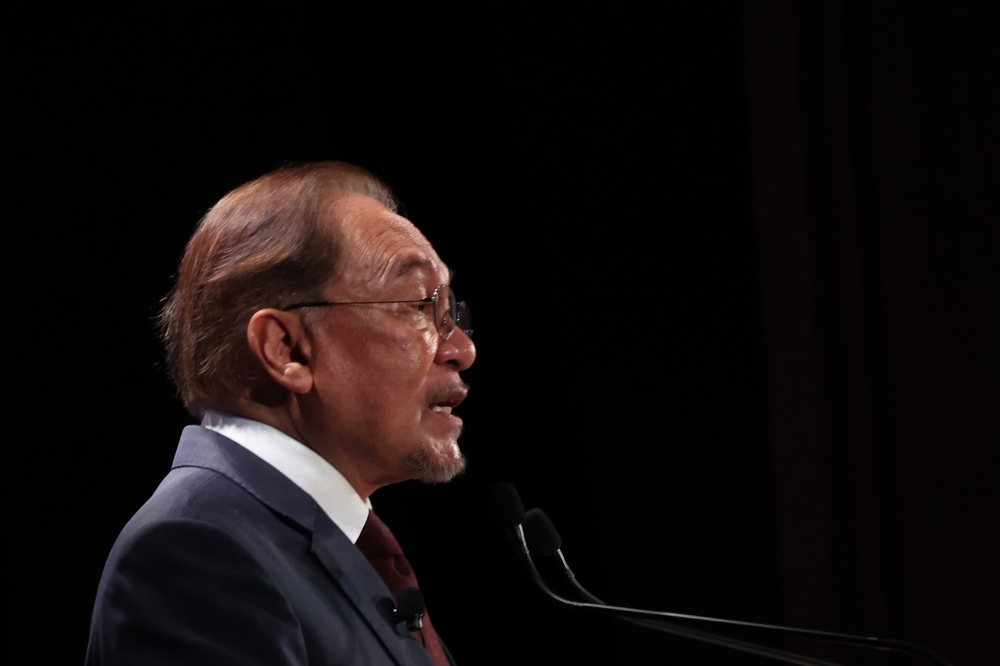
Prime Minister Datuk Seri Anwar Ibrahim has taken legal action against PAS Deputy President Tuan Ibrahim Tuan Man, filing a defamation suit in response to statements he contends were false and designed to damage his reputation. The lawsuit represents an intensification of political friction between the federal government and the Pan-Malaysian Islamic Party, which has emerged as an increasingly vocal opposition force despite its complex historical alignment with various coalitions.
The decision to pursue judicial recourse reflects a hardening of positions between the two leaders and their respective political camps. Anwar's move suggests that government patience with criticism from PAS has worn thin, particularly given the already strained relationship between the coalition government and the Islamist party. Legal action in defamation cases carries significant political weight in Malaysia, as such suits can shape public discourse and create legal jeopardy for political opponents.
Tuan Ibrahim, who occupies a prominent position within PAS's internal hierarchy, has been among the party's more vocal critics of the Anwar-led administration. PAS, which contests elections primarily in rural constituencies and has built its political base on Islamic conservative messaging, has positioned itself as an alternative to both the ruling coalition and the opposition Democratic Action Party-dominated bloc. The party's criticisms often centre on governance issues and cultural matters, framing itself as a watchdog against what it perceives as secular-leaning policies.
Defamation litigation in Malaysian politics carries substantial implications beyond the courtroom. Such suits can influence how media outlets and political figures frame their commentary, creating a chilling effect on speech that some analysts argue undermines robust democratic debate. The case will likely draw scrutiny from press freedom advocates and civil society organisations monitoring the health of Malaysia's political discourse.
The timing of the lawsuit comes as Malaysia navigates a complex political environment characterised by fragmented coalition arrangements. The federal government operates through Pakatan Harapan and the Malay-Muslim coalition component, while state-level politics remains highly competitive. PAS controls several state governments and represents a substantial bloc of parliamentary seats, making it neither insignificant enough to ignore nor aligned enough to cooperate smoothly with federal authorities.
Anwar's administration has faced criticism from multiple quarters since taking office, including from within its own coalition. This particular action against a senior PAS figure suggests the government may be taking a more aggressive stance toward external critics, potentially signalling a shift in how it manages political opposition and media relations. The escalation could reshape the tone of parliamentary debates and political campaigning in the months ahead.
For Malaysian readers and the broader Southeast Asian region, this development underscores the fragility of political coalitions built on pragmatic rather than ideological foundations. Malaysia's experiment with multiple competing blocs—government, opposition, and semi-aligned parties like PAS—continues to generate friction points. The lawsuit illustrates how quickly political disagreements can escalate into legal confrontations, with potential ramifications for democratic norms.
PAS's response to the suit will likely frame the action as evidence of governmental intolerance toward legitimate opposition voices. The party may use this to galvanise its supporters and reinforce its narrative as an independent force unafraid to challenge those in power. Such positioning resonates particularly well in constituencies where PAS commands substantial support.
The defamation case will require both sides to marshal evidence and legal arguments concerning the precise nature of Tuan Ibrahim's alleged remarks. Malaysian courts will need to determine whether the statements in question constitute fair comment on matters of public interest or constitute actionable defamation. This distinction carries weight beyond the immediate parties involved, potentially setting precedent for how political speech is adjudicated.
Observers of Malaysian politics will monitor whether other opposition figures face similar legal action, potentially indicating a broader strategy to constrain critical commentary. Conversely, PAS may use courtroom proceedings as a platform to amplify its critiques, converting legal defence into political messaging. The intersection of law and politics in Malaysia continues to reveal tensions inherent in translating Western democratic models into a distinct Southeast Asian context.
The lawsuit represents a critical juncture in Malaysian political dynamics, where competing forces jostle for legitimacy and influence. How courts and the public respond to this case may influence the political behaviour of all major players in the months and years ahead, affecting everything from parliamentary dynamics to electoral strategies.

