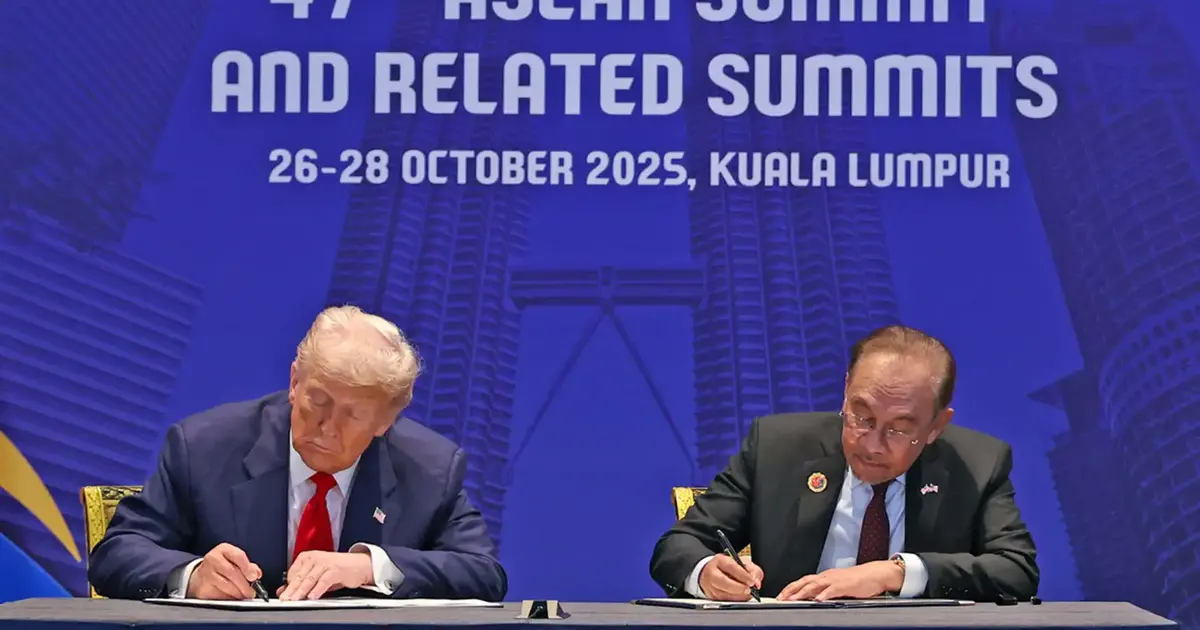
Prime Minister Anwar Ibrahim's administration has moved to dismiss a legal challenge mounted by opposition parliamentarians against the reciprocal trade agreement with the United States, marking an escalation in the political and constitutional dispute surrounding the bilateral deal. The government's application to strike out the case represents a significant procedural manoeuvre aimed at preventing the suit from advancing through the courts, a strategy that underscores the executive's determination to defend its authority over trade negotiations without parliamentary obstruction.
The opposition MPs have simultaneously pursued a parallel legal strategy by filing their own application requesting that the Federal Court examine constitutional questions arising from the trade agreement. This dual-track approach reflects mounting concerns within opposition ranks regarding the constitutional propriety of the government's handling of international trade pacts and the extent to which parliament should retain oversight over such agreements. The constitutional referral, if successful, could force the highest court in the land to clarify the precise boundaries of executive power in negotiating and implementing trade deals.
The Malaysia-US trade agreement has proven contentious since its inception, with critics arguing that insufficient parliamentary scrutiny preceded its conclusion. The reciprocal nature of the agreement means both nations would face comparable tariff reductions and market access obligations, potentially affecting Malaysian industries ranging from agriculture to manufacturing. Opposition voices have raised concerns that the government failed to adequately consult parliament or consider the implications for local producers before committing the nation to the arrangement.
The government's legal manoeuvre to strike out the case suggests confidence in its constitutional position regarding executive prerogative in trade matters. Malaysian law has traditionally granted the executive considerable latitude in conducting foreign policy and international negotiations, with parliament's role typically limited to ratification or legislative implementation rather than substantive negotiation. However, this conventional approach has increasingly drawn scrutiny from legal scholars and opposition figures who argue that modern governance demands greater transparency and parliamentary input on treaties affecting the national economy.
The constitutional questions now before the courts will likely centre on whether the government adequately discharged its obligation to inform and consult parliament before finalising the trade agreement. Courts across the Commonwealth have grappled with similar issues, balancing respect for executive judgment in diplomatic matters against democratic accountability. Malaysian jurisprudence on this issue remains relatively undeveloped, making the Federal Court's potential intervention particularly significant for establishing precedent.
For Malaysia's business community, the legal uncertainty surrounding the trade deal creates complications. Companies have begun adjusting supply chains and investment plans based on assumptions about the agreement's durability and implementation timeline. If courts ultimately invalidate or delay the agreement, these commercial adjustments could prove costly. Conversely, if the government prevails entirely, opponents may argue that parliament's voice has been completely sidelined in matters of economic consequence.
Regionally, the trade dispute carries implications beyond bilateral Malaysia-US relations. Other Southeast Asian nations have observed Malaysia's handling of the agreement with interest, particularly those considering similar reciprocal arrangements with major trading partners. How Malaysia's courts resolve this constitutional tension could influence whether other nations in the region move toward greater parliamentary involvement in trade negotiations or maintain traditional executive-dominated frameworks.
The timing of these legal proceedings also reflects broader political dynamics within Malaysia's parliament. The opposition has utilised litigation as a tool to challenge government policies when legislative numbers prove insufficient to block executive initiatives. This pattern has become increasingly common in Malaysian politics, with courts serving as alternative forums for political contestation when the electoral balance favours the ruling coalition.
The Anwar government's decision to push for dismissal rather than defend the agreement on its merits suggests strategic calculation about the political risks of full judicial scrutiny. A comprehensive court examination of the trade deal's negotiation process could expose internal government documents and communications, potentially creating political embarrassment regardless of the legal outcome. Dismissing the case entirely would avoid such disclosure while maintaining the government's preferred narrative about its handling of the agreement.
As the legal process unfolds, international observers including United States trade officials will monitor developments carefully. The US administration would likely prefer swift implementation without prolonged judicial wrangling that could delay tariff reductions and market access commitments. However, any interference by foreign governments in Malaysia's domestic legal proceedings would prove politically toxic and could ironically strengthen the opposition's position by appearing to validate concerns about surrendering national sovereignty.
The Federal Court's eventual ruling on the constitutional questions—should the application succeed—will establish important precedent regarding the boundary between executive and legislative authority over international agreements. Whether the court adopts a deferential posture toward executive expertise and judgment or demands meaningful parliamentary participation will shape how future Malaysian governments approach trade negotiations and treaty-making across multiple sectors and international relationships.