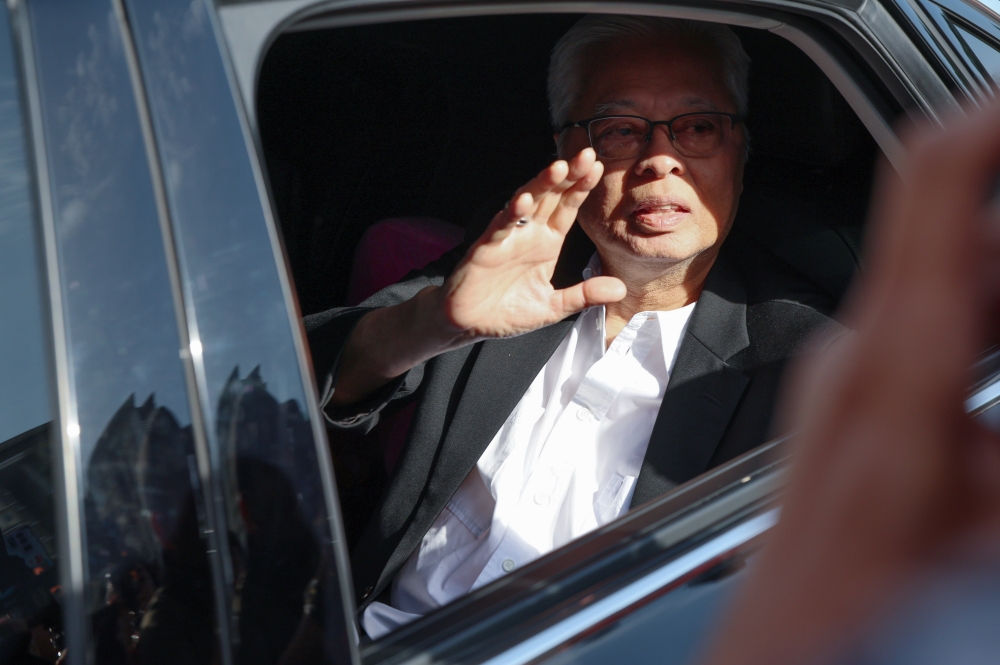
Prime Minister Datuk Seri Anwar Ibrahim made a personal visit to Institut Jantung Negara on Friday, calling on both Deputy Prime Minister Datuk Amar Fadillah Yusof and former Prime Minister Ismail Sabri Yaakob, who are currently receiving treatment at the cardiac specialist facility. The gesture underscores the cross-party goodwill that has characterised the broader political establishment's response to health challenges affecting senior government figures.
The visit by Anwar to the heart institute in the nation's capital reflects a tradition of political courtesy at the highest levels, particularly when senior lawmakers face medical difficulties. Such moments often transcend partisan differences, uniting political rivals and colleagues in expressions of concern for individuals who have served the nation in various capacities. The Premier's personal appearance at the facility, rather than merely sending symbolic wishes through intermediaries, carries particular significance given the demanding schedules maintained by those holding high office.
Ismail Sabri, who led the government between August 2021 and August 2022 before stepping down to allow Anwar Ibrahim to assume the premiership, remains an influential figure within the United Malays National Organisation and Malaysian politics more broadly. His ongoing role within government structures means his health status carries implications beyond personal concern, affecting the continuity of institutional knowledge and political relationships within the ruling coalition. The fact that a former premier requires hospitalisation at a specialised cardiac facility highlights the physical and mental tolls of leading the nation during challenging economic and political periods.
Fadillah, who carries substantial administrative responsibilities as Deputy Prime Minister alongside his roles within the Sarawak-based Parti Pesaka Bumiputera Bersatu, represents the critical East Malaysian dimension of the current federal coalition. His position within government is particularly important given the delicate balance required to maintain support from Sabah and Sarawak MPs, whose backing remains essential for the government's parliamentary majority. Any prolonged absence of such figures can create operational challenges and uncertainty within the administration's functioning.
The Prime Minister's remarks regarding hopes for a speedy recovery reflect the universal human concern that transcends political calculation, yet they also carry practical significance for government operations. When multiple senior figures face health challenges simultaneously, questions naturally arise about succession planning, continuity of ministerial functions, and the allocation of responsibilities among remaining cabinet members. These considerations become particularly pressing during periods of economic uncertainty or when parliament is scheduled to convene for important legislative business.
Institut Jantung Negara, as Malaysia's premier heart and lung centre, regularly treats patients from across the socioeconomic spectrum and maintains particular expertise in managing complex cardiac conditions that may require extended periods of observation or intervention. The facility's international standing means patients receive world-class diagnostic and treatment capabilities, though hospitalisation at such institutions typically signals conditions requiring serious medical attention rather than routine procedures. The presence of multiple senior political figures at the facility within a short timeframe may indicate seasonal factors, increased awareness of cardiac health risks among an ageing demographic of senior politicians, or coincidental clustering.
This incident comes at a time when Malaysia's political landscape continues adjusting to the power transition that occurred in late 2022. Although Anwar's administration has now consolidated governance and achieved several legislative and economic policy initiatives, relationships between the current government and its predecessors remain complex. The gesture of a personal hospital visit represents one dimension of managing these relationships while maintaining the dignity and respect owed to former officeholders who have served the nation. Such acts of public courtesy, though perhaps small in isolation, contribute to maintaining civilised standards within the political system.
The deputy premiership that Fadillah holds places him squarely in the succession hierarchy, making any health concerns a matter of institutional importance beyond personal welfare. Political systems depend upon clear lines of authority and the availability of proven administrators to step into critical roles when circumstances demand. While modern governance typically includes contingency planning for such situations, the actual health challenges facing key personnel cannot be predicted or entirely managed through administrative frameworks alone. The Prime Minister's visit acknowledges both the human dimension of political service and the institutional implications of losing access to experienced leadership figures.
For Malaysians observing these developments, the hospitalisation of multiple senior political figures within a shared timeframe also serves as a broader reminder about healthcare preparedness and the importance of accessible, world-class medical facilities. The government's investment in institutions like Institut Jantung Negara demonstrates public health infrastructure development that benefits not only political elites but the general population seeking specialist cardiac care. The visibility of senior leaders utilising public healthcare facilities also carries messaging implications about confidence in domestic medical capabilities rather than seeking treatment exclusively abroad.
The coming weeks will likely reveal more specific information about the health conditions and expected recovery timelines for both Ismail Sabri and Fadillah. Depending on the nature and severity of their conditions, recovery periods could range from relatively brief to extended, with potential implications for government functioning and parliamentary operations. The Prime Minister's expressions of support during this visit establish the tone for how the political establishment will discuss and manage these situations publicly, emphasising unity and collective concern rather than any sense of political disadvantage.

