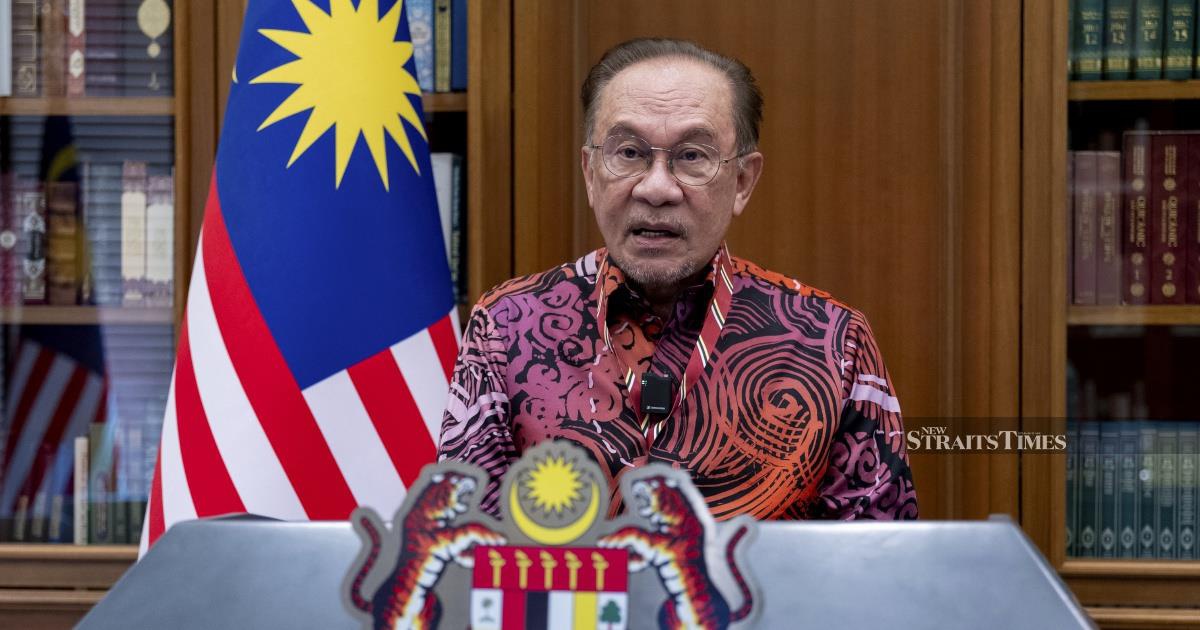
Prime Minister Datuk Seri Anwar Ibrahim has sent official felicitations to Beijing commemorating 105 years since the establishment of the Chinese Communist Party, underscoring the importance Malaysia attaches to its enduring diplomatic ties with China. The gesture reflects the bilateral relationship between Kuala Lumpur and Beijing, which encompasses substantial economic cooperation, trade partnerships, and cultural exchanges that have deepened considerably over recent decades.
Malaysia's approach to marking significant anniversaries of China's ruling party demonstrates the pragmatic nature of diplomatic relations in Southeast Asia. Rather than viewing such occasions through an ideological lens, regional governments have historically embraced them as opportunities to reinforce bilateral bonds and acknowledge shared development interests. For Malaysia, recognizing milestones in China's political calendar forms part of a broader strategy of maintaining balanced and constructive engagement with all major powers.
The Malaysian government's position on China has been characterised by a commitment to leveraging the economic benefits of the relationship whilst protecting national sovereignty and interests. Anwar Ibrahim's administration has inherited a complex arrangement involving Chinese investments in infrastructure projects, manufacturing partnerships, and educational exchanges. The prime minister himself has previously articulated a vision of engaging major powers in ways that advance Malaysia's economic agenda without compromising independence in foreign policy decision-making.
China's significance to Malaysia extends beyond ceremonial acknowledgements. As one of Malaysia's largest trading partners and a crucial source of foreign direct investment, Beijing's economic footprint shapes employment prospects, technology transfer, and infrastructure development across the country. Projects linked to the Belt and Road Initiative, Chinese-funded ports and industrial zones, and collaborative ventures in renewable energy illustrate the depth of economic interdependence that has accumulated.
From a regional perspective, Malaysia's diplomatic courtesies toward China reflect broader Southeast Asian attempts to navigate great power competition without alienating Beijing. At a time of rising geopolitical tensions in the Indo-Pacific, nations like Malaysia seek to preserve stable, predictable relationships with all major actors. This balancing act has become increasingly delicate as Washington and Beijing vie for influence across the region, yet Malaysia continues to insist upon its right to pursue relationships based on mutual benefit rather than strategic alignment.
The timing of such diplomatic gestures also carries symbolic weight. By extending congratulations on anniversary dates, governments signal continuity and normalcy in their relationships, particularly important during periods of international complexity. For Malaysia, maintaining cordial ties with Beijing helps anchor the nation's regional standing whilst signalling to other partners that engagement with China need not imply abandonment of other relationships.
Anwar Ibrahim's administration has sought to present itself as forward-thinking and pragmatic in its approach to China engagement. Unlike some of his predecessors' tenure, which occasionally witnessed diplomatic tensions with Beijing over trade disputes or geopolitical positioning, the current government has generally favoured constructive dialogue. This approach reflects the prime minister's broader international outlook, which emphasises economic cooperation and institutional reform over confrontational stances.
For Malaysian businesses and investors, strong Malaysia-China relations translate into tangible opportunities. Chinese firms have established significant manufacturing operations in Malaysia, whilst Malaysian companies have gained access to Chinese markets and capital. Educational partnerships have expanded substantially, with thousands of Malaysian students pursuing studies in China annually. These people-to-people connections complement official diplomatic gestures and create constituencies within both nations invested in maintaining stable relations.
The geopolitical context cannot be ignored when assessing such diplomatic courtesies. As the United States maintains its traditional alliances in the region and India seeks to expand its influence, Beijing views anniversaries and acknowledgements as affirming its legitimacy and centrality. For Malaysia, acknowledging these occasions represents a diplomatic courtesy that carries minimal cost whilst potentially generating goodwill. This calculation has guided Southeast Asian policy toward Beijing across multiple administrations.
Looking forward, Malaysia's relationship with China will likely continue evolving as both nations navigate technological change, environmental challenges, and economic restructuring. The infrastructure and human capital investments China has made in Malaysia create mutual interests in long-term stability. Trade relationships, which exceeded 140 billion ringgit in recent years, provide powerful incentives for maintaining constructive engagement regardless of the broader geopolitical environment.
For Malaysia's policymakers, the broader lesson is that regional prosperity requires engagement with multiple major powers whilst maintaining principled positions on sovereignty and national interest. Anwar Ibrahim's congratulatory message to Beijing thus represents not capitulation to or alignment with China, but rather a pragmatic acknowledgement that Southeast Asia's best interests lie in preserving stable relationships with all significant economic and political actors, China included.

