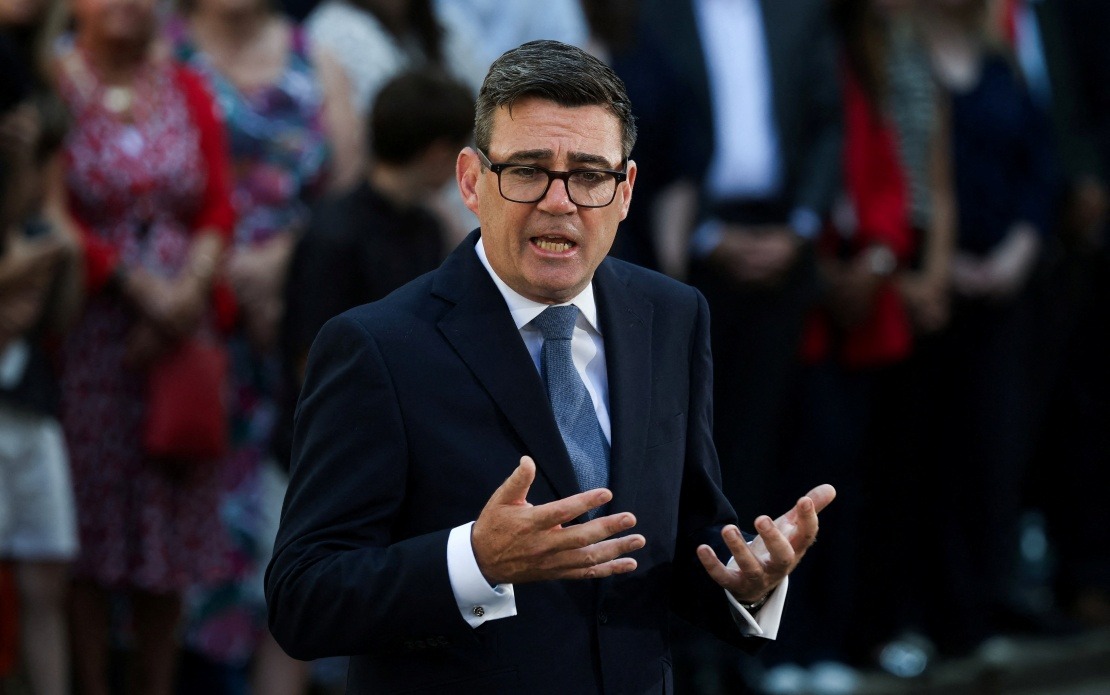
Prime Minister Datuk Seri Anwar Ibrahim has formally congratulated Andy Burnham following his appointment as the United Kingdom's newest Prime Minister, using the occasion to reaffirm Malaysia's commitment to deepening ties with Britain across multiple strategic sectors. Through a social media address, Anwar articulated his government's readiness to collaborate with Burnham's administration on several key initiatives that reflect contemporary geopolitical and economic priorities.
Among the concrete areas of cooperation that Anwar identified, the completion of a Digital Trade Agreement stands prominently, signalling Malaysia's focus on integrating digital commerce frameworks with major trading partners. Beyond trade mechanics, the Prime Minister outlined aspirations to expand partnership in artificial intelligence development, a technology increasingly central to Malaysia's economic transformation agenda. These technological investments align with Kuala Lumpur's broader vision of positioning the nation as a competitive digital economy within Southeast Asia and the global marketplace.
Clean energy collaboration and defence partnerships round out the proposed agenda, reflecting mutual interests in addressing climate challenges and maintaining regional security architecture. For Malaysia, these dimensions are particularly significant given the country's commitment to achieving net-zero emissions by 2050 and its role as a strategic player in maintaining balance in the Indo-Pacific region. Defence cooperation with Britain carries additional weight in a landscape where maritime security, counter-terrorism efforts, and freedom of navigation remain pressing concerns.
Anwar's statement also ventured into the fraught terrain of Middle Eastern geopolitics, commending Burnham for his candid acknowledgement that Britain's initial diplomatic posture regarding the Gaza crisis had proven inadequate. The Prime Minister praised this display of moral fortitude, suggesting that recognition of policy shortcomings represents a meaningful step toward greater ethical clarity in Western foreign policy discourse. This dimension of Anwar's message reflects Malaysia's consistent positioning as an advocate for Palestinian rights and its expectation that international partners demonstrate principled stances on humanitarian concerns.
The Malaysian Premier further highlighted Burnham's renewed calls for intensified pressure on the Israeli regime, framing such positions as evidence of moral consistency that had been lacking in some Western quarters. Anwar's emphasis on this aspect underscores how human rights and justice considerations inform Malaysia's diplomatic engagement strategies, even with longstanding traditional partners. The statement implicitly suggests that Malaysia views alignment on ethical foreign policy positions as foundational to broader strategic partnerships.
Anwar strategically anchored his overture to the new British government within the historical context of Malaysia-UK relations, noting that next year marks seven decades since the nations established formal diplomatic connections. This temporal marker provides an opportunity to commemorate shared history while simultaneously projecting ambitions for the relationship's future trajectory. The 70th anniversary frame presents both ceremonial significance and a practical juncture for institutionalising new cooperation frameworks and elevating partnership architecture.
The Prime Minister also extended recognition to Keir Starmer, Burnham's predecessor, acknowledging the departed Prime Minister's contributions to advancing bilateral relations during his tenure. This courtesy reflects diplomatic protocol and Malaysian respect for continuity in institutional relationships, even as transitions occur at the highest levels. Anwar's expression of goodwill toward Starmer's future endeavours demonstrates Malaysia's preference for maintaining collegial relationships across political transitions in partner nations.
Burnham's ascension to the British premiership occurred rapidly within Labour Party structures, having assumed party leadership on Friday before receiving formal appointment as Prime Minister on Monday following Starmer's resignation at Buckingham Palace. This transition marks the seventh change in British prime ministerial leadership within a decade, a reality that underscores political volatility in Westminster governance. For Malaysia, such frequent transitions present both challenges in maintaining diplomatic continuity and opportunities to establish fresh bilateral foundations with incoming administrations.
The timing of Anwar's initiative to engage Burnham substantively carries implications for Malaysia's broader diplomatic strategy in the Indo-Pacific and beyond. By swiftly establishing communication channels and articulating clear cooperation agendas, Malaysia positions itself as a pragmatic partner ready to capitalise on evolving circumstances. The emphasis on technological partnerships and clean energy reflects Anwar's administration's modernisation priorities while simultaneously offering British expertise and investment opportunities that could benefit both economies.
The Digital Trade Agreement represents particularly consequential territory, as such frameworks shape how digital services, data flows, and e-commerce traverse international borders. Malaysia's push for finalising this agreement with Britain signals recognition that digital commerce will constitute an expanding share of bilateral economic activity. For Malaysian businesses, especially those in fintech, e-commerce, and digital services, a comprehensive agreement with a major developed economy provides frameworks for market access and regulatory harmonisation.
Defence collaboration warrants attention given Malaysia's strategic location astride critical sea lanes and its interests in maintaining freedom of navigation in waters where regional powers increasingly assert competing claims. British military presence and expertise in the Indo-Pacific, sustained through initiatives like the AUKUS alliance and other partnerships, creates potential for Malaysia to leverage British technological capabilities and strategic perspectives in addressing regional challenges. Such cooperation can complement existing security arrangements and diversify Malaysia's security partnerships beyond traditional American frameworks.
Anwar's engagement with Burnham also reflects Malaysia's sophisticated approach to managing relationships across the ideological spectrum. Despite differences on certain geopolitical questions, Malaysia recognises Britain's persistent economic, technological, and security capabilities as valuable assets for partnership. This pragmatic bifurcation—disagreeing on some questions while cooperating intensively on others—characterises contemporary Malaysian diplomacy.
Looking forward, the success of Malaysia-UK cooperation will depend on how effectively both nations translate diplomatic goodwill into concrete institutional mechanisms and resource commitments. The proposed cooperation areas offer sufficient breadth to accommodate growing partnership scope, while the 70th anniversary milestone provides ceremonial and political momentum for advancing bilateral agendas. For Malaysian stakeholders across government, business, and civil society, a reinvigorated Malaysia-UK partnership offers pathways for technological advancement, economic growth, and strategic positioning in an increasingly multipolar global environment.

