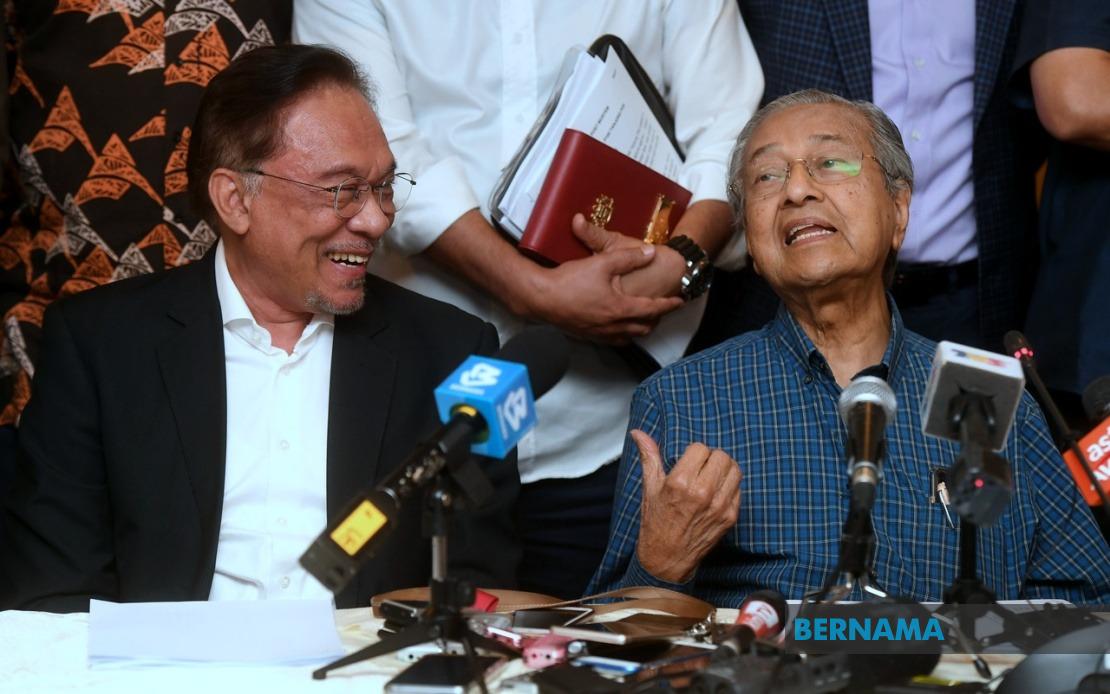
Prime Minister Datuk Seri Anwar Ibrahim marked a significant milestone in Malaysia's political history by extending warm birthday wishes to former Prime Minister Tun Dr Mahathir Mohamad on July 10, as the veteran statesman reached his 101st year. In a message shared on social media, Anwar expressed his hopes that Dr Mahathir would continue to enjoy good health and divine blessings, underscoring the respect that crosses generational lines within Malaysia's political establishment.
The gesture carries symbolic weight in Malaysian politics, where the relationship between Anwar and Dr Mahathir has been notably complex. Both leaders have navigated pivotal moments in the nation's political trajectory, yet their paths have intersected and diverged dramatically over decades. The public acknowledgment of this birthday milestone represents a moment of civility and reflection on shared national service, regardless of past political disagreements or differences in governance philosophy.
Dr Mahathir was born on July 10, 1925 in Alor Setar, Kedah, establishing roots in one of Malaysia's northern states that would shape his political career. His longevity and continued relevance in public discourse remain notable features of contemporary Malaysian politics. Few national leaders anywhere in the world have maintained such visibility and influence across multiple generations of governance and democratic cycles.
The former premier's political career spanned two distinct periods of service as prime minister, each leaving indelible marks on Malaysia's trajectory. His first tenure lasted 22 years, from 1981 through 2003, during which he transformed Malaysia's economic landscape, oversaw major infrastructure projects, and positioned the nation as an emerging industrial power. His policies during this extended period shaped institutional frameworks, developmental priorities, and Malaysia's international standing in ways that continue to influence contemporary governance.
Dr Mahathir's return to the premiership in 2018, at the age of 92, represented an unprecedented development in global politics. His comeback was driven by the political instability following the 14th general election and concerns about governance direction. At that advanced age, he became the world's oldest serving prime minister, a distinction that challenged international perceptions about age and political capability. His appointment demonstrated Malaysia's unique political dynamics and the electorate's willingness to return to experienced leadership during periods of uncertainty.
His second tenure, which extended until 2020, proved more tumultuous than his celebrated first period. Factional tensions within the governing coalition, health considerations, and evolving political alliances complicated his leadership during this return. The period illustrated how complex coalition politics and shifting party loyalties could affect governance continuity, even with a leader of Dr Mahathir's stature and experience. His eventual departure from office in 2020 marked another turning point in Malaysia's political narrative.
At 101 years old, Dr Mahathir remains an influential voice in Malaysian public affairs. His commentary on governance, economic policy, and political direction continues to command attention from media outlets, political observers, and the general public. Rare among retired political leaders, he has maintained an active presence in discussing national issues, demonstrating intellectual engagement with contemporary challenges facing the country. His longevity provides living continuity with Malaysia's post-independence history and early formative decades.
The birthday greeting from Anwar acknowledges both Dr Mahathir's historical significance and his ongoing role within Malaysia's political consciousness. Such public gestures of goodwill, particularly across political divides, contribute to a culture of mutual respect among senior statesmen. They signal that despite substantive policy differences and past conflicts, there exists a foundation of shared commitment to national development and institutional stability. This maturity in political relationships strengthens democratic discourse by demonstrating that principled disagreement need not preclude personal respect.
For Malaysian observers, Dr Mahathir's century mark represents a remarkable personal achievement and a reflection of improving healthcare and living standards in the country. His continued vitality at an age when most leaders have long since retired from public life challenges stereotypes about aging and capability. The milestone also serves as a moment for national reflection on the evolution of Malaysian leadership, institutional development, and the country's transformation from the time of his earliest political involvement through the present day.
The acknowledgment by the incumbent prime minister of his predecessor's birthday carries broader implications for Malaysia's political culture. It reinforces norms of institutional continuity and respect for those who have served, even when their policies or approaches differ from contemporary directions. As Malaysia navigates current political and economic challenges, such demonstrations of civility and respect for elder statesmen contribute to social cohesion and political stability. They remind citizens and observers that democratic governance can accommodate vigorous debate while maintaining personal dignity and institutional reverence.

