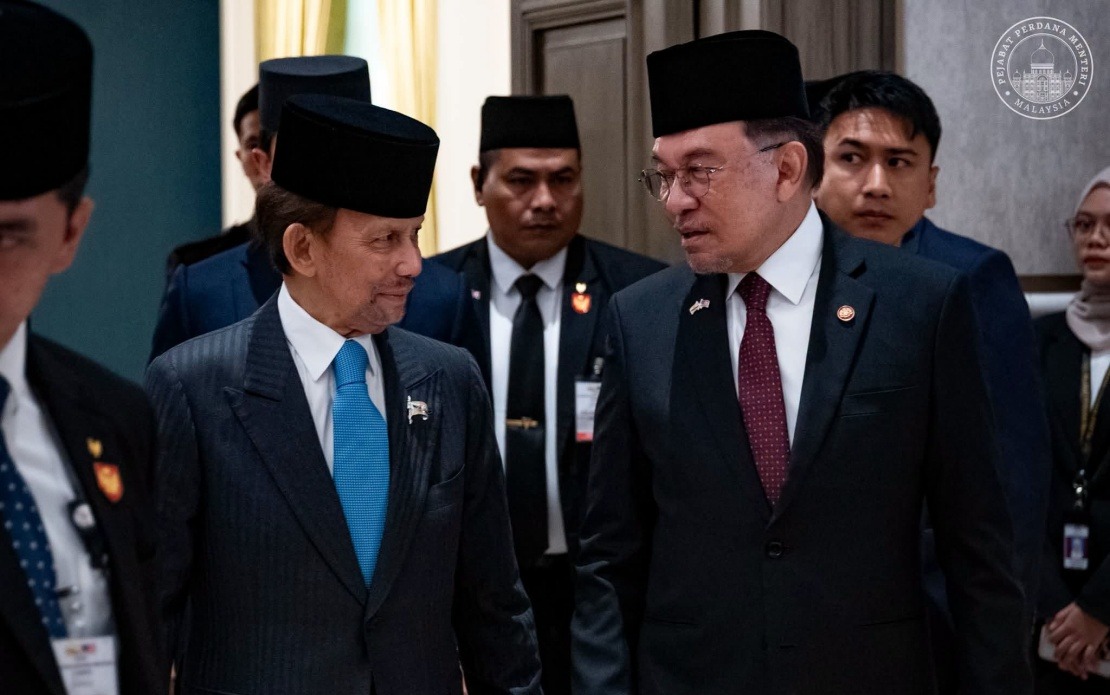
Prime Minister Datuk Seri Anwar Ibrahim received a telephone call from Sultan Hassanal Bolkiah of Brunei Darussalam on Tuesday, with the Brunei monarch inquiring about the Malaysian leader's wellbeing and offering prayers for his swift recovery. Anwar subsequently shared his appreciation through social media, highlighting the gesture of solidarity between the two neighbouring monarchies.
The call comes approximately one week after Anwar underwent an elective laparoscopic surgical intervention to address a para-umbilical hernia. The Prime Minister remains under continuous care by his medical team as he recuperates from the procedure, which was performed on Monday of the previous week. By all accounts, the operation was successful and carried out as scheduled without complications.
In reciprocating the Sultan's courtesies, Anwar expressed his own wishes for the Brunei ruler's continued health and prosperity. The exchange of goodwill reflects the warm bilateral relationship that Malaysia maintains with its neighbour across the maritime border, and underscores the personal dimension of regional diplomacy in Southeast Asia. Such direct communication between heads of state, particularly during periods when one is managing health challenges, demonstrates the depth of institutional ties between the two nations.
The timing of the Sultan's inquiry is significant given that Anwar is scheduled to travel to Bandar Seri Begawan for an official engagement within the coming week. The Prime Minister will participate in the 27th Annual Leaders' Consultation between Malaysia and Brunei, a longstanding bilateral mechanism for high-level dialogue on matters of mutual concern. His planned audience with Sultan Hassanal Bolkiah will represent the formal continuation of these scheduled talks despite the recent medical intervention.
The Annual Leaders' Consultation represents one of the cornerstones of Malaysia-Brunei relations, providing an institutional framework for addressing shared challenges and advancing mutual interests. These biennial gatherings have historically served as forums for discussing economic cooperation, security matters, maritime issues, and cultural exchanges. The forum's continuation signals that neither nation views the health situation as compromising the bilateral agenda, and both parties remain committed to their established consultation schedule.
From a regional perspective, the interaction highlights how personal relationships between leaders contribute to the stability and predictability of ASEAN diplomacy. The informal nature of direct telephone communication, coupled with formal bilateral mechanisms, creates multiple channels through which neighbours can maintain understanding and resolve potential friction points. For Malaysian readers, such exchanges reinforce the nation's standing as a respected member of the regional community, even during periods when the Prime Minister faces personal health challenges.
Anwar's commitment to keeping the scheduled meeting with Sultan Hassanal Bolkiah indicates confidence in his recovery trajectory. His medical team has cleared him to maintain his official duties, suggesting that the laparoscopic procedure, while requiring post-operative monitoring, is not expected to significantly disrupt his presidential functions. This approach is consistent with modern practice for such relatively non-invasive surgical interventions, which typically involve shorter recovery periods compared to open surgical approaches.
The exchange also carries implications for Malaysia's engagement with Brunei on substantive bilateral matters. The two nations share interests in maritime boundary management, economic integration through ASEAN frameworks, and regional security. The upcoming consultation will provide an opportunity for both leaders to review progress on existing initiatives and chart direction for future cooperation, particularly as both nations navigate broader shifts in regional geopolitics and economic dynamics.
For observers of Malaysian politics, the incident demonstrates the institutional resilience of the prime ministerial office and the government's capacity to manage routine operations while accommodating the health needs of the leader. The proactive communication with the Malaysian public through social media about the surgical procedure and the supportive call from Brunei also reflects contemporary practices of political communication, wherein transparency about leadership health matters has become expected in modern democracies and constitutional monarchies.
Looking ahead, the 27th Annual Leaders' Consultation will serve as a barometer of the bilateral relationship's current state and future direction. Both nations will likely use the occasion to reaffirm their commitment to long-standing partnerships while addressing any emerging challenges or opportunities that require high-level attention. The successful completion of this meeting, following Anwar's medical procedure, will further underscore the stability and continuity of Malaysia-Brunei relations in the post-pandemic era.

