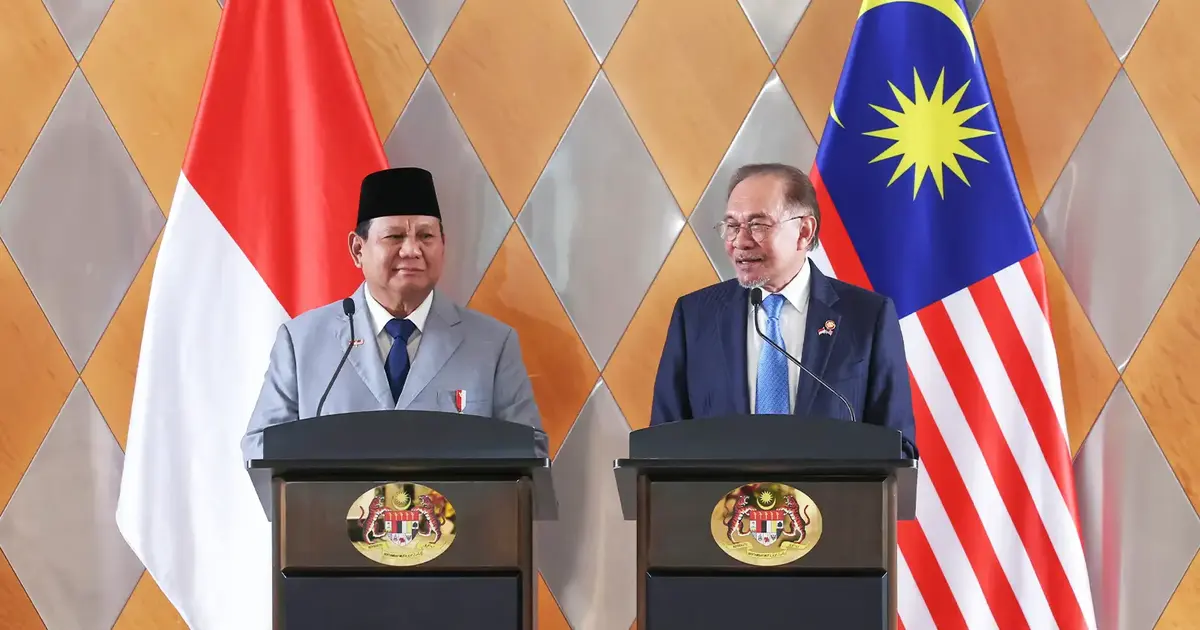
Prime Minister Anwar Ibrahim has taken his concerns about a high-stakes property venture involving Malaysia's largest settler agency directly to Indonesian President Prabowo Subianto through diplomatic correspondence. The move underscores growing unease within Putrajaya over the Federal Land Development Authority's (Felda) involvement in the Eagle High project, which carries potentially severe financial ramifications for the organisation and, by extension, the hundreds of thousands of Felda settlers who depend on it.
The scale of potential losses outlined by the Prime Minister presents a stark financial picture. According to Anwar, Felda faces exposure of over RM2 billion in the Eagle High arrangement, yet recovery prospects appear severely constrained, with projections suggesting the settlement authority could recoup as little as RM200 million if circumstances deteriorate further. This risk calculus highlights a fundamental concern: whether the venture's structure adequately protects Felda's interests or whether the organisation has entered into commitments that disproportionately favour other parties, particularly those on the Indonesian side.
Felda's significance in Malaysian political and social architecture makes this dispute particularly sensitive. The organisation manages approximately 1.5 million hectares of land and provides livelihoods for roughly 100,000 settler families, making it a cornerstone of rural development policy and a historically important constituency for government support. Any substantial financial deterioration at Felda directly threatens these communities' economic security and could reverberate through rural regions across Peninsular Malaysia, Sabah, and Sarawak.
The decision to communicate with Prabowo at the presidential level suggests that standard diplomatic or commercial channels have not yielded satisfactory resolution. By elevating the matter to direct government-to-government dialogue, Anwar signals that Malaysia views this not merely as a commercial dispute between entities but as an issue with bilateral implications. The timing of such correspondence may also reflect domestic political pressures, as questions about Felda's financial management increasingly draw scrutiny from lawmakers and the public alike.
Eagle High's structure and background remain subjects of considerable scrutiny within Malaysian circles. The venture represents a significant cross-border investment commitment, and the terms governing Felda's participation warrant closer examination. Questions persist about governance oversight, risk assessment procedures, and whether adequate safeguards existed to protect the settlement authority's capital and interests. These concerns gain weight when the potential downside—a RM2 billion loss—dwarfs the recovery scenario so dramatically.
The broader context of Malaysia-Indonesia relations adds another dimension to this controversy. The two nations maintain extensive economic ties and cooperation frameworks, yet resource disputes and commercial disagreements periodically emerge. A high-profile venture involving major financial exposure creates potential friction points, particularly if one party perceives the other as having negotiated unfavourable terms or failed to fulfill commitments. Anwar's intervention through direct presidential communication suggests he hopes to leverage bilateral goodwill to secure better outcomes for Felda.
Investor and stakeholder confidence in Felda hinges partly on transparent financial management and timely resolution of problematic commitments. The public revelation of potential losses of this magnitude, if unresolved, could undermine institutional credibility. Settlers and their representatives increasingly expect clarity about how their collective assets are deployed and protected, making the government's handling of this situation a bellwether for fiduciary responsibility.
The RM200 million recovery scenario Anwar referenced suggests negotiations may already be underway regarding potential settlement or restructuring of the arrangement. This figure likely represents management's assessment of realistic recovery if the venture is unwound, sold, or renegotiated. The vast gap between total exposure and likely recovery indicates that regardless of how this resolves, Felda faces material financial loss—the question becomes one of degree.
For Malaysian and Southeast Asian investors watching from the sidelines, this episode carries cautionary lessons about cross-border venture structuring and the importance of robust due diligence. It underscores how geopolitical considerations, regulatory environments, and exchange rate fluctuations can interact to create unforeseen liabilities. Felda's predicament serves as a reminder that even well-established institutions require sophisticated risk management when deploying capital internationally.
Moving forward, Anwar's engagement with Prabowo may open pathways toward renegotiating terms, securing debt relief, or finding alternative solutions that distribute losses more equitably. However, the fundamental challenge remains: restoring confidence in Felda's stewardship while protecting settler interests during what promises to be a protracted resolution process. The outcome will likely influence how Malaysian state enterprises approach international ventures in the coming years.

