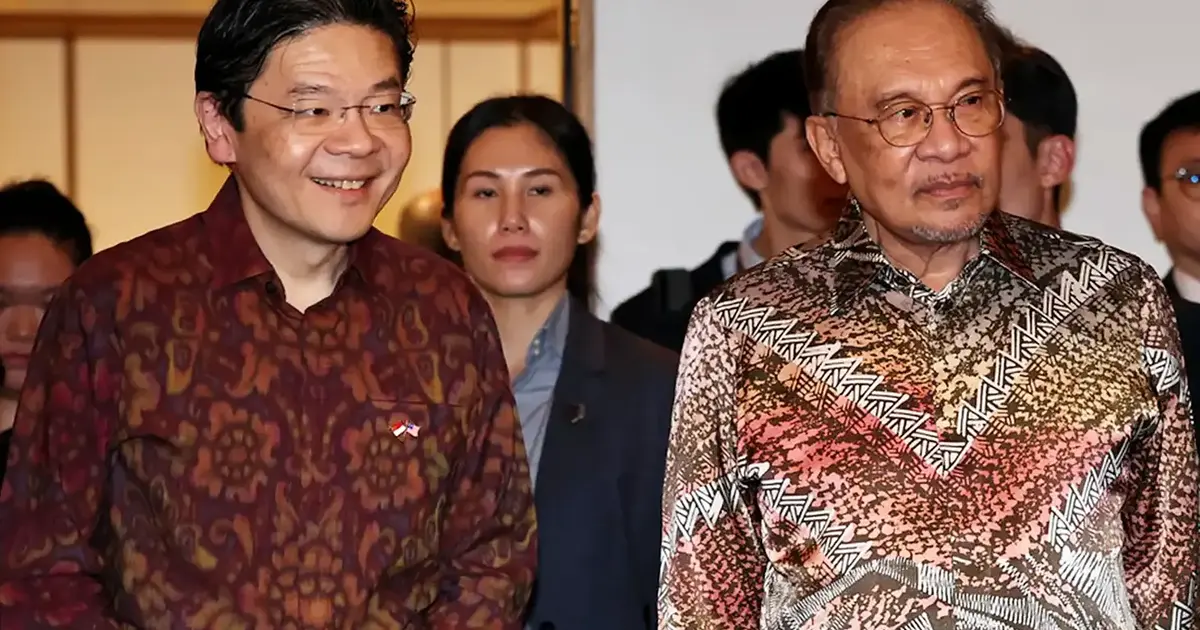
Prime Minister Anwar Ibrahim has clarified that Malaysia has not submitted any formal request to Singapore's leadership seeking assistance for Malaysians working in the republic to return and cast their votes in the upcoming Johor state election. When pressed on whether he intended to contact his Singaporean counterpart regarding the matter, Anwar firmly stated no such overture was being contemplated, effectively closing the door on a diplomatically sensitive issue that touches on cross-border labour mobility and electoral participation.
The question itself reflects a deeper concern among observers about the practical challenges facing Malaysian voters, particularly those employed in Singapore, who face logistical and time constraints during election campaigns. Singapore hosts a substantial population of Malaysian workers spanning various skill levels and industries, from domestic helpers to professionals in finance, technology, and healthcare. During polling periods, these individuals face a difficult choice between maintaining their employment obligations and fulfilling their constitutional right to vote in their home country.
Anwar's response demonstrates a clear delineation of Malaysia's position on electoral sovereignty and the mechanics of voting arrangements. While cross-border cooperation between the two nations exists across numerous policy domains, electoral processes remain distinctly domestic matters, subject to each country's constitutional and administrative frameworks. By declining to lodge a formal request, the Prime Minister is reinforcing the principle that voting arrangements cannot be negotiated through diplomatic channels with neighbouring countries, regardless of the shared interests both nations maintain regarding bilateral relations.
The Johor state election carries particular significance in Malaysian political calculations. As the southern bastion of what was once Umno's traditional stronghold, Johor's electoral outcome influences the broader political landscape at both state and federal levels. The concentration of Malaysian workers in Singapore means their collective voting power, while distributed across various constituencies, could potentially impact close contests. This has prompted discussions about whether administrative or diplomatic solutions might expand the electorate's ability to participate.
Historically, Malaysian governments have managed voter participation challenges through conventional mechanisms such as scheduled polling dates that account for work schedules, provisional voting arrangements in certain circumstances, and postal voting systems for Malaysian citizens abroad. However, these existing frameworks operate within established electoral law and do not typically involve diplomatic negotiations with foreign governments. Singapore, as a distinct political entity with its own immigration and labour policies, maintains strict boundaries around such matters.
The political backdrop to this exchange suggests underlying anxieties within various quarters about election participation and turnout. Lower voter engagement, particularly among younger or migrant worker populations, has been a recurring concern in Malaysian electoral politics. Some observers argue that improving accessibility for Malaysian workers abroad might strengthen democratic participation, while others contend that electoral integrity depends on maintaining clear, non-negotiable boundaries around voting procedures.
Anwar's position aligns with precedent. Previous Malaysian administrations have similarly resisted the temptation to internationalise electoral processes through diplomatic channels, even when sympathetic to the practical difficulties faced by overseas voters. The principle that elections remain sovereign matters, not subject to bilateral negotiation, reflects a broader commitment to institutional autonomy and the separation of electoral administration from foreign policy considerations.
For Malaysian workers in Singapore, the situation remains unchanged. They must either arrange personal travel to return to Malaysia during the polling period or utilize postal voting mechanisms if eligible and if such arrangements have been formally established for their constituencies. The burden of participation therefore rests primarily on individual initiative rather than on governmental facilitation through cross-border cooperation.
The interaction also underscores the distinct operating environments of the two nations. Singapore's highly managed approach to governance and tight control over movement and labour arrangements reflects its city-state model and development strategies. Malaysia's larger territory and more diffuse population distribution require different policy solutions. Seeking to harmonize voting arrangements across this divide would necessarily involve complex negotiations around labour rights, immigration protocols, and administrative coordination that extend well beyond electoral matters.
Looking forward, the clarification from Anwar signals that Malaysia will continue addressing voter accessibility through domestic mechanisms rather than pursuing international diplomatic solutions. This includes ongoing discussions about strengthening postal voting systems, improving advance polling arrangements, and perhaps expanding access to election-day voting venues for various categories of Malaysian citizens. Such approaches respect both electoral sovereignty and the practical realities of modern cross-border employment patterns.
The episode also reflects broader questions about how Southeast Asian democracies manage the reality of substantial intra-regional labour migration. As workers increasingly cross borders for employment, the relationship between citizenship rights, voting eligibility, and physical presence in home territories becomes more complex. Malaysia's response through Anwar's statements suggests the country will navigate this through established legal frameworks rather than seeking special diplomatic arrangements, even when sympathetic to the challenges involved.

