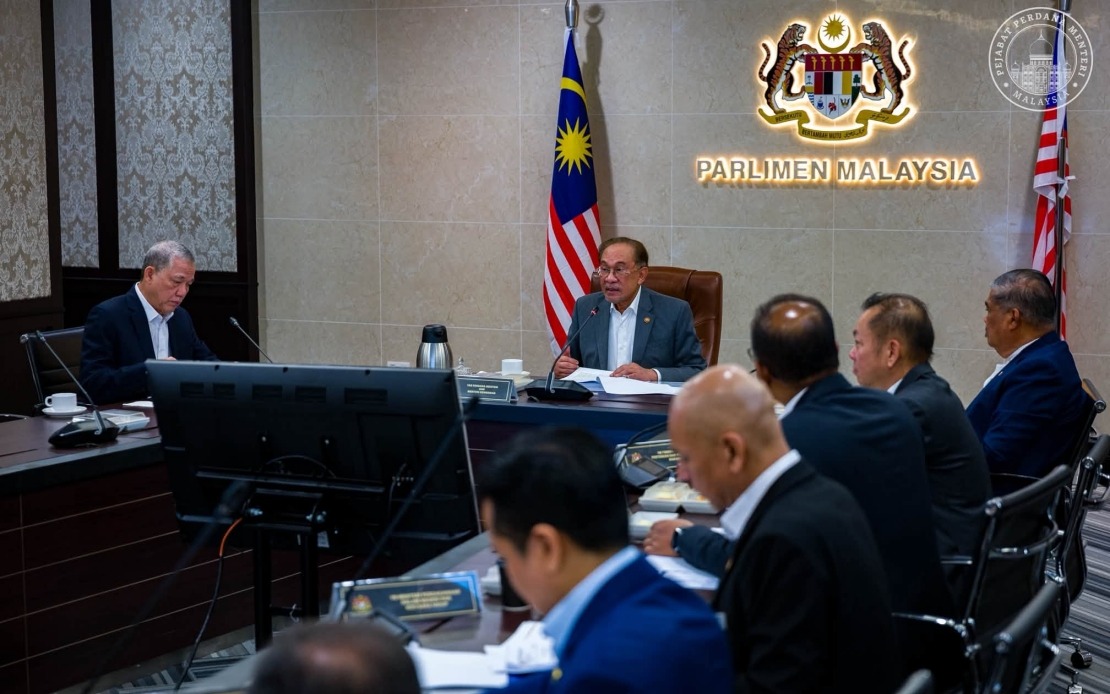
Prime Minister Datuk Seri Anwar Ibrahim has mobilised the government's agricultural apparatus to prepare comprehensive defences against an impending climate threat, ordering the Ministry of Agriculture and Food Security (KPKM) to urgently develop mitigation strategies ahead of a predicted Super El Niño event expected to commence in November. The directive underscores growing concerns about the vulnerability of Malaysia's food systems to extreme weather patterns, particularly as global climate volatility increases the frequency and intensity of such phenomena.
Anwar issued the instructions during the first National Food Security Council Meeting of 2026, a gathering that reflects the government's elevated focus on ensuring stable domestic food supplies and protecting agricultural communities from climate-related shocks. The emphasis on urgency stems from the relatively compressed timeframe before the anticipated onset of the Super El Niño, leaving the ministry with limited months to implement preventive measures and build resilience across farming operations nationwide.
The anticipated climatic disruption carries significant economic and social implications for Malaysia's agricultural sector, which employs hundreds of thousands of Malaysians and constitutes a cornerstone of rural livelihoods. A Super El Niño typically triggers prolonged dry conditions across much of Southeast Asia, substantially reducing rainfall and elevating temperatures—conditions that severely stress crop yields, livestock productivity, and freshwater resources essential for irrigation. Such weather patterns previously caused substantial losses across the region, with neighbouring countries experiencing crop failures and economic disruption.
Beyond immediate production concerns, Anwar stressed the importance of maintaining rigorous food safety and quality benchmarks throughout any mitigation effort, signalling that the government will not permit economic pressure to compromise consumer protection standards. This position reflects heightened global attention to food safety protocols and Malaysia's commitment to maintaining export competitiveness and domestic consumer confidence in locally produced foodstuffs.
The council's deliberations extended beyond climate resilience to encompass collaborative arrangements with Thailand on fisheries cooperation, indicating a regional dimension to Malaysia's food security strategy. Cross-border agricultural partnerships have grown increasingly important as Southeast Asian nations recognise mutual vulnerabilities to climate shocks and the potential for coordinated responses to enhance collective food resilience. Such diplomatic engagement on agricultural matters demonstrates how food security has become integral to broader regional stability conversations.
Anwar stressed the necessity of sustained engagement with fishing communities to ensure their compliance with established product standards, recognising that small-scale and artisanal fishers often operate with limited technical capacity and require government support to meet quality requirements. This targeted approach acknowledges that food security depends not merely on production volumes but on the ability of entire supply chains—from primary producers to processors—to function effectively and meet consumer and export standards.
The government's strategy emphasises technological adoption and innovation as mechanisms for bolstering agricultural competitiveness and climate resilience. Modern farming techniques, precision agriculture, improved crop varieties, and efficient irrigation systems can substantially mitigate the impact of erratic weather patterns while simultaneously enhancing productivity and profitability for farmers. Southeast Asia has increasingly become a testbed for such technologies, with governments recognising that modernisation offers pathways to reconcile productivity growth with environmental sustainability.
The council also examined broader initiatives aimed at strengthening Malaysia's agrifood sector competitiveness, encompassing farmers cultivating field crops, padi growers producing the nation's staple grain, livestock breeders, and fishermen. This comprehensive sectoral approach recognises that food security requires attention across diverse agricultural domains and that no single production system can sustain national food requirements. Supporting each segment ensures a diversified, resilient food system capable of weathering shocks to any particular sector.
The timing of these deliberations reflects growing international awareness that climate-related food security threats represent one of the most pressing development challenges confronting the region. Malaysia, as a tropical nation with significant agricultural land and a rapidly urbanising population, faces the dual challenge of protecting productive capacity whilst meeting the dietary needs of an expanding middle class increasingly demanding food variety and quality. The government's preemptive stance demonstrates understanding that reactive responses to climate crises prove costlier than advance preparation.
For Malaysian consumers, the implications of this initiative extend beyond abstract policy discussion. Proactive measures to protect agricultural output and maintain stable supply chains help contain food price inflation, which disproportionately affects lower-income households and represents a significant cost-of-living concern. The agriculture ministry's success in implementing these measures will directly influence household budgets and food affordability across the nation during the anticipated climatic stress period.
The council's focus on strengthening producer competitiveness through technology and innovation signals the government's commitment to creating a dynamic, resilient agrifood sector capable of competing regionally and internationally. As Southeast Asian nations increasingly integrate into global agricultural value chains, Malaysian producers must achieve productivity and quality standards matching international benchmarks. Supporting this transition whilst simultaneously protecting domestic food security requires balanced policy interventions that the current initiative appears to address.
Implementing these measures will require coordination across multiple government agencies, research institutions, and private sector stakeholders. The agriculture ministry must translate the Prime Minister's directive into concrete programmes including drought-resistant crop varieties, water conservation technologies, improved market information systems, and financial support mechanisms enabling farmers to adopt resilience measures. Success depends on the ministry's capacity to mobilise resources and execute programmes effectively within compressed timelines.

