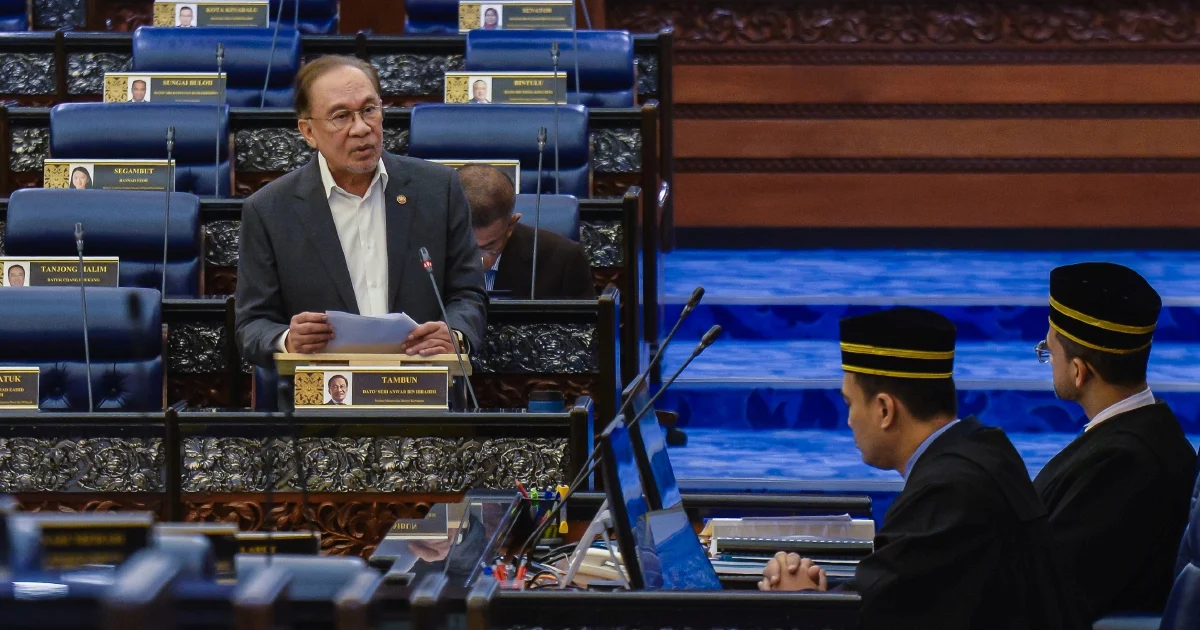
Prime Minister Datuk Seri Anwar Ibrahim has moved to clarify recent controversy surrounding the Johor Felda Settlers' Day celebration, unequivocally denying that he personally directed the cancellation of the 2026 event scheduled for Kluang. The statement comes amid mounting questions about the postponement of what is traditionally an important occasion for the Federal Land Development Authority's farming community, whose participation and morale are central to the agricultural sector's stability in the state.
The incident has highlighted the complex intersection of state governance, federal coordination, and public accountability in Malaysia's administrative structure. Such disagreements over major public events, particularly those with cultural and economic significance, can indicate broader tensions between different tiers of government or among stakeholders with diverging interests. The Felda settlers represent a substantial voting bloc and a crucial component of the rural economy, making their concerns a matter of political importance across multiple governing bodies.
Felda, established in 1956 as a scheme to develop agricultural land and improve settlers' livelihoods, has evolved into a significant institutional force within Malaysia's agricultural landscape. The annual Settlers' Day serves as both a commemoration of their contributions and a platform for addressing grievances related to land rights, commodity prices, and social welfare. Kluang, as a prominent Felda hub in Johor, would have hosted an event of considerable local and national significance, making the cancellation announcement a matter of concern for the community.
The Prime Minister's denial suggests that miscommunication, bureaucratic oversight, or conflicting directives from various government bodies may have contributed to the event's postponement. In Malaysia's multi-layered governance system, federal, state, and local authorities sometimes operate with insufficient coordination, leading to public confusion about who authorized particular decisions. This incident underscores the importance of clear communication channels and transparent decision-making processes when affecting public-facing events, particularly those of cultural and symbolic importance.
For the Felda settler community, such uncertainty around their commemorative events can carry broader implications. The settlers, many of whom face economic pressures from fluctuating palm oil prices and land management challenges, view these occasions as opportunities to advocate for policy attention and recognition of their role in national development. Cancellations or postponements, whether deliberate or accidental, risk alienating a constituency whose support remains vital to government legitimacy in rural Johor.
The clarification from Kuala Lumpur also reflects the sensitive political climate surrounding agricultural policy and land administration in Malaysia. Johor, as a major agricultural state, has long been a focal point of federal-state relations regarding economic priorities and resource allocation. The state government, the federal administration, and various agencies including Felda itself may have differing perspectives on event scheduling and resource deployment, particularly in the current economic environment where public spending is under scrutiny.
From a Southeast Asian perspective, Malaysia's experience with managing settler communities and agricultural commemorations offers instructive lessons. The region's ongoing tension between modernization and traditional livelihoods, coupled with the political importance of rural constituencies, means that such events carry significance beyond their immediate ceremonial purpose. Neighboring countries with similar schemes watch how Malaysia navigates these dynamics, as they face comparable challenges in balancing agricultural development with settler welfare and political representation.
The Prime Minister's intervention and denial of involvement, rather than simply allowing the matter to pass, suggests the government views this issue as requiring direct political engagement. This reflects recognition that public perception of how leadership treats rural communities and their institutions matters significantly for governance legitimacy. The denial itself becomes a statement of intent regarding how the administration prioritizes stakeholder communication and public accountability.
Moving forward, the resolution of this matter will likely depend on clarification of who authorized the cancellation decision and the reasons underlying it. Stakeholders including the Johor state government, Felda management, and the settler associations will need transparent information about the event's rescheduling. Without such clarity, speculation and grievance could fester, potentially affecting government-settler relations and creating space for opposition parties to exploit rural discontent.
The incident also highlights the need for improved protocols governing announcements of major public event cancellations, particularly those affecting organized communities with established networks and political representation. Such events, once announced, generate expectations among participants and create logistics chains that are difficult to reverse. Future governance improvements might include formal consultation requirements before cancelling settled commemorative occasions, ensuring that decisions receive appropriate oversight and authorization.
Ultimately, the Johor Felda Settlers' Day controversy, while appearing localized, reflects larger questions about federal-state coordination, rural political economy, and the mechanisms through which government maintains accountability to its constituencies. The Prime Minister's denial, by itself, resolves neither the settlers' underlying policy concerns nor the administrative confusion that led to the cancellation announcement, but it does signal that the matter has reached the highest levels of government attention.

