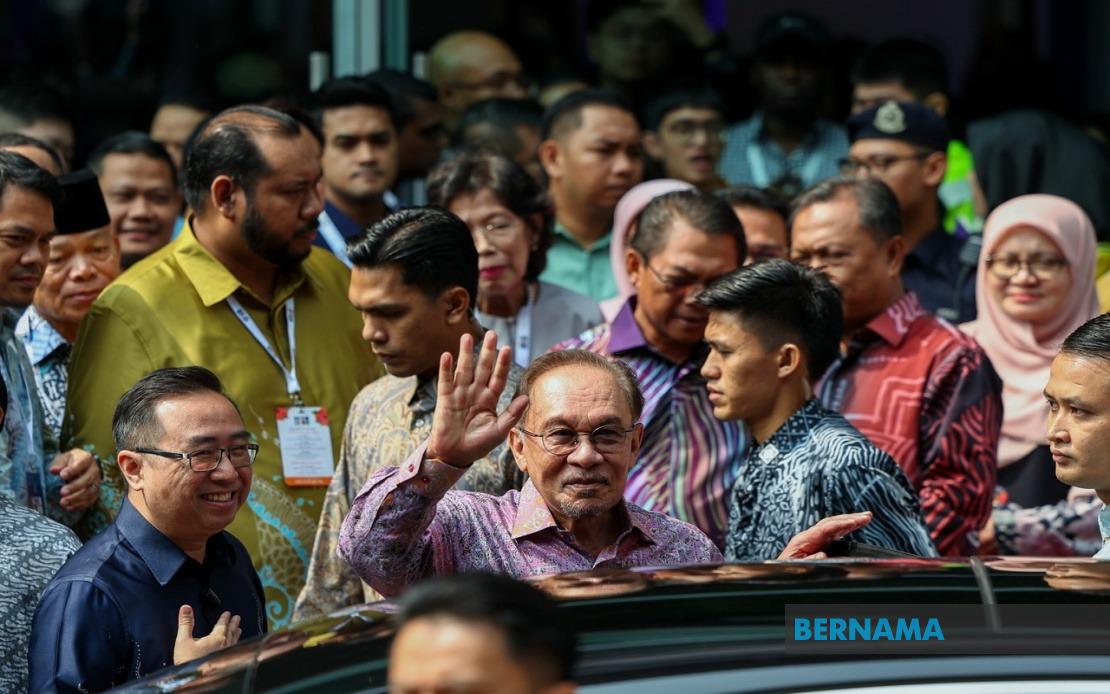
Prime Minister Anwar Ibrahim has denied being informed of efforts to bring former PKR deputy president Datuk Seri Mohamed Azmin Ali back into the party fold. Speaking at the National Innovation and Commercialisation Expo (NICE) 2026 at the Kuala Lumpur Convention Centre (KLCC), Anwar responded tersely to questions about the reported overture, stating simply that he had received no notification of any such invitation and questioning whether one had even been extended.
The statement comes just days after Azmin, who now holds the position of secretary-general at Parti Pribumi Bersatu Malaysia (Bersatu), publicly dismissed any possibility of his return to PKR. In his earlier remarks, Azmin stressed that despite invitations reportedly being offered to various former party members, he would categorically not be rejoining the party he once held a senior position within. The firmness of his rejection suggests a complete severance of ties, making his departure from PKR a defining moment in Malaysian political dynamics over recent years.
Azmin's exit from PKR and subsequent move to Bersatu represented one of the more significant defections in contemporary Malaysian politics, marking a shift in coalition alignments during a period of considerable political realignment. His role as secretary-general in Bersatu places him among the upper echelons of that party's leadership structure, indicating his importance to Bersatu's strategic direction and organisational functioning. The reported invitations to return thus carry particular symbolic weight, suggesting PKR may be seeking to heal internal divisions or strengthen its position through bringing back prominent figures.
However, PKR's overtures to former members extend beyond Azmin. The party has reportedly been in contact with other notable figures from its ranks. Datuk Kamarudin Jaffar, who formerly represented Bandar Tun Razak in parliament, and Datuk Mansor Othman, the previous Member of Parliament for Nibong Tebal, have both been mentioned as potential returnees to the party. These approaches suggest a broader strategic initiative within PKR aimed at consolidating party strength and recovering ground lost to rival coalitions through personnel departures.
The situation took a different turn with Datuk Dr Xavier Jayakumar, former PKR vice-president, who confirmed that he would indeed be returning to the party. His decision to rejoin stands in stark contrast to Azmin's categorical rejection, illustrating the varied responses party veterans have displayed when faced with readmission opportunities. Jayakumar's return represents a tentative success for PKR's apparent recruitment drive, suggesting that at least some senior figures remain open to reconciliation despite previous splits.
Anwar's assertion that he lacked awareness of the Azmin invitation raises questions about communication channels within PKR's leadership structure and decision-making processes. Whether such invitations are coordinated at the highest level or delegated to lower-ranking party officials remains unclear from his remarks. The ambiguity itself highlights potential organisational complexities within PKR as the party navigates internal politics while simultaneously managing its role within Malaysia's broader coalition government framework.
The political context underlying these developments warrants consideration. PKR, as a key component of the governing Pakatan Harapan coalition, faces pressures from rival political forces seeking to poach its members or undermine party cohesion. The strategic value of retaining or recovering prominent figures like Azmin extends beyond party pride; it relates directly to parliamentary arithmetic and the stability of government. Each departure or defection potentially shifts the balance of power in parliament, making personnel management crucial to political sustainability.
Azmin's refusal to return, coupled with his prominent position in Bersatu, reflects the hardening of political divisions between PKR and Bersatu. Once seen as part of a reformist political force, their divergence has become increasingly pronounced, with Bersatu now occupying a different coalition space. The fact that Azmin has risen to secretary-general status in Bersatu suggests he has found greater opportunity and alignment with that party's direction than PKR offers, making any return less likely than party outreach efforts might initially suggest.
For Malaysian observers, these patterns illustrate the fluidity of political party membership at senior levels, where figures move between organisations based on changing circumstances, coalition dynamics, and personal political calculations. The invitations extended by PKR reflect standard political practice of maintaining relationships with potential allies and attempting to reverse damaging departures. Anwar's denials of personal involvement in the Azmin matter, however, suggest he may be distancing himself from potentially unsuccessful recruitment efforts or asserting his authority over party decisions by questioning their legitimacy.
The broader implications for Malaysia's political landscape centre on coalition stability and the management of internal party politics during a period where parliamentary mathematics remain tight and sensitive. As PKR seeks to strengthen its position through selective recruitment of former members, parties across Malaysia's political spectrum continue jostling for advantage. The success or failure of these initiatives will partly determine the trajectory of Malaysian politics over coming months, particularly regarding government stability and coalition cohesion.

